

Tuesday Blend: The Shared Note — Cinnamon Leaf, Clove Bud & Tangerine for the First Cold Afternoon
There’s a specific smell that means the year has turned a corner — not pumpkin, not pine, but the one that lives in the spice drawer: cinnamon and clove, the pair everyone assumes are cousins because they show up in the same recipes.
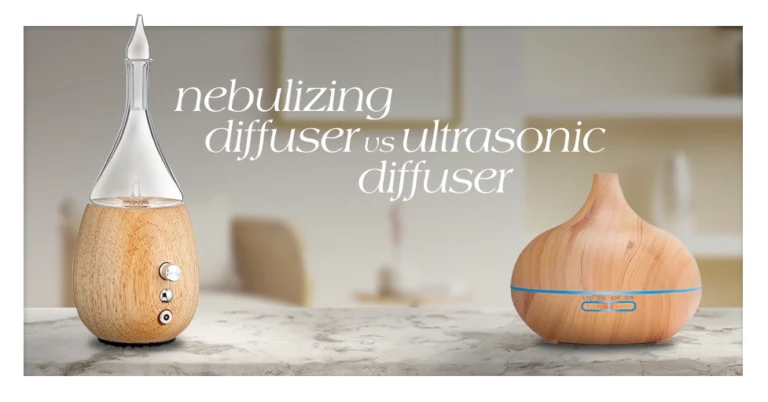
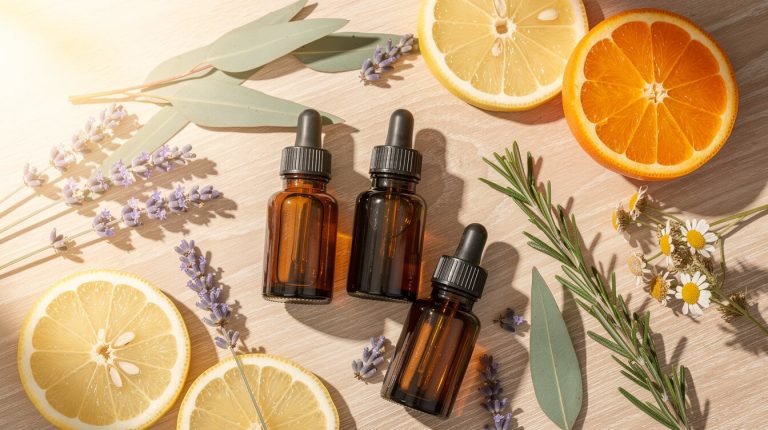
This week’s pour: 2 drops cinnamon leaf, 2 drops clove bud, 8 drops tangerine in your Nebulizing Diffuser® — twelve drops total, weighted hard toward the citrus because the two spice oils are doing far more work per drop than their small share suggests.

Here’s the jewel most spice-blend write-ups miss entirely: cinnamon leaf and clove bud smell distinct to most noses, yet they share the exact same dominant aromatic molecule. Both oils run 70–90% eugenol — the same phenylpropanoid, the same base note. The difference you’re actually smelling comes from what rides alongside it: cinnamon leaf carries trace linalool and benzyl benzoate for its rounder, sweeter edge, while clove bud carries beta-caryophyllene for its drier, almost peppery snap. Two oils, one shared backbone, different supporting cast.
One caution worth knowing before you reach for the spice rack: cinnamon bark oil (not leaf) runs heavy on cinnamaldehyde instead — sometimes 80%+ — which is a far more aggressive compound on skin and airways and the reason bark oil needs real restraint. Cinnamon leaf keeps cinnamaldehyde down near single digits and leans on eugenol instead, which is exactly why leaf, not bark, is the one that belongs in a diffusion blend. Most bottles labeled simply “cinnamon” at the grocery store are bark — check the label for “leaf” before you pour.
Tangerine carries the other ten minutes of the session. It’s almost pure d-limonene, like most sweet citrus oils, but with a softer, less acidic top note than orange or grapefruit — which is exactly why it can hold eight of your twelve drops without flattening the spice underneath it. Because a Nebulizing Diffuser moves all three oils on a cold air stream under Bernoulli’s Principle — no heat, no water — that eugenol backbone reaches the room unoxidized. Heat-based units run the real risk of scorching eugenol into a sharper, more medicinal note after 20– 30 minutes; nebulizing just never gets hot enough to let that happen.
Run it mid-afternoon, 20–25 minutes, right around the hour you’d normally reach for tea. For the exact ratio logic behind weighting a blend this top-note-heavy, our essential oil blending chart walks through the notes map in full.

Sign Up to Get Your FREE Essential Oils e-Book Here
One shared molecule, two very different personalities, and a room that finally smells like the season caught up. — Chad