


Essential Oils for Hair Growth and Thickness: Ratios & Recipes
Mixing essential oils for hair growth and thickness works best when you get two things right that most guides skip entirely: matching the essential oil to a carrier oil your specific hair type will actually absorb, and mixing it at a ratio strong enough to matter but gentle enough to use every day. Get the pairing wrong and even the right essential oil sits on top of your hair doing nothing. Get the ratio wrong and you either waste oil or irritate your scalp.
This guide walks through how to choose the right carrier oil for your hair type, the exact essential-oil-to-carrier ratios for growth and thickness, five ready-to-use recipes, and — just as important — how long to actually expect before you see a difference. Everything here is drawn from Organic Aromas’ 12+ years of customer blending data and the aromatherapy science most guides skip. Let’s start where the search really begins — matching the oil to your hair.
What Carrier Oil Is Best for Hair? Start With Your Hair Type
Here is the detail almost every “best carrier oils” listicle glosses over: the right oil is decided by your hair’s porosity — how easily the cuticle lets moisture in and out. You can test yours in two minutes. Drop a single clean, product-free strand into a glass of room-temperature water and wait a few minutes. If it sinks quickly, you have high porosity (a raised, gappy cuticle that drinks up oil but loses moisture fast). If it floats on top, you have low porosity (a tight cuticle that resists absorption, so heavy oils just sit there). If it hovers in the middle, you have balanced, medium-porosity hair that tolerates most oils.
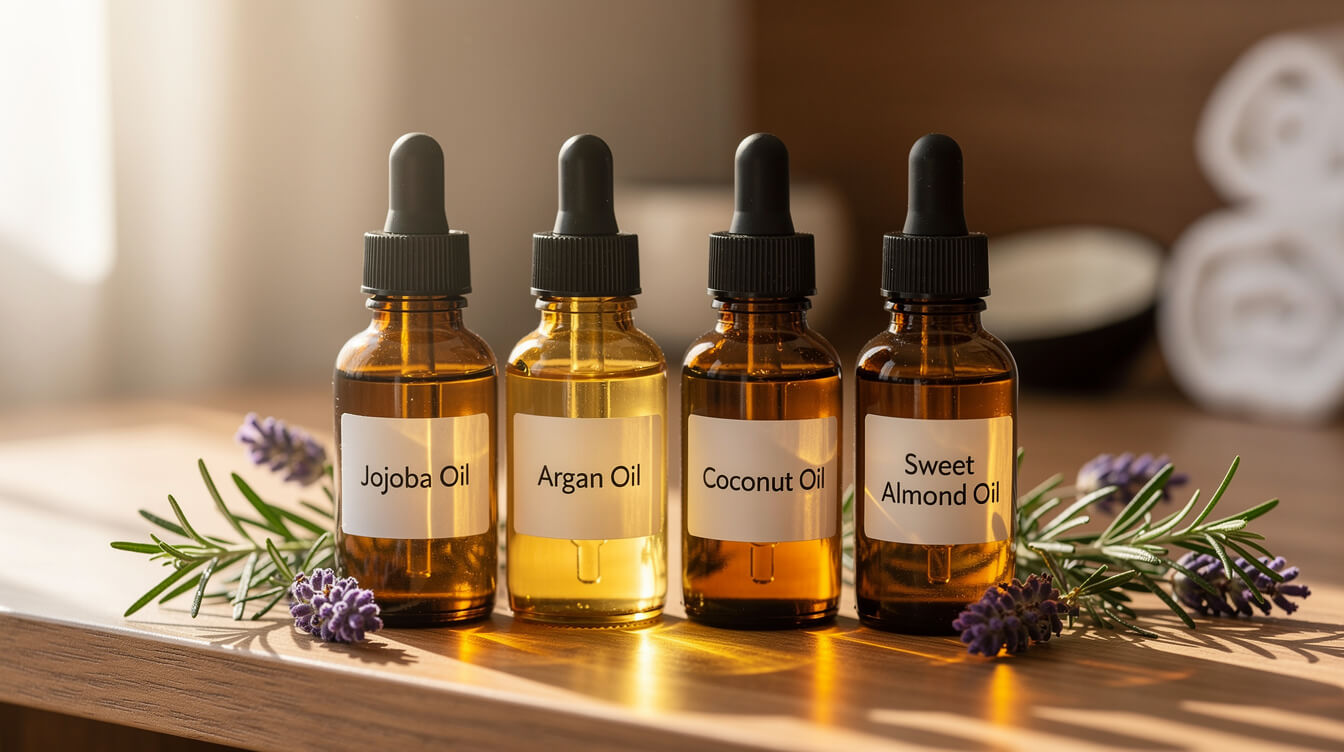
Once you know your porosity, choosing gets simple. High-porosity and dry, damaged, or coarse hair wants richer, sealing oils; low-porosity, fine, or oily hair wants lightweight oils that absorb instead of coating. This quick-reference chart maps the most popular carrier oils to the hair they actually suit:
| Carrier oil | Best for | Weight / feel | Comedogenic rating* |
|---|---|---|---|
| Jojoba | Fine, oily, low-porosity hair & scalp | Light; mimics natural sebum | 2 |
| Grapeseed | Fine hair, greasy roots, humid climates | Very light, non-greasy | 1 |
| Argan | Frizz, dull ends, most hair types | Light-medium, fast-absorbing | 0 |
| Sweet almond | All-round everyday use, medium porosity | Medium | 2 |
| Coconut | Dry, coarse, high-porosity lengths | Rich; penetrates the strand | 4 |
| Avocado | Very dry, damaged, thick hair | Heavy, deeply nourishing | 3 |
| Castor | Sealing ends, edges, dry scalps | Very thick; use sparingly | 1 |
Two carrier oils deserve a closer look because their chemistry is genuinely different. Coconut oil is one of the very few oils that doesn’t just coat hair — it penetrates the cortex. Its dominant fatty acid, lauric acid (roughly 47% of the oil), has a straight shape and low molecular weight that lets it bind to hair proteins. A widely cited study in the Journal of Cosmetic Science (Rele & Mohile, 2003) found coconut oil reduced protein loss in hair — used both before and after washing — better than mineral or sunflower oil. That penetration is exactly why coconut suits thirsty, high-porosity lengths but can feel heavy on fine or oily roots (note its comedogenic rating of 4). Jojoba, by contrast, is technically a liquid wax ester that closely mirrors the scalp’s own sebum, making it the smart, lightweight pick for low-porosity or greasy-prone hair.
For a deeper dive into base oils beyond hair care, see our guides to types of carrier oils for essential oils and the best carrier oil for essential oils. If you plan to add essential oils to your chosen carrier, our 2026 dilution chart and safety guide keeps your ratios safe.
Sign Up to Get Your FREE Essential Oils e-Book Here
Benefits of Using Essential Oils on Hair
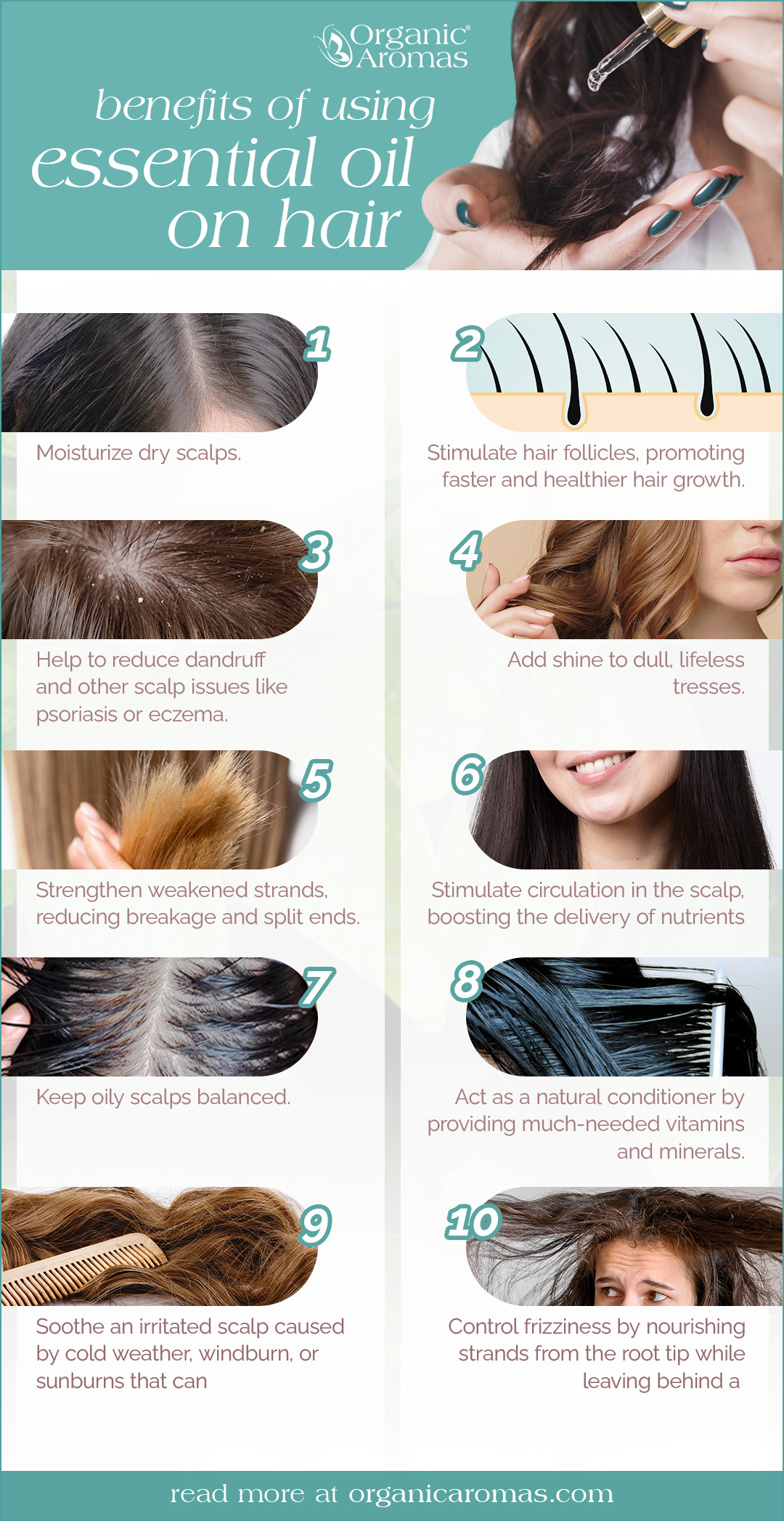
Once your carrier oil is matched to your hair, a few drops of pure essential oil turn it into a targeted hair and scalp ritual. Here is what a well-chosen blend can support:
Moisturize dry scalps. Carrier and essential oils are naturally hydrating, which makes them a great way to add moisture back into the scalp and hair. Blending oils in different concentrations helps replenish that just-washed dryness and keeps the scalp feeling comfortable rather than tight.
Support the look of fuller, thicker hair. Regular scalp massage with certain essential oils — rosemary is the best-studied — is a favorite ritual for people who want to encourage the appearance of thicker, healthier-looking hair over time. We break down the research in our guide to essential oils for hair growth and what the rosemary trial showed.
Keep the scalp feeling clean and balanced. Many people fold oils like tea tree and bergamot into their routine simply because they leave the scalp feeling fresh and clarified between washes. Used as part of regular care, they help you keep flakiness and product build-up at bay.
Add shine to dull, lifeless tresses. Dullness usually comes down to lowered hydration in the strands and sun exposure over time. A light finishing oil restores that natural sheen and smooths the cuticle so hair catches the light again.

Strengthen the look and feel of weakened strands. Chemical treatments and heat styling roughen the cuticle over time. Nourishing oils coat and soften each strand so hair feels stronger and looks less prone to breakage and split ends.
Invite a soothing scalp-massage ritual. Massaging the scalp with a calming blend is a genuinely relaxing few minutes of self-care — and that gentle massage is part of why oiling routines feel so good. Fatty acids, vitamins, and antioxidants in the oils nourish the scalp while you unwind.
Keep oily scalps balanced. Sebum production varies from person to person. Lightweight, sebum-mimicking oils like jojoba help greasy-prone roots feel balanced rather than stripped or slick — the low-porosity picks from the chart above.
Act as a natural conditioner. Rich in vitamins and minerals, a good oil blend conditions from within, helping strands stay resilient against heat styling and harsh shampoos. Use it as a weekly mask or a leave-in for the ends.
Comfort a weather-stressed scalp. Cold wind and sun can leave the scalp feeling tender and dry. A soothing organic oil helps restore comfort and moisture far better than most off-the-shelf products.
Control frizz. Frizz happens when moisture escapes a raised cuticle. A blend that nourishes and leaves a light protective coating seals hydration in and keeps flyaways smooth between washes.
10 Essential Oils to Pair With Your Carrier Oil
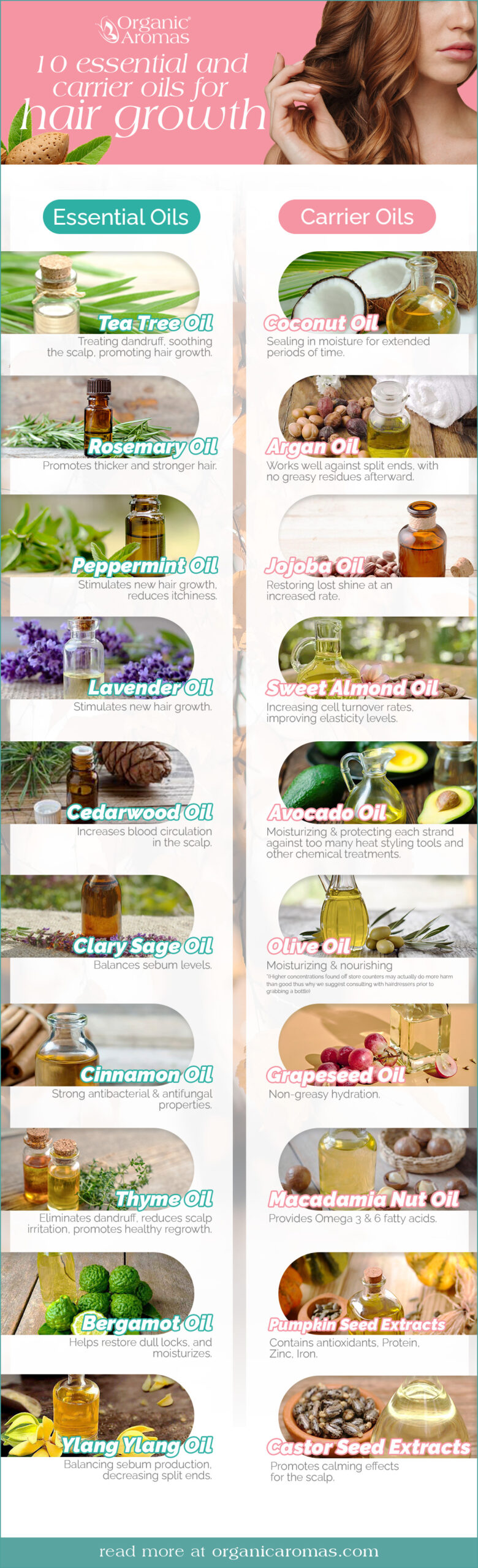
Your carrier oil does the nourishing and delivery; the essential oils bring the aroma and the plant compounds. Here are ten favorites for a healthy-looking scalp and hair.
Tea Tree Oil. Prized for its clean, clarifying feel, tea tree helps the scalp feel fresh and flake-free between washes.
Peppermint Oil. Its cooling tingle is invigorating on the scalp, and it’s a popular choice in scalp-massage blends aimed at fuller-looking hair.
Rosemary Oil. The most-researched essential oil for the appearance of thicker hair — see our rosemary essential oil guide for more of its uses.
Lavender Oil. Beyond its calming aroma, lavender oil is a gentle, all-hair-types favorite for a soothing scalp ritual. See can lavender promote hair growth.
Cedarwood Oil. Warm and woody, cedarwood is a classic partner to rosemary and lavender in scalp-massage blends.
Clary Sage Oil. A balancing, herbaceous oil that many reach for when the scalp swings toward oily.
Cinnamon Oil. Warming and clarifying, a tiny amount helps cut through product residue — always heavily diluted, as it is potent on skin.
Thyme Oil. A crisp, herbaceous oil often used in small amounts in clarifying scalp blends.
Bergamot Oil. Bright and citrusy, bergamot lends a fresh lift to blends aimed at restoring shine to dull lengths.
Ylang Ylang Oil. A rich floral favored in blends for balanced-feeling, oily-prone scalps and glossy-looking ends.
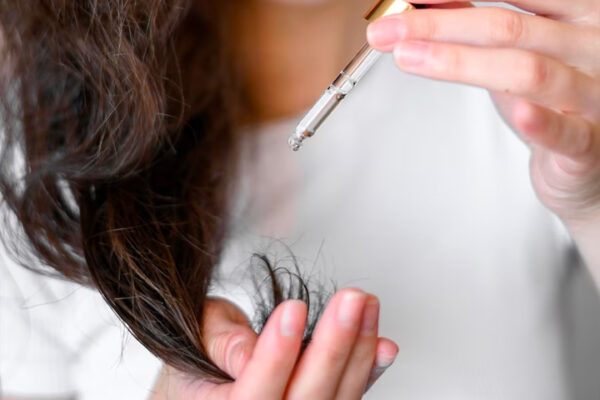
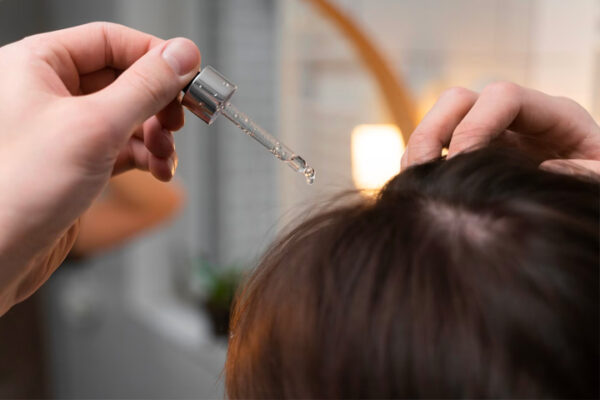
Whichever essential oils you choose, they must always be diluted into a carrier oil before touching the scalp — never applied neat. Just a few drops of your favorite essential oil per tablespoon of a carrier like jojoba or coconut is plenty. For the full picture on which oils suit which goals, see 4 essential oils for a healthy hair and scalp.
Join Now and Get a Coupon for 10% Off!
Carrier Oils in Depth
Here is a closer look at the workhorse carrier oils from the chart, and what makes each one shine.
Coconut Oil. The one carrier oil that penetrates the strand (thanks to lauric acid), sealing in moisture for softer, more manageable lengths. Best on dry, high-porosity hair; go light near oily roots.
Argan Oil. “Liquid gold” — a fast-absorbing, non-greasy oil that tames frizz and smooths split ends across almost every hair type, with a comedogenic rating of 0.
Jojoba Oil. A liquid wax ester that mirrors your scalp’s own sebum, so it absorbs cleanly and is ideal for fine, low-porosity, or oily-prone hair.
Sweet Almond Oil. Rich in vitamin E, this medium-weight all-rounder supports softness and elasticity for everyday medium-porosity hair.
Avocado Oil. Loaded with vitamins A, C, E, and B-complex plus iron and potassium — a heavy, deeply moisturizing pick for very dry, thick, or damaged hair.
Grapeseed Oil. Featherlight and non-greasy, it seals in hydration and fights frizz without weighing fine hair down — great in humid climates.
Castor Oil. Thick and rich; a little goes a long way for sealing ends and edges or comforting a dry scalp. Always blend it with a lighter oil to make it spreadable.
General Guidelines for Creating Proper Essential Oil Blends
When creating your own essential oil blend, a few steps keep it safe and effective.
1. Choose Quality Oils: Use high-quality, pure essential oils from reputable suppliers. Purity is what separates a blend that nourishes from one that irritates. Our Essential Oil Blending Lab Kit and pure single oils are a reliable starting point.
2. Follow Safety Guidelines: Always follow safety guidelines and proper dilution levels so you avoid skin irritation. A patch test on the inner arm 24 hours ahead is worth the wait.
3. Start Slow: Use small amounts of each essential oil until you find the combination that works for your hair and nose.
4. Keep Good Records: Write down each ingredient and its ratio so you can recreate a blend you love — or adjust one that felt too heavy.
5. Be Creative! Blending is a lovely creative outlet. Have fun crafting combinations that match your hair goals and the scents you enjoy.
5 Best Oil Mixes for Hair Growth and Thickness
Ready-to-try recipes for essential oils for hair growth and thickness, each pairing essential oils with a carrier matched to a hair type. Unless noted, this means roughly 2–3% dilution — about 12–18 total drops of essential oil per ounce (2 tablespoons) of carrier oil, split across the oils listed. Halve the drop count if your scalp is sensitive or you have never patch-tested the blend before.
Rosemary, Lavender, and Jojoba (8 drops rosemary + 4 drops lavender per oz): A light, balancing blend — perfect for fine, low-porosity, or oily-prone hair that wants a scalp ritual without grease. Rosemary is the most-studied essential oil for hair growth and thickness; lavender rounds out the scent and adds its own follicle-supportive research.
Peppermint, Tea Tree, and Argan (6 drops peppermint + 6 drops tea tree per oz): A cooling, clarifying mix that leaves the scalp feeling fresh — suits most hair types. Peppermint’s menthol content is what produces the tingle; start at the lower end of the range until you know how your scalp responds.
Cedarwood, Cinnamon, and Coconut (8 drops cedarwood + 2 drops cinnamon per oz): A rich, sealing blend for dry, coarse, high-porosity lengths that need deep moisture. Keep cinnamon low — it is one of the more likely oils to irritate skin at higher concentrations.
Ylang Ylang, Clary Sage, and Avocado (6 drops ylang ylang + 6 drops clary sage per oz): A nourishing blend for very dry or thick hair, with balancing florals for oily-prone roots.
Bergamot, Thyme, and Grapeseed (8 drops bergamot + 4 drops thyme per oz): A featherlight, shine-restoring mix that protects dull lengths without weighing hair down. Bergamot is phototoxic on skin exposed to sunlight — keep this one to nighttime scalp application, or see our phototoxic essential oils guide for the full list of sun-sensitive oils.
Short on time? A ready-made All-Purpose Blended Carrier Oil gives you a balanced base to which you simply add your chosen essential oils.
Blend With Pure, Single-Origin Essential Oils
The quality of your blend is only as good as your oils. Organic Aromas’ 100% pure essential oils are the perfect partner for any carrier oil in this guide — undiluted, unadulterated, and ready to nourish your hair ritual. Explore the Essential Oil Blending Lab Kit to get started with a curated set.
DIY Guide to Making Hair Growth and Thickness Essential Oil Blends at Home
Making essential oil blends for hair is easy. Follow these steps to craft the perfect mix.
1. Gather Your Ingredients: You’ll need pure essential oils, a carrier oil matched to your hair type (jojoba for fine, coconut for dry), and any extras like dried herbs.
2. Choose Your Blending Tools: A glass dropper bottle with a tight cap, a small bowl or jar, and a stirring spoon. Glass matters — essential oils can degrade plastic over time.
3. Measure Out Oils: Add your essential oils first (a few drops each), then top up with the carrier oil to your target dilution — usually 2–3% for scalp use, which is about 12–18 drops of essential oil per ounce of carrier.
4. Mix & Store: Transfer to your dropper bottle, cap securely, label, and store in a cool, dark place away from sunlight and heat so the blend keeps its potency.
How Long Until You Notice a Difference?
This is the part most blend guides skip, and it is the reason people give up on essential oils for hair growth and thickness too early. A hair follicle spends years in its active growth (anagen) phase before it ever sheds, so a single strand cannot “speed up” overnight — what a scalp ritual actually influences is the follicle environment: circulation, buildup, and inflammation around the root. The published trials that these blends are based on ran for a reason: the widely-cited rosemary oil study measured results at 6 months, and the classic thyme-lavender-rosemary-cedarwood scalp massage study ran 7 months. Expect the same timeline. Use your blend 3–5 nights a week, photograph your hairline or part monthly under the same lighting, and judge results at the 12-week mark at the earliest — not the second week. For the evidence behind specific oils and how they were tested, see our deeper look at essential oils for hair growth and the rosemary trial.

Sign Up to Get Your FREE
e-Book Here…
How To Use Essential Oil Blends On Your Hair
Here’s a step-by-step guide to getting the best results from your mix:
1. Apply to Scalp: Gently massage a small amount into your scalp and roots with your fingertips. That massage is half the ritual — a few slow minutes stimulates the scalp and feels wonderful.
2. Massage Through Hair: Work any remaining blend through the lengths and ends to deliver shine and hydration where hair is oldest and driest.
3. Leave In or Rinse: For a deep treatment, leave it in overnight under a shower cap or scarf, then shampoo out in the morning. For a lighter finish, apply a drop or two of a light oil (argan, grapeseed) to damp ends and leave in.
How To Use Essential Oil Blends In Shampoo or Conditioner
Adding an essential oil blend to your shampoo or conditioner is a great way to give hair a nourishing boost. Here’s how:
1. Measure Out Blends: Add about 1 teaspoon of your carrier-diluted blend for every 8 ounces of shampoo or conditioner.
2. Add and Shake: Pour the measured blend into the bottle and shake gently so it disperses evenly.
3. Wash Hair: Use as normal, massaging into the scalp and through the lengths for maximum benefit and absorption.
4. Rinse & Style: Rinse thoroughly and you’ll be left with soft, bouncy hair ready for styling. Using the blend as a weekly hair mask is another easy way to layer in the benefits.
Wrapping It Up
Essential oils for hair growth and thickness work best as a system, not a single ingredient: the carrier oil matched to your hair type, essential oils mixed at a real ratio (12-18 drops per ounce), applied consistently for a full 12+ weeks. Do the two-minute float test, pick your base, blend to the ratios above, and you have a genuinely personalized hair ritual — with realistic expectations about how long real change takes to show. Whether you massage it in overnight or add it to your shampoo, the right oil pairing leaves hair looking healthier, thicker, and shinier — the natural way.
Frequently Asked Questions (FAQs)
What carrier oil is best for hair?
It depends on your hair type. For fine, oily, or low-porosity hair, choose lightweight oils like jojoba, grapeseed, or argan. For dry, coarse, or high-porosity hair, choose richer oils like coconut, avocado, or castor. Do the float test to find your porosity, then match your oil to it.
What are the best essential oils to pair with a carrier oil for hair?
Popular picks are Rosemary, Peppermint, Lavender, and Cedarwood, valued for scalp rituals and the appearance of fuller, healthier-looking hair. Always dilute them into a carrier oil before applying.
How do I mix essential oils with a carrier oil for hair?
Aim for a 2-3% dilution for scalp use, roughly 12-18 drops of essential oil per ounce of carrier oil like coconut or jojoba. Start small, blend, and adjust to your hair’s response.
How often should I apply oil blends to my hair?
For most people, 2-3 times per week works well. Consistent, gentle use is more effective than occasional heavy application.
Which carrier oil is best for an oily scalp?
Jojoba is the top pick for oily or low-porosity hair because it closely mimics the scalp’s natural sebum and absorbs cleanly. Grapeseed and argan are also excellent lightweight, low-comedogenic options.
Are there any precautions when using essential oils on hair?
Yes. Never apply essential oils undiluted, always blend them into a carrier oil, and do a 24-hour patch test on your inner arm first to check for sensitivity.
How long until essential oils show results for hair growth and thickness?
Give it at least 12 weeks of consistent use, 3-5 nights a week. The studies these blends draw from measured results at 6-7 months, because a hair follicle spends years in its growth phase before a change becomes visible. Judge results by monthly photos, not by how your scalp feels after one use.



Thank you for the auspicious writeup. It in fact was a amusement account it. Look advanced to more added agreeable from you! By the way, how could we communicate?
hi!,I like your writing so much! share we be in contact more approximately your article on AOL? I need a specialist in this area to resolve my problem. Maybe that is you! Looking ahead to see you.
Hi my family member! I want to say that this post is awesome, nice written and come with approximately all significant infos. I would like to peer extra posts like this.
you are in reality a good webmaster. The website loading velocity is amazing. It sort of feels that you’re doing any distinctive trick. Also, The contents are masterwork. you have done a fantastic job in this topic!
Somebody essentially help to make significantly articles I’d state. This is the first time I frequented your web page and up to now? I surprised with the research you made to make this actual post incredible. Fantastic job!
cake 1.5g delta 8 review
fooduniversitylasvegas.com
Thanks for the great info!
Thanks, will pass this along
Never tried this
Need to try this
This is AWESOME! I can’t wait to try it! I have thin hair and I’ve tried many remedies!
I definitely need to try some of these – if they work like they say
FANTASTIC blog post!!!!!! Will be re-making some blends for my warm oil scalp massage!
awesome list
I don’t have thinning hair, but the article is very informative.
Love all the uses for hair and scalp! I used a blend on my dry itchy scalp during the winter. It provided much needed relief.
Thanks for the great help – I need this!
Very interesting newsletter, awesome contest to enter.
This is an amazing site. So much information I did not know.
Lot of info I haven’t heard before
My shopping list definitely got bigger after reading this!
I can’t wait to try some of these.
good to know
My hair is thinning big time. 54 and menopausal problems I guess so will have to try some of these blends!
I’ve heard of oils helping with hair growth. I’ll have to try a few oils and see how it does~!
So much info!
Thanks!
Essential oils can really be used for anything!
Thank you so much for this extensive information, my hair really needs some life and shine.
Do you sell the micro tube oil uptake glass atomizer as a replacement part? I cracked mine while cleaning and am worried it will continue to fracture. Thank you!
i didnt no u could do that much
Gold stuff.
Think I need to give this a whirl!
Thank you for the tips
Thank you
I had been using Frankincense, caderwood and rosemary mix with argan and coconut oil for sometime, just love it.
Good to know
I don’t have thin hair but your article is very informative.
Good information
Wow, I never would have thought to use oils for hair growth. Thank you for the information
Great information to get started.
Wow! I will try this!
Great information!
This is a very thorough and helpful article. I’m considering the tea tree, peppermint and argon oil combination for thicker hair if nothing else it will smell invigorating! One question though how do we know what ratio to use? I didn’t see it in the article.
Lost all of my thick fullness with age im guessing
Good information. Be aware that once you stop the oils, the hair growth and thickness goes back to how it was.
Thin hair is a bummer. Hope these oils help.
This was very interested!
I need to try the Ylang Ylang, Clary Sage, and Avocado mix. I am 56 and do not really worry about graying, I worry all of the time that my hair is thinning though.
So much knowledge thank you for sharing! I am trying these blends now!
When you get to a certain age you start to lose hair -this might be a good solution to the problem!
My hair is post menopausal and thinning so am very pleased to try this to see if it improves