

Incense Without the Smoke: How Japan Learned to “Listen” to Scent
Some scents come with a little ceremony attached. A thin thread of smoke, a dish of ash, a match. One of our customers wanted the scent and the ceremony, but not the smoke.
The Review: All of the Incense, None of the Smoke
An Elegance owner summed up a whole lifestyle shift in one line: “I like the smell of incense, but don’t enjoy inhaling the smoke.” Their Nebulizing Diffuser® became the answer, and they added a small, practical habit we love. Because pure oil is intense, they keep “a window partly open” while it runs, weather permitting. And they are “slowly working my way through” the oils, one at a time. It turns out that this is very close to a 500-year-old way of enjoying fragrant wood.
In Japan, the Best Incense Was Never Meant to Smoke
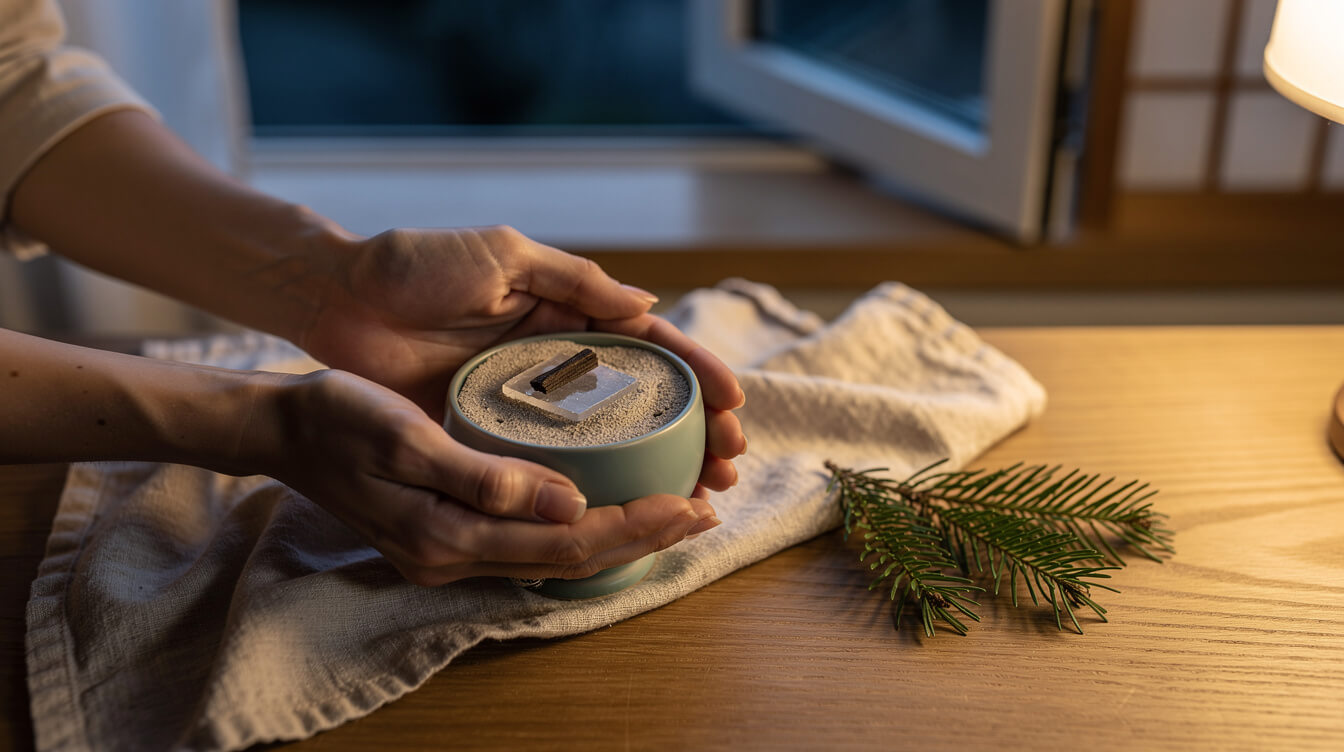
In kōdō, the Japanese “way of incense” that took shape in the Muromachi period, a tiny sliver of aloeswood is never set alight. A piece of charcoal is buried in ash inside a small cup, a thin mica plate called a gin’yō rests on top, and the wood sits on the mica. The gentle heat coaxes the aromatics out. If smoke appears, the wood is too hot and the plate gets nudged off center. Practitioners don’t say they smell the incense. They call it monkō, “listening to incense.” Each guest cups a hand over the cup and takes three slow breaths, turning aside to breathe out. The prized wood is jinkō, “sinking incense,” because resin-soaked aloeswood is dense enough to sink in water.
Cold-air nebulizing works in the same spirit. There is no flame and no heat, so the oil reaches you as the plant made it.

Sign Up to Get Your FREE
e-Book ($9.99 Value)
A Three-Breath Listening Ritual for Shut-Up November Rooms
Pick a woody oil. Our Formosa Blend is one of the few in our collection with real aloeswood, alongside hinoki. Or build your own incense-like trio from 4 drops Atlas cedarwood, 2 drops ho wood and 1 drop sweet fennel, which echoes the star anise in many Japanese incense recipes. Run it on low for ten minutes, switch it off, and crack a window just an inch, as our customer does. With the heating on and the windows sealed this month, a little fresh air keeps the scent soft instead of heavy. Then sit near the unit, cup your hands loosely in front of your face, and take three slow breaths. Notice what changes from the first breath to the third. If you’re curious why burning resin and its pure oil smell so different, our frankincense deep-dive explains the smoke.
Here’s to listening a little more closely this week.
Warmly,
Chad