


Essential Oil Mosquito Repellent Recipe: 5 DIY Blends That Work
If mosquitoes treat your backyard like an all-you-can-eat buffet, you have plenty of company — and a genuinely effective, natural answer. A good essential oil mosquito repellent recipe lets you skip the harsh synthetic sprays and mix a pleasant-smelling, plant-based deterrent from ingredients you probably already trust. Below you’ll find five tested DIY blends, the exact drop counts and dilution math, and one science-backed oil that most home recipes overlook entirely.
We’ve spent more than a decade listening to how our customers actually use pure essential oils outdoors, and the difference between a blend that works and one that fizzles usually comes down to two things most guides gloss over: which oils have real repellent data behind them, and how long each one lasts before you need to reapply. Let’s fix both.
What Essential Oils Repel Mosquitoes — and How Long Protection Lasts
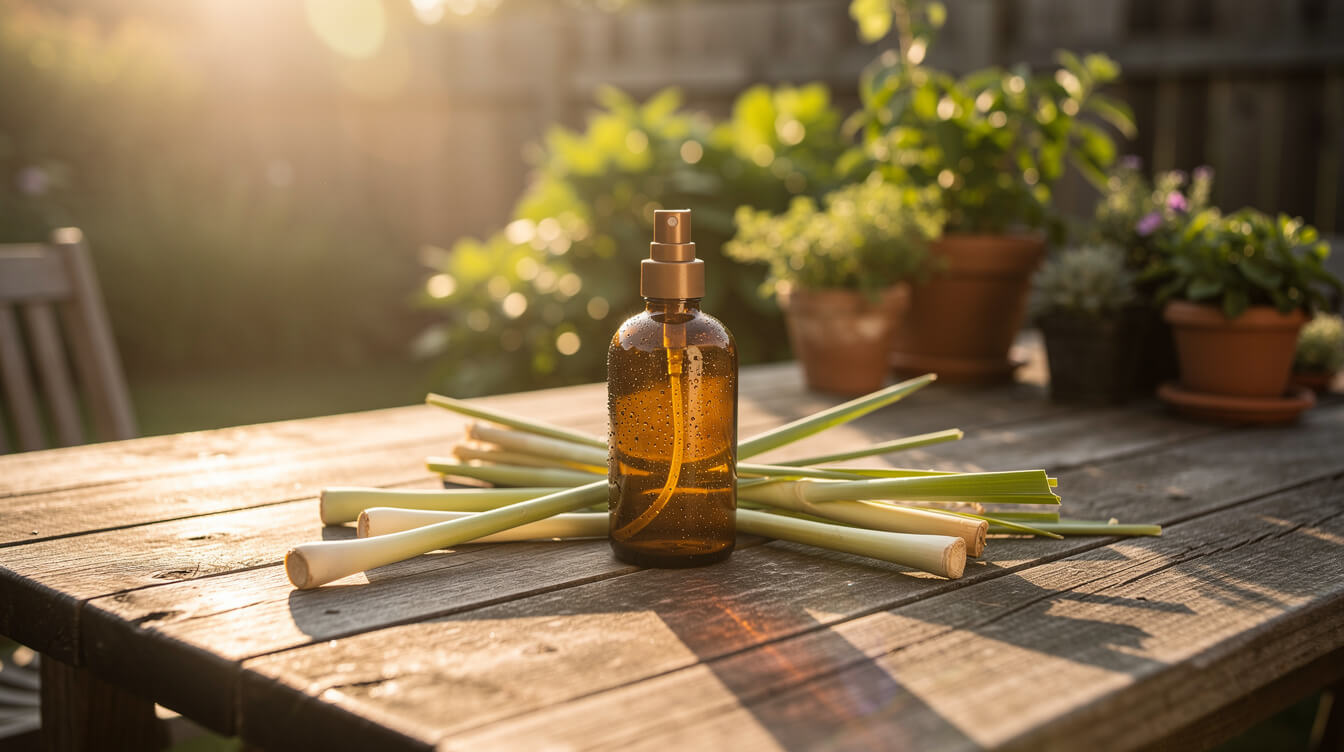
Not every “bug oil” is created equal. A handful of essential oils show up again and again in the repellent research because their aroma compounds — citronellal, geraniol, eugenol, and 1,8-cineole — interfere with the scent receptors mosquitoes use to find you. The most reliable performers are:
- Citronella — the classic; masks the carbon dioxide and lactic acid mosquitoes home in on
- Lemongrass — high in citronellal, closely related to citronella
- Lemon eucalyptus — the standout (more on this below)
- Peppermint — sharp menthol note insects avoid
- Lavender — gentle, pleasant, and mildly repellent
- Eucalyptus and rosemary — camphoraceous oils that round out a blend
It helps to know why mosquitoes zero in on you in the first place. They track the carbon dioxide you exhale, the lactic acid and warmth of your skin, and dozens of scent cues from a surprising distance. Repellent oils work by flooding that picture with competing aromatics, effectively jamming the signal so you become harder to locate — which is also why full, even coverage matters, since a single missed ankle is an open door.
The jewel most recipes miss is duration. In comparative repellent research (including the widely cited 2002 New England Journal of Medicine study by Fradin and Day), plant oils like pure citronella typically protect for only about 20 minutes to two hours before the volatile compounds evaporate — which is exactly why reapplication matters so much. Knowing the rough staying power of each oil is the difference between a blend that quietly quits and one you can rely on:
| Essential oil | Key repellent compound | Approx. protection window* |
|---|---|---|
| Citronella | Citronellal, geraniol | ~20 min – 1 hr |
| Lemongrass | Citronellal | ~30 min – 1 hr |
| Lemon eucalyptus (PMD) | Para-menthane-3,8-diol | ~2 – 6 hrs |
| Peppermint | Menthol | ~30 – 45 min |
| Lavender | Linalool | ~30 min (mild) |
*Windows vary with concentration, sweat, and activity. Treat them as reapplication guides, not guarantees. For a deeper look at the pest-by-pest picture, see our guide to essential oils and insects, and our roundup of citronella essential oil benefits.
Lemon Eucalyptus (PMD): The One Botanical the CDC Puts Beside DEET
Sign Up to Get Your FREE Essential Oils e-Book Here
Here’s the fact that separates an expert blend from a Pinterest recipe: oil of lemon eucalyptus (OLE) — and specifically its refined active compound PMD (para-menthane-3,8-diol) — is the only plant-derived repellent the U.S. Centers for Disease Control and Prevention recommends alongside DEET and picaridin. The EPA registers PMD-based products as effective biopesticides, and their protection window rivals lower-concentration DEET.
That said, precision matters. “Lemon eucalyptus essential oil” straight from the bottle is not the same as the standardized, PMD-rich OLE used in registered products — the raw oil has less PMD and a shorter window. For a homemade blend, lemon eucalyptus is still one of your strongest ingredients; just lean on it a little heavier and reapply on schedule. One important safety note straight from the CDC: products with OLE or PMD should not be used on children under three years old.
A quick buyer’s tip: if you want the longest-lasting botanical option, look for a bottle labeled specifically as Corymbia citriodora (lemon eucalyptus) and, ideally, one that notes its citronellal or PMD content. The more of that active fraction, the longer your blend holds the line before it needs a refresh.
5 Essential Oil Mosquito Repellent Recipes You Can Make Tonight
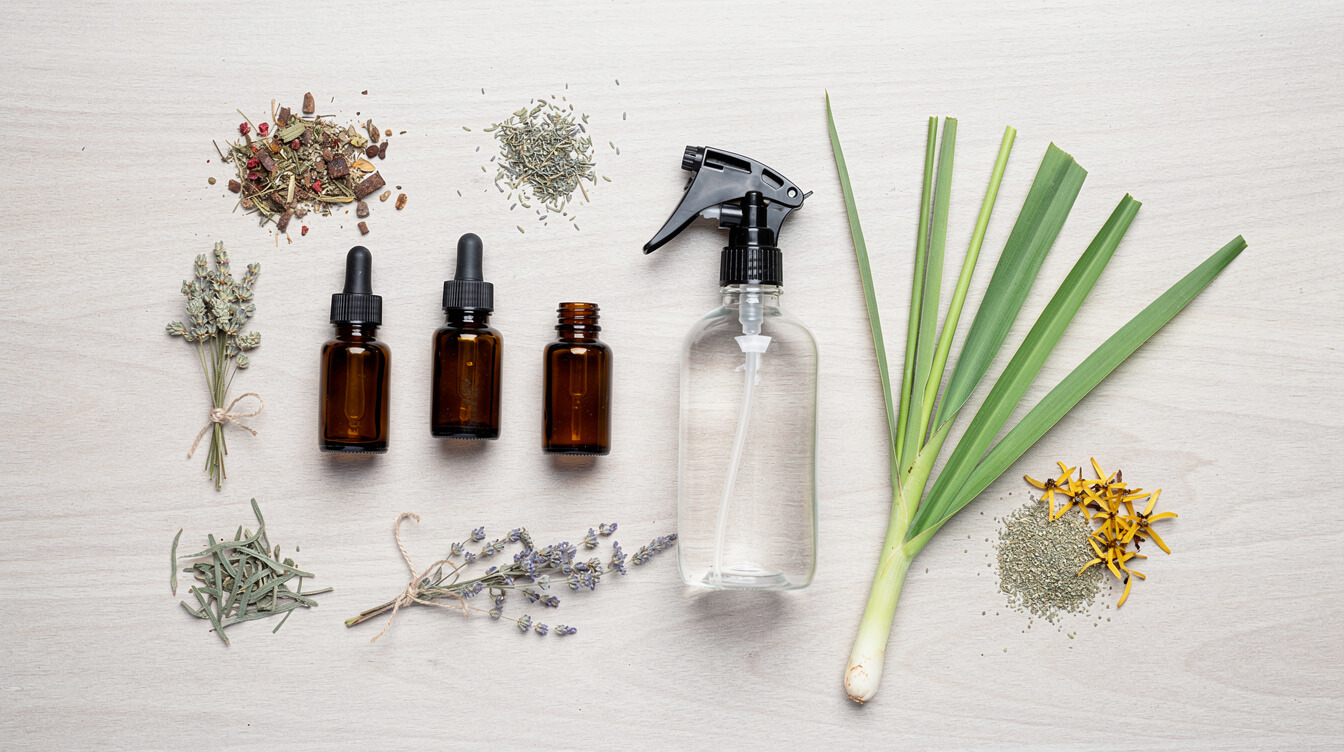
Each recipe below is built around the oils above. Gather clean glass bottles, your carrier or base, and a small funnel. Shake anything water-and-oil based before every use — essential oils don’t dissolve in water, so separation is normal.
Recipe 1 — Natural Mosquito Repellent Spray
- 4 oz witch hazel (alcohol- and paraben-free) or 2 oz witch hazel + 2 oz distilled water
- 15 drops citronella essential oil
- 15 drops lemongrass essential oil
- 10 drops lemon eucalyptus essential oil
- 10 drops peppermint essential oil
- 1 glass spray bottle + funnel
Combine in the bottle, cap, and shake well. Keep the essential-oil load near 5–6% of the total for everyday use. Mist onto exposed skin and clothing, avoiding eyes; reapply every 1–2 hours.
Recipe 2 — Mosquito-Repelling Body Lotion
- 4 oz virgin coconut oil (solid base)
- 8 drops tea tree essential oil
- 8 drops lavender essential oil
- 8 drops lemongrass essential oil
- 6 drops citronella essential oil
- 6 drops eucalyptus essential oil
Warm the coconut oil until just soft, stir in the oils, and let it set. Scoop a small amount and smooth over skin before heading out — ideal for dry skin and calmer than a spray.
Recipe 3 — Mason Jar Citronella Candle
- 2 Mason jars, lemon and lime slices, fresh rosemary sprigs
- 40 drops rosemary essential oil
- 15 drops citronella essential oil
- Water + floating tea lights
Layer citrus slices and rosemary in each jar, fill with water stirred with the oils, then float a tea light on top. Pretty on a patio table and practical at dusk.
Recipe 4 — On-the-Go Roll-On
- 10 ml roller bottle
- Fractionated coconut or jojoba oil (carrier, fill to shoulder)
- 4 drops lemon eucalyptus, 3 drops citronella, 2 drops lavender
This keeps the blend near a skin-friendly 4–5% dilution. Roll onto wrists, ankles, and behind the knees — the spots mosquitoes target most.
Recipe 5 — Patio Diffuser Blend
- 8 drops citronella essential oil
- 6 drops lemongrass essential oil
- 4 drops lemon eucalyptus essential oil
- 2 drops lavender essential oil
This is the no-mess option — nothing on your skin at all. We’ll cover why a well-built diffuser blend can outperform a candle in the section below.
The 15% Rule: Diluting Your Repellent Safely
Join Now and Get a Coupon for 10% Off!
Repellent blends run a little stronger than everyday aromatherapy, but stronger is not always better — and it is never worth a skin reaction. The practical ceiling for a leave-on skin blend is roughly 10–15% essential oils, and you should drop closer to 5% (or lower) for children, sensitive skin, or daily use. A few numbers to anchor on:
- About 20 drops of essential oil = 1 ml
- A 4 oz (118 ml) spray at 5% needs roughly 118 drops total — the recipes above stay comfortably under that
- Always patch-test a dab on your inner forearm and wait 24 hours before a full application
For the full breakdown, our essential oil dilution chart and ratios guide walks through every concentration. Skip essential-oil repellents entirely on infants, and if you’re pregnant or breastfeeding, check with your care provider first. Citrus-based oils can also be phototoxic in sunlight, so favor lemon eucalyptus (which is not strongly phototoxic) for daytime skin blends.
The Whisper-Quiet Way to Repel Mosquitoes Indoors: A Nebulizing Diffuser®
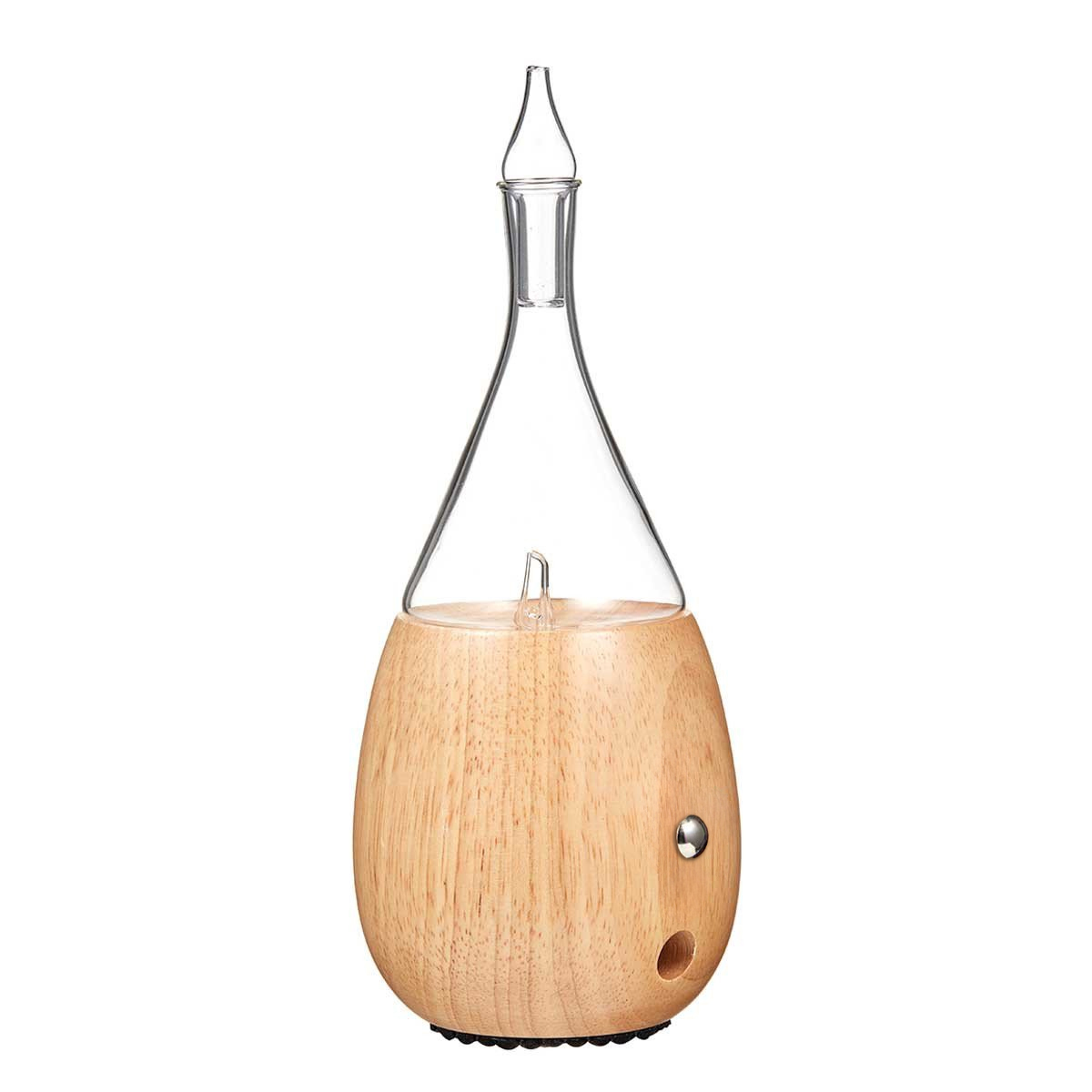
The most effortless method on this list puts nothing on your skin at all. A Nebulizing Diffuser® turns pure, undiluted essential oil into an ultra-fine aromatic mist and disperses it through the air — making the whole room, porch, or tent less inviting to mosquitoes instead of protecting one patch of skin at a time.
Why nebulizing specifically? Here’s the mechanism competitors hand-wave: repellent power lives in the lightest, most volatile terpenes — citronellal and geraniol — and those are exactly the molecules that heat and water dilution degrade. An ultrasonic or heat diffuser waters the oil down and can cook off the active compounds. A Nebulizing Diffuser® uses Bernoulli’s Principle — a fast stream of air across a glass tube — to atomize the oil cold, at full strength, keeping those repellent terpenes intact. No water, no heat, no plastic.
Compared with a citronella candle, the difference is coverage and consistency. A candle only scents the air immediately around the flame and depends on you sitting downwind of it; a nebulizing mist saturates the whole space evenly and doesn’t rely on an open flame near curious kids or pets. For a covered porch or a bedroom on a warm night with the windows open, it’s the most set-and-forget option here.
Load a diffuser with our 100% pure citronella essential oil and a touch of lemongrass, and you have a hands-free barrier for the whole space. The Raindrop Smart Nebulizing Diffuser® is wireless and app-controlled, so you can run it on a timer through the buggiest hours of dusk.
Repel Mosquitoes the Whisper-Quiet Way
The Raindrop Smart Nebulizing Diffuser® disperses pure, undiluted citronella and lemongrass into the air — no water, no heat, no plastic. It fills a room with an aroma mosquitoes dislike while you simply relax.
Safety, Pets, and What the Research Really Says

Join Our Exclusive Member Club to get Big Discounts!
Natural does not automatically mean harmless. Peer-reviewed work — including a study in the Journal of Agricultural and Food Chemistry that found a blend of citronella, lemongrass, peppermint, and eucalyptus effective at repelling mosquitoes — confirms these oils work, but also that they evaporate faster than synthetics and vary batch to batch. Set expectations accordingly: reapply often, and don’t treat a DIY blend as protection against mosquito-borne illness in high-risk regions, where the CDC still recommends registered repellents.
A few honest cautions:
- Patch-test every new blend and discontinue if skin reddens.
- Keep OLE/PMD oils away from children under three.
- Pets metabolize essential oils very differently — never apply these blends to cats, dogs, or birds, and diffuse only in ventilated spaces they can leave. See our guides to essential oils safe for pets and oils to avoid around dogs.
- Store finished blends in dark glass, out of sunlight, and use within a few months.
Dealing with more than mosquitoes this season? The same principles carry over to our guides on essential oils for cockroaches and peppermint oil for spiders.
Frequently Asked Questions
What is the best essential oil mosquito repellent recipe?
For most people, the spray in Recipe 1 — citronella, lemongrass, lemon eucalyptus, and peppermint in witch hazel at about 5% — offers the best balance of effectiveness, scent, and staying power. Lean on lemon eucalyptus if you want the longest window.
How often do I need to reapply a natural repellent?
Plan on every 1–2 hours, and more often if you’re sweating or swimming. Essential oils are volatile by nature, so their protection fades faster than synthetic repellents.
Which single oil lasts the longest?
Lemon eucalyptus (and refined PMD) has the longest documented window — up to several hours — which is why it’s the only botanical the CDC lists beside DEET.
Can I just diffuse oils instead of putting them on my skin?
Yes. A Nebulizing Diffuser® loaded with citronella and lemongrass treats the whole room and is ideal if you dislike anything on your skin — just diffuse in a ventilated space and keep pets’ needs in mind.
Final Thoughts
A great essential oil mosquito repellent recipe isn’t about dumping every “bug oil” into a bottle — it’s about choosing oils with real data behind them, respecting a safe dilution, and reapplying on schedule. Start with the spray, keep a roll-on in your bag, and let a Nebulizing Diffuser® handle the whole patio while you actually enjoy the evening. Mix a batch tonight, and reclaim your summer — naturally.





Would love a formula for a yard spray that can ward off mosquitoes for a few weeks at a time. I’m using garlic and it does work but it takes several attempts to get it going once the nasty biting season begins. I’d also appreciate a recommendation for the best essential oil to add to the garlic that’s safe for animals that would enhance the smell to help detour mosquitoes from wanting to come more often. Any advice will be most appreciated. Thank you.
I’ll try this.
What have you been up to? I am fascinated about covid19. Can you talk about it? If the same thread is opened please redirect my post :). Thanks :).
PS: I don’t know any people with covid and you? rambo 😀
Are these safe around cats if you use as a spray on carpets etc as I know citronella not safe as a flea spray with cats?
The lotion recipe calls for VIRGIN coconut oil, not fractionated coconut oil!! Of course it won’t harden!!
Be Careful if you’re going to a place where you can find bees…I was followed by a bunch of bees and stung by inner because lemongrass attracts them.
Lavender really works for use
Going to a party we will be outside what can I defuse for mosquito repellent I have 4 diffusers
Thank you Lora
Is the blend the mosquitos blend ok for children?
I used the first recipe and we still got attacked by mosquitoes and added 6 more drops of oils on all but it still didnt work.
How long do these repellents last – the mixture?
I am making a mosquito repellent as a science experiment and i am comparing it to leading brand repellents. I think this was really helpful and I loved that you put several different forms of repellents like sprays, lotions, candles, etc. Great Idea!!!
A friend made recipe #1 spray for me with witch hazel base and I’m wondering if it would be ok to spray on my clothes or if I need to saturate my skin and allow to dry prior to dressing? And wondering how often I’d need to reapply if get drenched (rainy season in Africa) or sweat alot?
Any help is great – thanks!
Whatever you do, DO NOT USE TEA TREE OIL IF YOU HAVE PETS!!! It’s a harmful neurotoxin to dogs. It causes seziures, lethargy, vomiting, odd behavior and other things. Whatever you do. Do not use it if you have pets!!!
Mix with a spoon? Couldn’t I just put all the ingredients in the bottle & shake well?
I use Vitamin B1. Thiame secreres from your pores and mosquitoes Or other bugs such as fleas or ticks don’t like it. Its got to be in your system for a week to work though. I also disfuse essential oils for the smell as well double the protection double the fun
After researching a decent bug repellent, I opted to make the lotion, which turns out, isn’t really a lotion, since fractionated coconut oil does not harden. How about fixing the instructions so that future site visitors don’t waste their money? Smh…
Tea tree oil is dangerous to animals.
I suggest you use peppermint and lavender.
I am a volunteer in Tanzania and I can bring essential oils along, but I can’t buy coconut oil or witch hazel over there. Are there any other ingredients I could substitute?
What blend would you recommend for someone who cannot use either Lemongrass or Citronella oil? I’m incredibly allergic.
Awesome recipes!
I made the lotion repellent, not with the liquid coconut oil tho, also without citronella, because that’s the only EO I didn’t have at the time. The repellent without citronella works amazing!!! I couldn’t believe it. I’m almost out of my first batch, but will definitely be making another batch soon. ♥️
I did an accidental test of one of your recipes. I sprayed all my exposed skin and then went for a walk in the forest. I got about 50 bites through my clothes but not one where I’d used your spray. Next time I’ll spray my whole body, under my clothes, before getting dressed. But, in summary, your spray works great! Thanks so much for putting that information out there!
Sorry to say, but none of the mentioned mosquito repellents work for me. I followed the recipes to the point and still the mosquitos persist in drawing my blood. Are the recipes maybe too weak?
How is the lotion a lotion? It’s just essential oils and fractionated coconut oil, which are all liquid. I’m going to try making it with beeswax so it’s more of a salve than just oil.
interested in your recipes, but when I print, most info is missing cause a caption prints over the ingredients, that says the likes of "someone in Las Vegas just added ……..etc., " I don’t care about that, I just want the recipes, but I’m forced to handwrite. On to someone else’s site.
Why can’t I share this article to a friend’s FB page?
For those that asked – fractionated coconut oil will not harden. The long chain fatty acids have been removed. Just swap out fractionated for unrefined coconut oil and the recipe will work.
How long does it take for the liquid for the lotion recipe to harden? I would have thought it would have happened by now. It’s been two days. Is there an ingredient missing in your recipe?
Thanks for the information, this was very helpful to me making a good smelling natural bug repellent! 🙂
How I can make 100% natural mosquito repellant vaporiser
Can I make my own mosquito spray or lotion by mixing peppermint, lemon and lavender oils? We are going to Zimbabwe and Botswana but i’m Not crazy about taking the pills that have lots of side affects.
hello sir /mdm
pls send me farmula on mosquito reppel
I read the blog it’s very helpful but I would like to know Can we use the lotion on children.
The candles look terrific but the oil and water won’t mix together; I think a bit of white vinegar is needed to break them down..
Please guide how to make mosquito repellent coils & liquid with these essential oils. Please email to me.
Fractionated coconut oil will never harden. All the solids have been removed and it remains liquid always.
Can’t wait to try all of these recipes. Being in Canada we’ve had a wetter than normal summer forecasted so mosquitos will be a huge inconvenience. We had to start tick meds for our dog back in March.
Interested**
These are great ideas, Usually I don’t have much problems with bugs biting me but in the summer it gets so hot it drives the bugs crazy, causing me to grab the spray. And these seem like an effective natural alternative to try out.
These are great ideas, Usually I don’t have much problems with bugs biting me but in the summer it gets so hot it drives the bugs crazy, causing me to grab the spray. And these seem like an effective natural alternative to try out.
I am definitely going to make this essential oil recipe. My daughter has very sensitive skin so we try to stay away from the harsh chemicals that are found in the insect repellants that are sold in the stores. Thanks for the information.
Great tips! Ill def be trying this out!!
Thanks 🙂
I am a bug magnet so I found this blog to be very useful. I will definitely try it out in the coming summer months!
I’ve read conflicting articles about the effectiveness of citronella as a mosquito repellent. However, I’d be more than happy to try the DIY combinations you’ve shown above.
Thank you for the information you have provided regarding how to deal with mosquitoes, fleas, and ticks using natural resources. I live in Louisiana and we have a major problem this time of year.
After a big camping weekend I’m definitely thinking about the need for mosquito repellent! So many good ideas!
I am so grateful for this kind of blogs this information was really helpful.
Regards from Mexico