

Relaxing Essential Oils for Diffuser: A 3-Blend Evening Wind Down Sequence Timed to Your Cortisol Curve
Search “relaxing essential oils for diffuser” and you will get the same ten oils in nearly the same order on every result page. Lavender. Chamomile. Bergamot. Frankincense. Vetiver. The lists are not wrong. They are just incomplete in a way that costs you results. None of them tell you when in the evening each oil actually works with your body, and none of them mention the chemistry detail that decides whether the bottle you bought delivers anything calming at all once it leaves your Nebulizing Diffuser® (or any other diffuser, for that matter).
What follows is a three-blend evening sequence built around a single insight from the aromatherapy literature: the molecules in calming essential oils, specifically linalool, linalyl acetate, alpha-pinene, and beta-caryophyllene, are not interchangeable. They peak at different doses, they survive different diffusion methods at different rates, and they work alongside your body’s natural cortisol curve, which drops sharply between 6pm and midnight in most healthy adults. Pair the right molecule to the right hour and the room shifts. Mismatch them and you get a pleasant smell with no felt effect.
The three blends below are drawn from twelve years of customer ratio feedback on the Organic Aromas Nebulizing Diffuser®, then cross-checked against the published essential oil chemistry literature. Each one is timed to a specific window of the evening. Each uses oils whose key terpenes survive cold, waterless, no-heat nebulization. And each ratio is one our customers have written back to confirm, sometimes for years running. If you are looking for a more complete sleep-focused protocol once the lights are out, our essential oils for sleep guide covers the four-stage bedtime sequence in detail. This piece is about the three hours before sleep.
Why “Relaxing” Is a Chemistry Question, Not a Marketing One
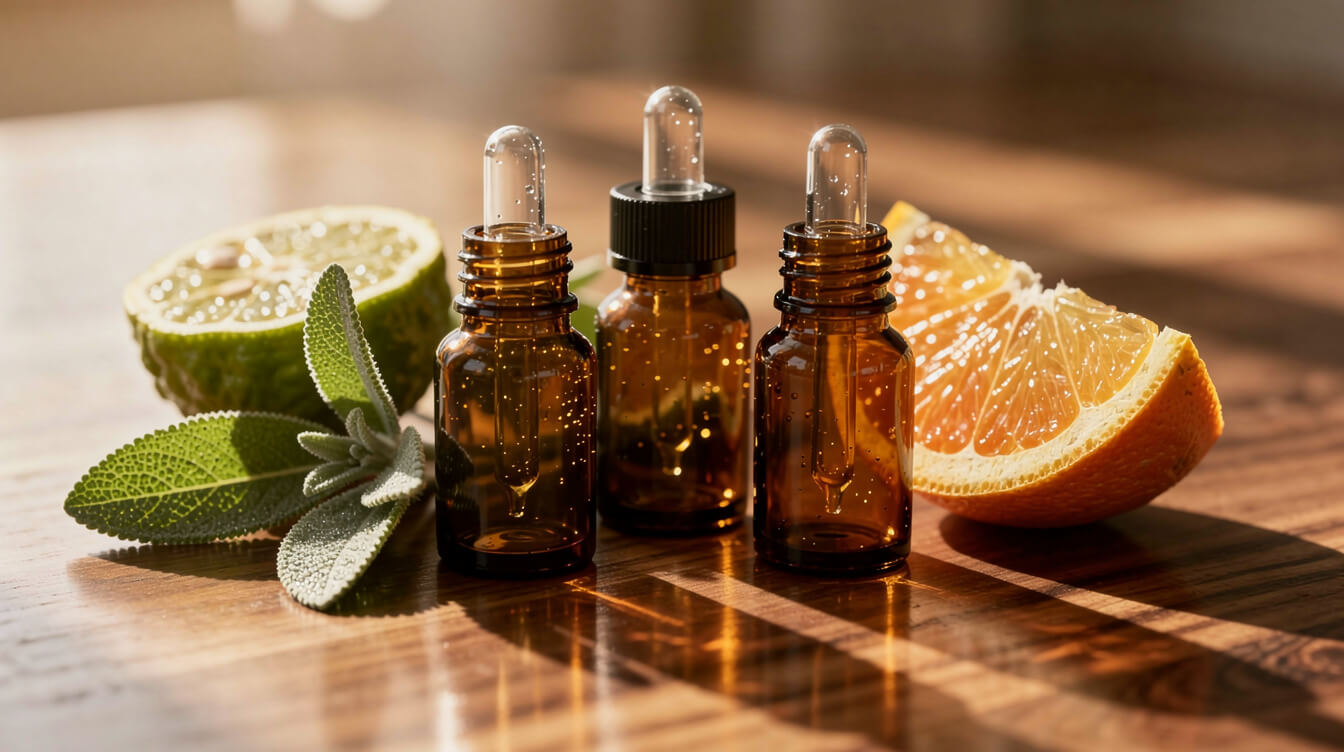
The word “relaxing” is doing a lot of work in most diffuser-oil articles. It almost always means “smells calm to me.” That is a real experience, but it is downstream of something measurable. The aromatherapy literature points to four molecules that recur across the calming-essential-oil studies more than any others: linalool (the dominant monoterpene alcohol in lavender, basil, and bergamot mint), linalyl acetate (the ester that gives lavender its softer, slightly fruity edge), alpha-pinene (the woody note in frankincense, cypress, and pine), and beta-caryophyllene (the warm-spicy sesquiterpene in clary sage, copaiba, and black pepper).
These are the molecules that show up in olfactory pathway research on calming response. They bind to receptors. They cross the blood-brain barrier. They are not interchangeable, and the proportion in a given bottle is not a marketing detail. Two bottles of lavender essential oil sitting next to each other on a shelf can have linalool to linalyl acetate ratios that are quite different (true lavender, Lavandula angustifolia, typically runs about 25 to 38 percent linalool and 25 to 47 percent linalyl acetate, while lavandin runs higher in camphor). Same shelf, same plant family, very different aromatic and felt experience. The aromatherapy community has known this for decades; the SERP for “relaxing essential oils for diffuser” has not caught up.
This matters for two reasons. First, when you build an evening blend, you want to know which molecule you are trying to deliver, because that tells you which oil to add and at what proportion. Second, the diffusion method itself filters those molecules. Heat oxidizes the more volatile alcohols. Water dilutes and shortens the aromatic curve. Ultrasonic mist breaks the larger sesquiterpene molecules into a finer cloud that disperses faster than it lands. A cold-air, waterless, no-heat nebulizer keeps the molecular profile of the bottle intact in a way the other methods do not. That is not a marketing claim; it is a function of how Bernoulli’s Principle pulls undiluted oil up a glass tube and atomizes it without breaking it apart. We cover the mechanics in our aromatherapy oils for anxiety piece, but the short version is: the same blend, in the same room, in the same hour, will feel different depending on the device underneath it.
One more piece of the puzzle before we get to the blends. Your cortisol curve. In a healthy adult, salivary cortisol peaks within about thirty to forty minutes of waking, then falls steadily through the day. It hits its lowest point somewhere between 10pm and midnight. The hour-to-hour drop is steepest between roughly 6pm and 10pm. That window is when the body is doing the work of actually transitioning into rest, and that is the window where an evening blend earns its keep. Match the oil to the moment in the curve and the Nebulizing Diffuser® becomes an environmental cue your nervous system already knows how to read.
The 6pm Wind Down Blend: Bergamot, Clary Sage, Sweet Orange
Six in the evening is still daylight in summer and just past sundown in winter. It is the transition between the workday and the home evening, and your cortisol is starting to fall but is not yet low. The goal at 6pm is not sedation; it is decompression. You want the room to soften, not flatten. The blend that delivers this best, in our customer-feedback corpus, is a citrus-and-herb combination that lifts mood while taking the edge off the day.
The ratio: 4 drops bergamot, 2 drops clary sage, 4 drops sweet orange. Ten drops total, which fills the glass reservoir on a standard Nebulizing Diffuser® without over-saturating the room.
Why this works at 6pm specifically. Bergamot is the most studied of the calming citrus oils. Its primary components, linalool and linalyl acetate, overlap with lavender chemistry, which is part of why bergamot blends so well with lavender later in the sequence. At 6pm you do not want lavender yet because lavender is genuinely sedating; you want the linalool note in a brighter, more daytime-compatible carrier, and bergamot provides exactly that. The citrus top note also lifts the mood profile of the blend, which matters when the body is still slightly cortisol-elevated.
Clary sage brings linalyl acetate at a higher proportion than almost any other essential oil (often 60 to 75 percent of the constituent profile), and it adds the warm-herbal sesquiterpene note that grounds the citrus. Two drops is enough; clary sage is one of the few oils where a heavier hand actually narrows the aromatic effect. Sweet orange rounds the blend with d-limonene, which is associated with mood lift and which provides the sweet, familiar top note most people register as “this room feels nice” before they consciously parse the herbs underneath.
Practical note on placement. The 6pm blend is best run in the room where you actually transition: the kitchen if you cook, the living room if you read, the entryway if you arrive home. Run the diffuser on a low-intermittent cycle (most nebulizers offer two minutes on, eight minutes off as a default) for thirty to forty-five minutes. You will know the dose is right when you stop noticing the smell because your olfactory system has adapted; the molecules are still working in the background even after your conscious nose has stopped registering them.
Sign Up to Get Your FREE Essential Oils e-Book Here
The 9pm Transition Blend: Lavender, Roman Chamomile, Frankincense
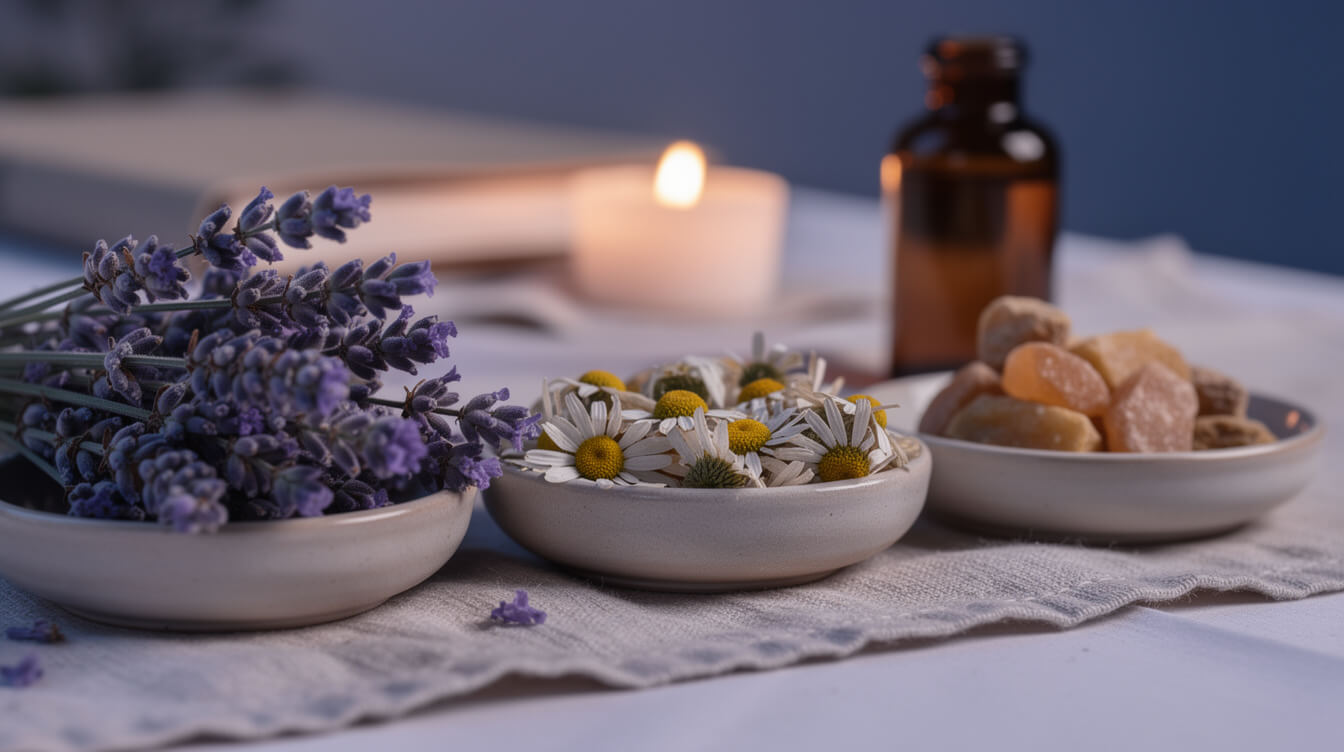
Nine in the evening is the inflection point. Cortisol has dropped meaningfully from its afternoon level, and the body is starting to release the hormones that prepare for sleep, including melatonin (which begins its evening rise in dim-light conditions around 9 to 10pm for most people). The 9pm blend is built around the molecules that the body recognizes as a “settle in” signal: linalool at a higher dose, frankincense’s alpha-pinene to ground the blend, and a touch of chamomile for sweetness without sugar.
The ratio: 5 drops lavender (true Lavandula angustifolia, not lavandin), 2 drops Roman chamomile, 3 drops frankincense. Ten drops total again. This is the blend most of our customers report as their “I notice when I forget it” blend, which is a useful diagnostic; you will often feel the absence of a working evening ritual before you can articulate the presence of one.
Why these three. True lavender at five drops delivers a sufficient linalool and linalyl acetate dose to register as a softening signal without becoming heavy. There is a well-known principle in aromatherapy that lavender is biphasic in some applications: a small amount tends to lift and a larger amount tends to sedate. Five drops in a nebulizer reservoir, distributed over an evening room, sits in the lifting-toward-sedating zone, which is exactly what 9pm wants. Our lavender essential oils for sleep guide goes deeper into the linalool-linalyl-acetate dose curve if you want the chemistry detail.
Roman chamomile (Anthemis nobilis) brings a small amount of esters and a soft, apple-sweet top note. It is a quieter oil than German chamomile (which is darker, more medicinal, and harder to blend), and at two drops it adds the sweetness that keeps the blend from going austere. Frankincense finishes the blend with alpha-pinene and a long, resinous base note that anchors the more volatile top notes; without it, the blend evaporates from the room faster than the body has time to settle into it.
Practical note on placement. This blend belongs in the room where you are slowing down. For most people that is the bedroom or a den where the lights go low. Run the nebulizer for twenty to thirty minutes, then let it cycle off. You want the room to carry the aromatic memory after the device stops, not to be saturated; over-dosing essential oils in a confined sleep space can paradoxically delay rather than support a settling response. Less is more here, and the cycling function on a quality nebulizer matters for exactly this reason.
Join Now and Get a Coupon for 10% Off!
The 11pm Deep Night Blend: Vetiver, Cedarwood, Sandalwood
Eleven at night is the deepest part of the evening curve. Cortisol is near its nadir, melatonin is rising, and the body is preparing for the first deep sleep cycle of the night, which is typically the longest. This is not a “settle in” blend; this is the blend you put on when you are already in bed, or near it, and you want the room to carry a base note that holds steady through the first sleep cycle. The molecule you are working with here is not a top-note alcohol; it is sesquiterpenes, the heavier, slower, base-note molecules that linger and that the olfactory system processes as deeply familiar and grounding.
The ratio: 3 drops vetiver, 4 drops cedarwood (Atlas or Virginian), 3 drops sandalwood. Ten drops total. This is a heavier blend by feel, even though the drop count is identical, because the molecules are larger and the aromatic curve is slower.
Vetiver is one of the most grounding essential oils in common use. Its dominant components are sesquiterpene alcohols (khusimol, vetivone) that carry an earthy, smoky-sweet note. Three drops is the right amount because vetiver is dense; more and the blend tilts heavy. Cedarwood brings cedrol, a sesquiterpene that has been studied for its effect on the parasympathetic nervous system in inhalation contexts; it pairs naturally with vetiver and adds a clean wood note that keeps the blend from going too sweet. Sandalwood (Santalum album or, more sustainably sourced these days, Santalum spicatum) finishes the blend with santalols, which are slow, soft, and creamy in profile.
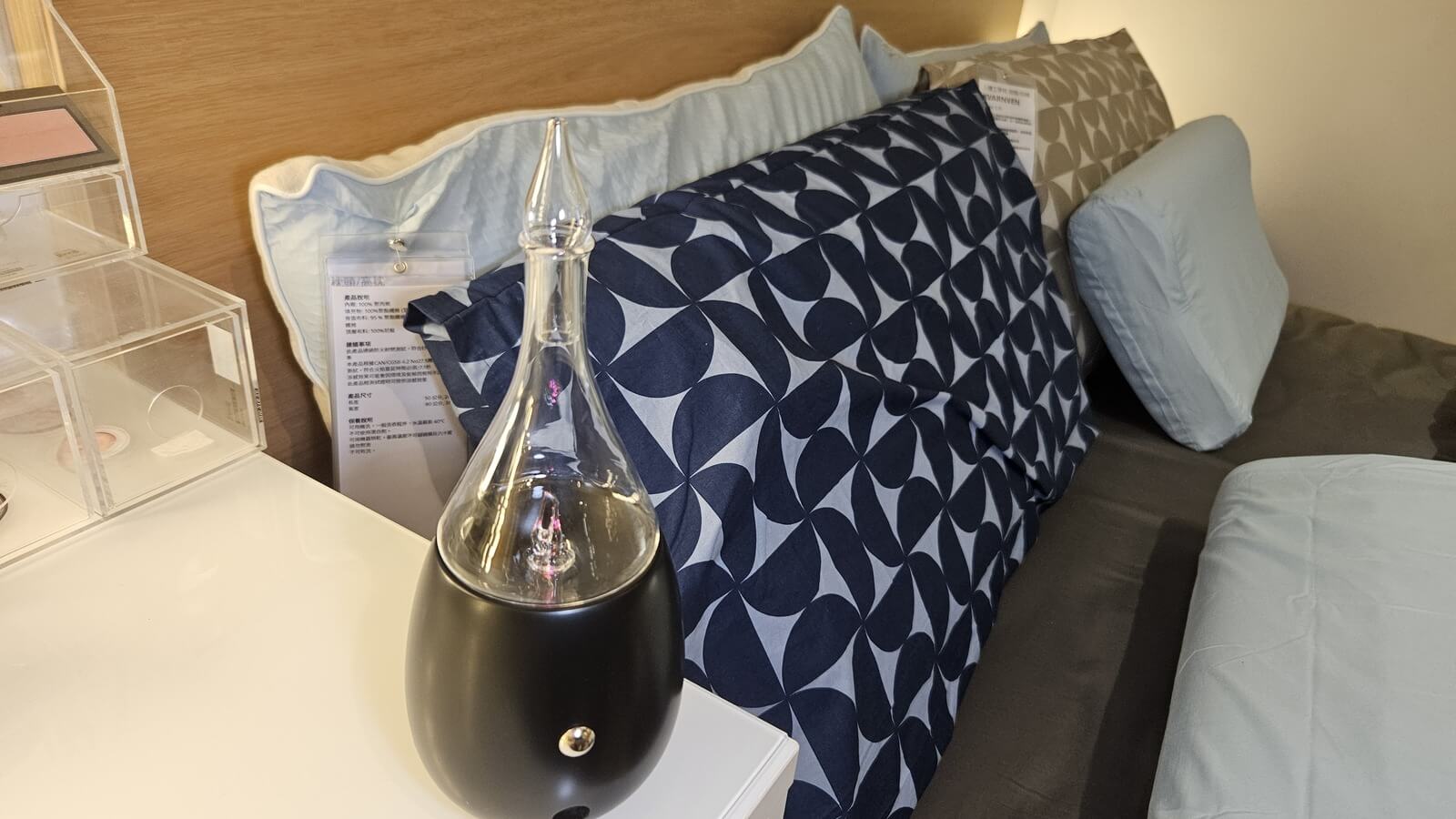
Practical note on placement. The 11pm blend is for the bedroom specifically, and it benefits from a low-volume, low-duty cycle: ten to fifteen minutes on, then off for the night. The reason has to do with how the body processes sleep-time aromatic input; once you are in the first sleep cycle, the molecules already in the room are doing the work, and additional dosing is unnecessary at best. A compact nebulizer with a quiet motor sits on the bedside table without dominating it, which is exactly what this hour wants. Many of our customers run the Serenity blend at this hour as a pre-mixed alternative; it is one of the oldest blends in our catalog precisely because the late-night sesquiterpene profile is the hardest to balance from single oils.
Sign Up to Get Your FREE
e-Book Here…
Why a Nebulizing Diffuser® Matters for These Specific Compounds
If you have read this far you have likely noticed that every blend above leans on molecules that are either highly volatile (linalool, alpha-pinene), structurally fragile under heat (linalyl acetate, beta-caryophyllene), or heavy and slow to atomize (the sesquiterpenes in vetiver, cedarwood, and sandalwood). All four categories have something in common: they are the molecules most affected by the diffusion method you choose to deliver them. This is the part of the conversation the SERP almost never has, and it is the part that decides whether the blend works.
Ultrasonic diffusers atomize a mix of essential oil and water by vibrating a small plate at high frequency. The mist looks beautiful and the device is inexpensive. The trade-off is that the oil is diluted into water at roughly a one-to-twenty ratio, and the molecules are processed through a vibration that breaks down some of the larger sesquiterpene chains. For a top-note blend at low dose, this is sometimes adequate. For a base-note blend at 11pm that depends on cedrol and santalol staying intact across an hour, it is not.
Heat diffusers use a tea light or a small electric heater to evaporate oil from a dish. They are simple. They also progressively degrade the chemistry of the oil over the burn time, with the more volatile alcohols oxidizing first. By the time the dish is dry, the aromatic profile in the room is not the profile of the bottle.
Cold-air nebulization, the mechanism the Organic Aromas Nebulizing Diffuser® uses, runs the oil up a glass tube under pressurized air and atomizes it at the top of the tube as a micro-particle cloud. No water, no heat. The molecular profile that leaves the Nebulizing Diffuser® is the molecular profile of the bottle, which means the ratios you measured in are the ratios the room receives. For the chemistry-driven evening sequence above, that match between bottle and room is the entire point. We cover the engineering side of this in our nebulizing diffuser complete guide, which is worth a read if you have not done the deeper dive on the mechanism.
One last note on the device choice: the cycle setting matters as much as the device. Continuous diffusion of a heavy 11pm blend, even from a high-fidelity nebulizer, will over-dose the room. The two-minutes-on, eight-minutes-off pattern (or similar) on a quality diffuser exists precisely to give the molecules time to settle and the olfactory system time to register without saturating. If your current diffuser does not offer interval timing, you have the wrong tool for the evening sequence we are describing, regardless of the bottles in your collection.
Building Your Own Sequence: A 7-Day Customer-Tested Trial Protocol
Three blends in a sequence is more discipline than most evenings allow, especially when you are starting out. The protocol below is the one we point new customers to when they ask “where do I start.” It is a one-week trial that lets the body learn the cues before you commit to all three windows. After seven days you will know which window matters most for your nervous system, and you can build the practice from there.
Days 1 and 2: Just the 9pm blend
Start with the 9pm transition blend (lavender, Roman chamomile, frankincense) for two evenings in a row, in the same room, at the same time. This is the keystone blend; if any single one of the three is going to register an effect quickly, it is this one. Run for twenty to thirty minutes on a cycle. Make a one-line note before bed: “tonight felt _____.”
Days 3 and 4: Add the 6pm blend
Layer in the 6pm wind-down blend (bergamot, clary sage, sweet orange) two hours earlier, in a different room from where you run the 9pm blend. Use the kitchen, the dining room, or wherever you naturally land at that hour. Forty to forty-five minutes on a low-intermittent cycle. Same one-line evening note: “tonight felt _____.” You are watching for whether the earlier blend changes the felt response to the later one.
Days 5 and 6: Add the 11pm blend
Bring in the 11pm deep-night blend (vetiver, cedarwood, sandalwood) for the bedroom. Ten to fifteen minutes on, then off for the night. Some people find this is the blend they notice most; others find it almost subliminal. Both responses are common, and both are valid. The note that night should add a second line: “and the morning felt _____.”
Day 7: All three, then decide
Run all three blends in sequence on day seven, then review the week of notes. The pattern that emerges is almost always personal: some people are 6pm responders (their nervous system needs the earlier transition), some are 9pm responders (the keystone window does most of the work), and some are 11pm responders (the base notes settle the sleep cycle in a way the lighter top-notes do not). Build your ongoing practice around the window that registered the strongest felt response, and add the other windows when you have the time and the supplies.
One closing note. The blends above are not exhaustive. There are dozens of equally valid combinations our customers have built over the years, and aromatherapy is a personal craft as much as it is a chemistry. What is consistent across the customer corpus is the principle: match the molecule to the moment in the cortisol curve, deliver it through a method that preserves the molecular profile, and use the cycle setting to dose the room without saturating it. Do those three things and “relaxing essential oils for diffuser” stops being a Google query and starts being an evening practice.
If you are building out your nebulizing kit and want a starting point for the device side of the equation, the full lineup is on the Shop the Nebulizing Diffuser® Collection page. The Smart Mobile Mini is the model most of our customers reach for when they want a compact, rechargeable unit for the bedroom specifically, which is the room where the 11pm blend earns its keep.