

Best Diffuser for Essential Oils: A Buyer’s Framework That Ranks by Mechanism, Not Price
Search “best diffuser for essential oils” and you will get a wall of ranked lists: this one has a bigger tank, that one has a softer night light, the other one is twenty dollars cheaper. Almost none of them answer the question that actually decides whether you will love the device a year from now. The most important difference between two diffusers is not price, color, or tank size. It is the mechanism: how the device turns a bottle of oil into scent in the air. Get the mechanism right and a modest unit will outperform an expensive one. Get it wrong and no amount of features will save the experience.
This guide ranks by mechanism first, on purpose. We will walk through the four ways a diffuser can disperse essential oil, what each method does to the scent and to the oil itself, and the handful of specs that genuinely predict satisfaction. By the end you will be able to judge any product on a shelf in about thirty seconds, without trusting anyone’s ranking, including ours. Organic Aromas has spent more than twelve years gathering feedback from over 200,000 customers on exactly this question, and the pattern is consistent: the people happiest with their purchase chose the right method for their space, then stopped worrying about the rest.
Why the Best Diffuser for Essential Oils Is a Mechanism Question, Not a Price One
Two diffusers can sit side by side at the same price and deliver completely different experiences, because they are doing fundamentally different things to the oil. One might heat it, one might float it on water and mist it, one might blow air across a pad, and one might atomize it directly with a stream of pressurized air. Those are not cosmetic differences. They change how strong the scent is, how true it smells to the bottle, how long a session lasts, how much cleaning you do, and even whether the beneficial aromatic compounds survive the trip into the air.
Here is the trap most buyer’s guides fall into. They treat “diffuser” as one category and then compete on accessories: lights, timers, tank capacity, app control. Those features are real, but they sit on top of the mechanism like trim on a car. A beautiful timer on a method that degrades your oil is lipstick on a compromise. So before you compare two products, you should be able to name which of the four methods each one uses. That single piece of information tells you more than the entire spec sheet. If you want the short version of the comparison that matters most, our breakdown of the nebulizing diffuser versus ultrasonic diffuser debate covers the two most popular methods head to head.
The reason mechanism beats price is simple. Essential oils are volatile, which means their aromatic molecules evaporate readily and are chemically delicate. The whole value of a pure oil is the specific, complex blend of compounds it carries. A method that preserves that blend gives you the oil as the distiller intended. A method that alters it, by adding heat, water, or selective evaporation, gives you something thinner or skewed. You paid for the oil. The mechanism decides how much of it actually reaches your nose.
The Four Ways a Diffuser Disperses Oil, and What Each Does to the Scent
There are exactly four diffusion methods on the market. Every product you will ever consider is one of these, regardless of branding. Understanding what each does to your oil is the core skill of buying well.
Heat Diffusion
A heat diffuser warms oil, sometimes mixed with water, over a candle or an electric element until it evaporates into the room. It is quiet and inexpensive. The problem is chemistry. Essential oils are built from volatile compounds that respond to temperature, and heat does not treat them all equally. The lightest, brightest top notes flash off first, and sustained warmth can oxidize and rearrange the more delicate constituents. The lavender that smelled soft and rounded in the bottle can come across flat or slightly cooked in the air. Heat is the least faithful method to the oil, which is why even reviewers who test everything rarely recommend it for serious aromatherapy.
Evaporative Diffusion
Evaporative diffusers, including reed diffusers and small fan units, move air across an oil-soaked pad, wick, or set of reeds. They are simple and travel friendly. The catch is something perfumers call note splitting. Because the light molecules evaporate faster than the heavy ones, the scent you smell in the first hour is not the scent you smell in the third. A balanced citrus and cedar blend can start as mostly citrus and finish as mostly cedar, because the bright top notes leave first. You are never getting the whole composition at once, which makes evaporative methods better for casual ambient fragrance than for the full character of a quality oil.
Ultrasonic Diffusion
Ultrasonic units are the most common diffusers sold today. A small metal plate vibrates roughly 2.4 million times per second, shattering water into a fine cool mist, with a few drops of oil floating on top of that water. They are affordable, double as a light humidifier, and run quietly. But notice what is actually leaving the device: mostly water, carrying only a trace of oil. The scent is diluted by design. There are practical side effects too. The reservoir is a warm, damp basin that can grow biofilm if it is not cleaned often, and if you fill it with tap water, the dissolved minerals get aerosolized and settle as the fine white dust people find on nearby surfaces. Ultrasonic diffusion is convenient, but it trades scent strength and purity for that convenience. If you are weighing this method specifically, our guide to the ultrasonic diffuser for essential oils goes deeper on its strengths and limits.
Nebulizing Diffusion
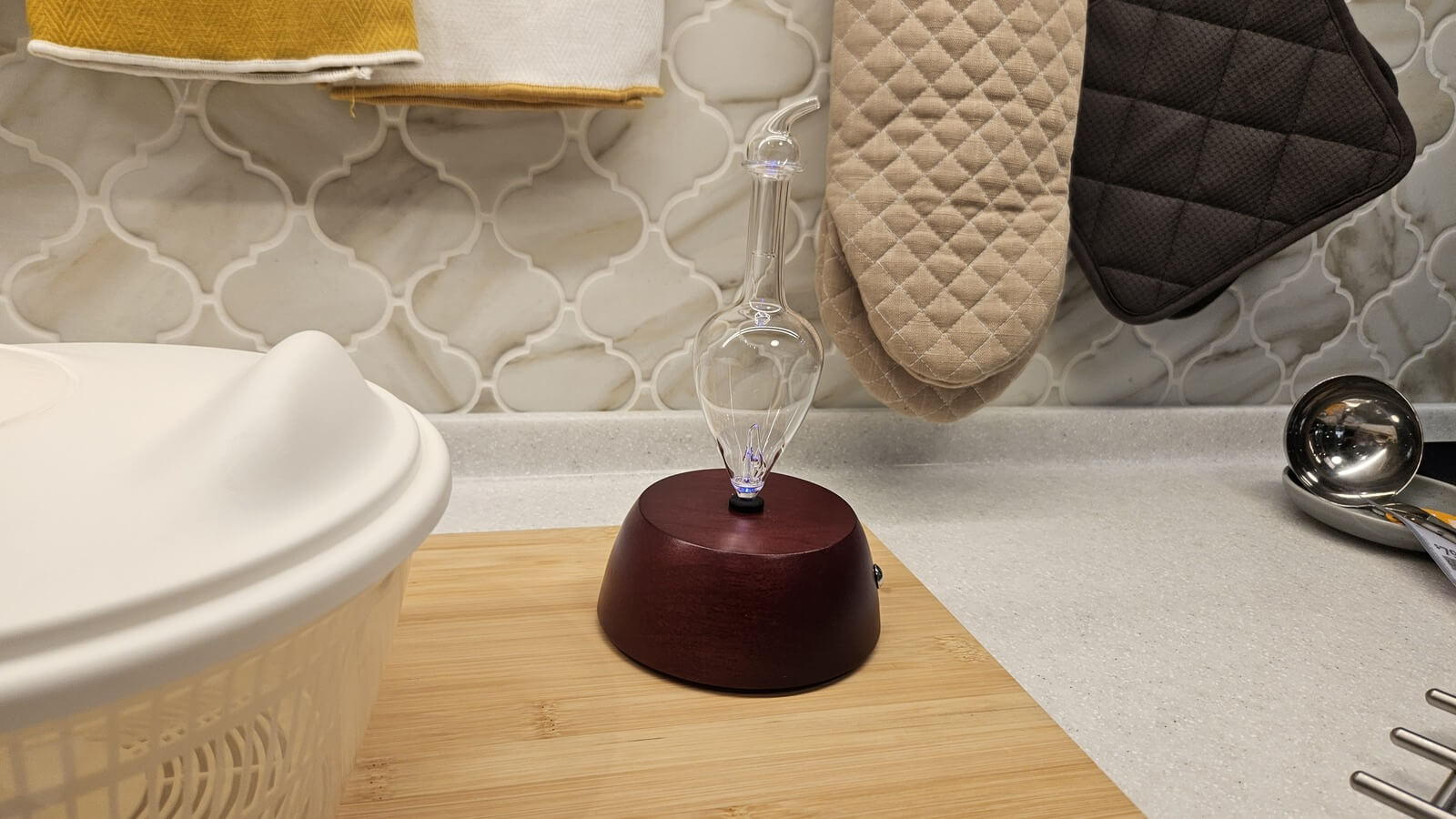
A Nebulizing Diffuser® uses no water and no heat at all. A stream of pressurized air passes over a small glass tube standing in neat essential oil, and the resulting pressure drop draws the oil up and shatters it into an ultra fine mist of pure, undiluted oil particles. Nothing is added and nothing is cooked. What enters the room is the oil exactly as it left the bottle, atomized into particles small enough to hang in the air and spread evenly. This is the method that preserves the full aromatic profile, which is why it consistently earns the strongest scent and purity feedback in our customer data. The trade is honest: because you are diffusing neat oil, a session uses more oil than a watered down mist, and you will want to run it in timed bursts rather than continuously.
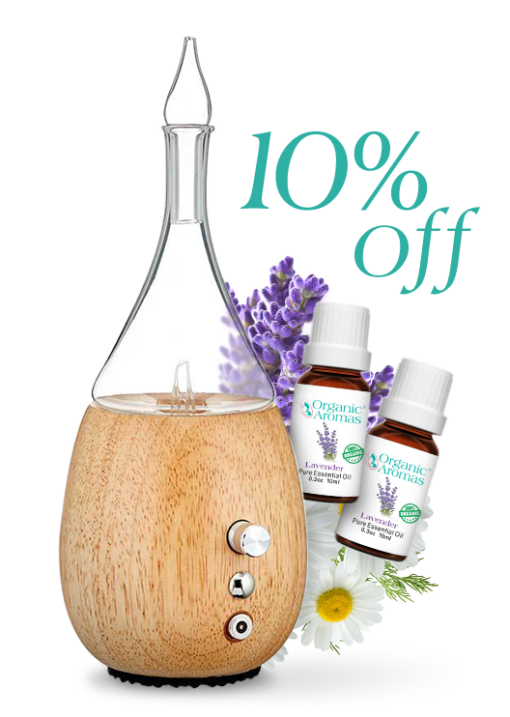
Join Now and Get a Coupon for 10% Off!
How Nebulizing Diffusion Works: Bernoulli’s Principle in Plain English
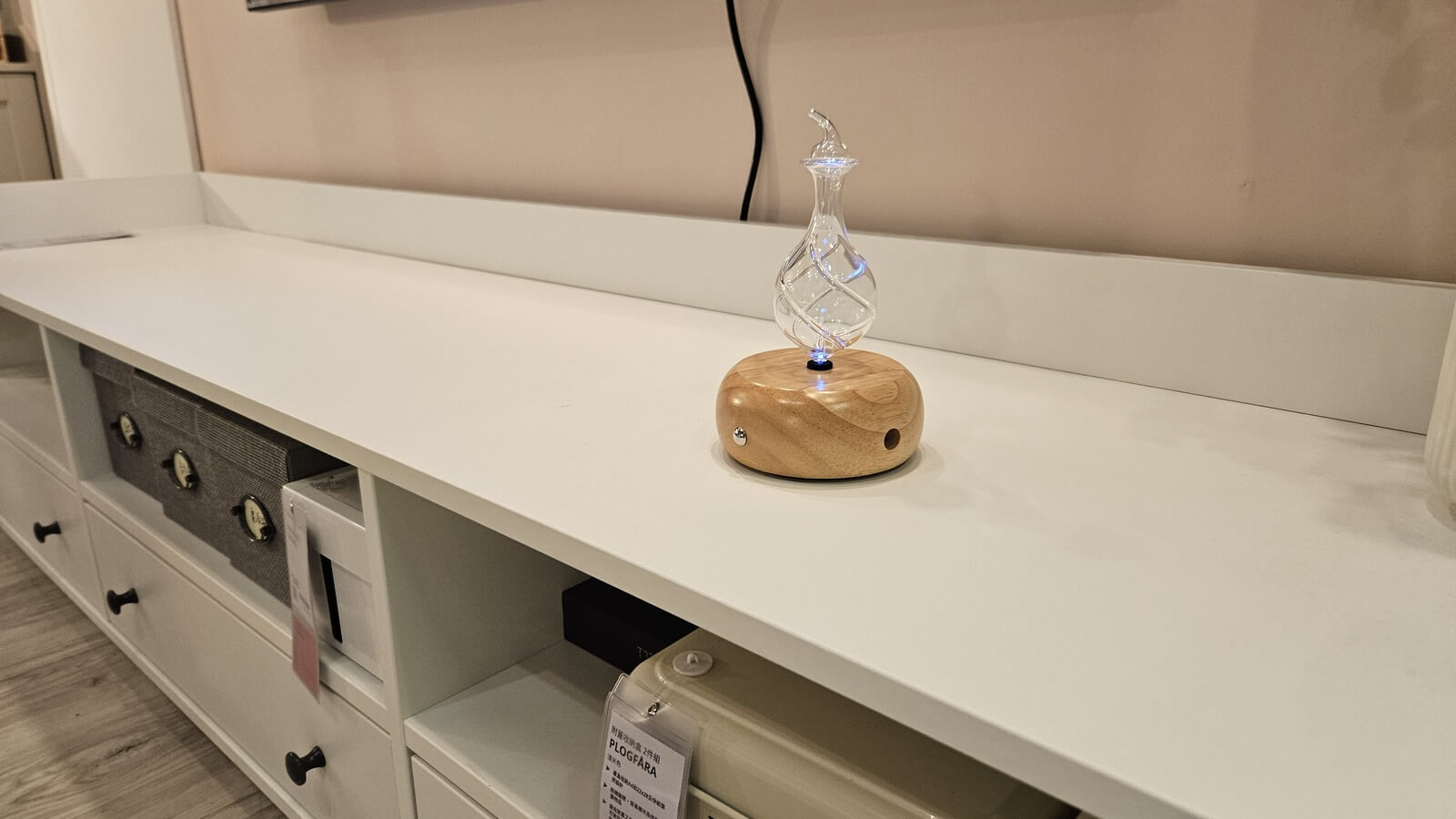
The science behind nebulizing diffusion is the same principle that lets an airplane wing generate lift and an old fashioned perfume atomizer throw a fine spray. It is called Bernoulli’s Principle, and the plain English version is this: when air moves quickly, its pressure drops. Inside a Nebulizing Diffuser®, a small air pump pushes a fast jet of air across the top of a narrow glass tube whose bottom sits in the oil. The fast air lowers the pressure at the top of the tube, and the higher pressure on the oil below pushes the liquid up the tube. At the top, the jet hits the rising oil and explodes it into a cloud of microscopic droplets.
Two things make this method special. First, there is no dilution. The droplets are pure oil, not water with a hint of oil, so the scent that reaches you is concentrated and true. Second, the droplets are extremely small, and small particles behave differently in air than large ones. A fine particle settles slowly and stays suspended far longer, so the aroma drifts and fills a room evenly instead of falling out of the air a few feet from the device. That is why a well sized nebulizer can perfume a whole living room while a misting unit only scents the air immediately around it. We unpack the airflow in more detail in our explainer on the waterless diffuser and Bernoulli’s Principle.
There is also a build advantage that follows directly from the method. Because no water touches the oil, a nebulizer can be made from materials that suit pure oil rather than a wet reservoir: real wood and medical grade glass instead of the plastic tank an ultrasonic unit needs. That matters for longevity, because undiluted essential oils are powerful solvents that can cloud and degrade cheap plastic over time. The mechanism quietly drives the material choice, and the material choice drives how long the device lasts.
The Five Specs That Actually Predict Satisfaction
Once you have settled the mechanism, only a few specs genuinely move the needle. Most of what gets printed on the box is noise. These five are signal.
Build material. Pure essential oils slowly attack soft plastics. A unit that holds neat oil should use glass and wood for the parts that touch oil, both for durability and because those materials do not impart their own smell. Plastic reservoirs are acceptable for water based misters but a liability for undiluted oil.
Noise level. The point of aromatherapy is calm, so a buzzing fan or a gurgling pump undoes the purpose. Look for units described as whisper quiet, and be skeptical of cheap nebulizers that use a loud aquarium style pump. A good Nebulizing Diffuser® runs at a low, easy to ignore hum.
Maintenance reality. Ask what cleaning actually looks like. Water based units need frequent rinsing to prevent biofilm, plus descaling if you use tap water. A waterless unit skips all of that and is cleaned with a few drops of high proof alcohol to clear residue from the glass. Over a year, that difference is dozens of chores.
Timed, intermittent operation. This spec is underrated. Running a strong diffuser in cycles, for example a couple of minutes on followed by a rest, does two useful things. It stretches your oil, and it works with your sense of smell rather than against it. Your nose adapts quickly to a constant scent and stops registering it, a normal effect called olfactory adaptation, so intermittent bursts keep the aroma noticeable while using less oil.
Oil compatibility and throughput. Be honest with yourself about how you will use it. Nebulizers diffuse neat oil, so they go through oil faster per minute than a watered down mist, but you also run them in short bursts. If you mostly want light background fragrance for many hours, a different method may suit you. If you want true, full strength aroma on demand, the throughput is the price of that strength.
Sign Up to Get Your FREE
e-Book Here…
Matching the Best Diffuser for Essential Oils to Your Room and Routine

The best diffuser for essential oils is the one that fits the room you actually have and the routine you will actually keep. Start with the space. A small bedroom or a desk corner is forgiving, and almost any method will register because the source is never far away. A large open plan living room is a different problem. There, output and particle size decide everything, and a low output mister will leave the far corners untouched while the unit hovers in its own little scent bubble. If you are filling a big space, sizing matters, and our piece on choosing an essential oil diffuser for a large room walks through the coverage math.
Then match the method to your routine. If you want a quick, powerful lift before guests arrive or to mark the start of a wind down ritual, nebulizing in short bursts is ideal, because it reaches full strength almost instantly and shuts off cleanly. If you want gentle, all night humidity with a faint scent, an ultrasonic unit leans that way, with the maintenance trade off noted above. Knowing your own pattern, brief and intense versus long and faint, points you straight to the right mechanism without any ranking required.
For most people who care about the scent itself, who bought quality oils and want to smell them honestly, a waterless nebulizer is the natural fit. It is worth seeing how the different models compare, and our roundup of the best nebulizing diffuser picks lays out the options by setting and style. If you are ready to choose one, the Raindrop Smart Nebulizing Diffuser® pairs the pure, waterless method described above with app control and a rechargeable battery, so you can place it anywhere without hunting for an outlet. It is the most direct way to put everything in this guide into practice.
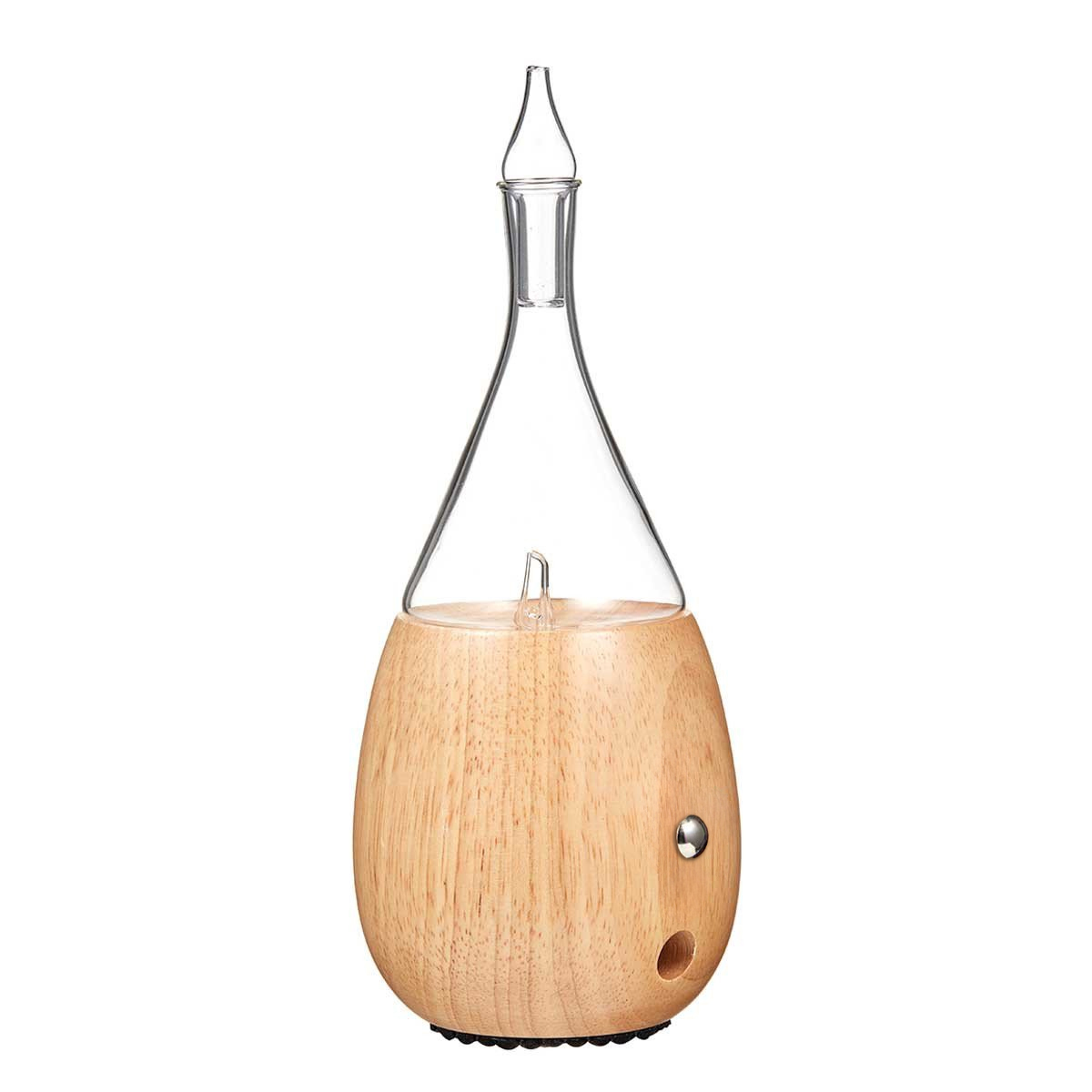
Smell Your Oils the Way They Were Made
No water, no heat, no plastic tank. Pure undiluted essential oil, atomized by Bernoulli’s Principle into a whisper quiet mist. Handcrafted from real wood and medical grade glass.
Frequently Asked Questions
Is a more expensive diffuser always better? No. Price tracks features and materials, not necessarily the right method for you. A well built nebulizer and a cheap one use the same principle, and a pricey ultrasonic unit is still an ultrasonic unit. Decide the mechanism first, then let your budget choose among the good options within it.
Which method gives the strongest scent? Nebulizing diffusion, by a clear margin, because it diffuses pure oil rather than oil diluted in water or skewed by heat. That strength is why it is run in short bursts rather than continuously.
Do I need to add water to a Nebulizing Diffuser®? No. A nebulizer is waterless by design. You add essential oil directly to the glass reservoir, and the air stream does the rest. No water means no mineral dust, no biofilm, and no daily rinsing.
Why does my ultrasonic diffuser leave white dust? That dust is the dissolved minerals in tap water, aerosolized along with the mist and settling on nearby surfaces. Distilled water reduces it. A waterless method avoids it entirely because there is no water to carry minerals.
Can I use any essential oil in a nebulizer? Use pure, undiluted essential oils, and it is worth learning how to judge essential oil purity before you buy. Avoid oils pre blended with carrier oils, because carriers are heavier and can clog the fine glass tube. For nebulizing, neat single oils and pure blends are what you want, which is also why you never need a carrier oil for diffusing in the first place.
Is nebulizing diffusion noisy? A quality unit is a soft, low hum from the small air pump, easy to ignore. Bargain nebulizers that use loud aquarium pumps are the exception, which is why noise level is one of the five specs worth checking.

Join Our Exclusive Member Club to get Big Discounts!
Final Thoughts: Buy the Mechanism, Not the Marketing
The next time you compare two diffusers, skip the photos and the star ratings for a moment and ask one question: how does it turn oil into scent? Heat cooks the oil. Evaporation splits it. Ultrasonic dilutes it. Nebulizing delivers it pure. Once you can name the method, the rest of the spec sheet falls into place, and the so called best diffuser for essential oils stops being a matter of opinion and becomes a matter of fit. Choose the mechanism that respects your oil and suits your space, and a quiet, well made device will reward you every single day. After more than twelve years and 200,000 customers, that is the one piece of advice that has never changed.