

What Scents Are Best for Your Diffuser? A Pure-Oil Guide by Mood
Choosing scents for a diffuser feels like it should be the easy part — pick a smell you like, add a few drops, done. Yet plenty of people do exactly that and end up underwhelmed: the aroma is thin, it fades within minutes, or it never really fills the room. The problem is almost never the oil you chose. It is the pairing of the right scents for a diffuser with a diffusion method that actually carries them into the air intact — and a little know-how about which aromas suit which mood, room, and season.
This guide is organized the way you actually live: by mood. You will find pure-essential-oil recommendations for winding down, focusing, waking up, freshening a space, and cozying up in cool weather — plus the perfumer’s framework for building a scent that holds its shape from the first minute to the last. First, though, the one detail that decides whether any of it works.
Why Scents for Your Diffuser Fall Flat — and How to Fix It
A single bottle of lavender is not one smell. It holds more than a hundred volatile aromatic compounds, each with its own molecular weight and evaporation speed. Bright top-note molecules such as linalool flash into the air within the first couple of minutes. Heavier base-note molecules such as the cedrol in cedarwood can linger for hours. Whether you smell the scent the distiller intended depends entirely on how your device releases those molecules.
Most diffusers quietly sabotage the top notes. An ultrasonic diffuser cracks oil across a vibrating disc inside a tank of water, so the aroma is diluted before it ever leaves the machine and the most fragile molecules are shaken apart on the way out — softer and shorter than the bottle promised. A reed diffuser relies on capillary action, which favors the lightest molecules and leaves heavier base notes pooling in the jar. A heat or candle diffuser literally scorches the lighter compounds before they can rise. If your diffuser scents keep smelling flat, this is usually why.
A Nebulizing Diffuser® takes a different physical path. Using Bernoulli’s principle — the same physics that draws fuel into a carburetor — it pulls undiluted oil up a thin glass tube and atomizes it into micron-scale droplets at room temperature. No water, no heat, no carrier solvent. The linalool, the limonene, the cedrol, and everything in between leave the glass in the proportion the distiller intended, which is the only environment where a carefully chosen scent reaches the room the way you imagined it. If you want the full physics, our comparison of the Nebulizing Diffuser® versus an ultrasonic diffuser breaks it down side by side.
The takeaway before we get to the scents themselves: match your oil to a delivery method that preserves it. Otherwise you are judging a beautiful aroma by a muffled recording of it.
Pure Essential Oil vs. Synthetic Fragrance Oil: What You’re Actually Smelling

Sign Up to Get Your FREE Essential Oils e-Book Here
Search for scents for a diffuser and most of the results are “fragrance oils” or “aroma oils.” It is worth knowing what that label usually means. A pure essential oil is the distilled or cold-pressed volatile fraction of a real plant — steam-distilled lavender, expressed sweet orange peel, resin-tapped frankincense. A fragrance oil is a synthetic aroma blended in a lab to smell like something, often diluted in a carrier such as dipropylene glycol. Both can smell pleasant. Only one carries the actual aromatic chemistry of the plant.
This matters more than usual when your device is a nebulizer. Because a Nebulizing Diffuser® atomizes oil neat, with no water to buffer it, it wants a clean, pure oil that will not gum the glass or leave a synthetic residue. It also rewards quality: the difference between a cheap oil and a well-distilled one is obvious when every molecule reaches your nose undiluted. If you are unsure what you are buying, our guide to the best aroma oil for a diffuser walks through how to tell pure oil from a synthetic blend.
There is a common complaint that essential oils smell “boring” or “one-note” next to a good candle. Nine times out of ten that is a diffusion-and-blending problem, not a limitation of the oils. A lone drop of lavender through a watered-down machine really is one-note. The same lavender, atomized pure and layered with a citrus top note and a woody base, is as complex and transportive as any luxury candle — and it is that layering, covered below, that closes the gap.
The Best Diffuser Scents by Mood

Aroma is deeply tied to mood and memory, so the most useful way to choose is to start with how you want a room to feel. Here are pure-oil recommendations by mood, with a note on why each works. Treat these as a starting palette, not a rulebook — your nose is the final authority.
Calm & Restful (Evening Wind-Down)
For a soft, settled atmosphere at the end of the day, reach for oils rich in the gentle esters and alcohols that read as “soothing.” Lavender is the classic for good reason: a well-grown Lavandula angustifolia can run 25–38% linalyl acetate and 25–45% linalool, the pairing most people associate with relaxation. Round it out with the apple-soft warmth of Roman chamomile, grounding cedarwood, or a whisper of bergamot for lift.
- Lavender + Cedarwood — floral softness anchored by dry wood; a reliable bedroom scent.
- Bergamot + Roman Chamomile — a gentle citrus-floral that feels like exhaling.
- Sweet Marjoram + Lavender — herbaceous and enveloping for a slow, quiet evening.
These create a calming, restful ambiance rather than treating anything — think of them as setting a mood, not a remedy. Keep the dose light in a bedroom; a pure nebulized aroma travels far on very little oil.
Focus & Clarity (Work & Study)
To make a workspace feel sharp and awake, lean on crisp, cooling, camphoraceous notes. Rosemary is the standout — specifically a 1,8-cineole-rich chemotype, prized for its bright, clearing quality. Peppermint adds a cool snap of menthol, and lemon keeps the whole thing clean and unfussy.
- Rosemary (cineole) + Lemon — clean, energizing, and easy to live with for long stretches.
- Peppermint + Sweet Orange — a cool-bright combination that keeps a room feeling fresh.
- Basil + Grapefruit — herbaceous lift for an afternoon slump.
Bright & Uplifting (Morning & Daytime)
Citrus oils are the fastest way to make a space feel sunlit. They are dominated by limonene, the compound behind that instantly recognizable just-peeled brightness. Because citrus notes are volatile and fade first, they are the perfect job for a nebulizer that delivers them at full strength.
- Sweet Orange + Ylang Ylang — cheerful citrus with an exotic floral heart.
- Grapefruit + Bergamot — sparkling, slightly bitter, wonderfully fresh.
- Lemon + Lime + a drop of Peppermint — a wake-up trio for the kitchen.
Fresh & Clean (Everyday Living Spaces)
For a space that simply smells clean and cared-for, the green, herbaceous, and lightly medicinal oils do the work. Eucalyptus and tea tree bring a spa-like crispness, lemongrass adds a bright green edge, and fir or pine lend a fresh, outdoors feeling.
- Eucalyptus + Lemon — the definitive “freshly cleaned” scent.
- Lemongrass + Tea Tree — green and crisp for a kitchen or entryway.
- Siberian Fir + Peppermint — cool, foresty, and invigorating.
Warm & Cozy (Cool-Weather Comfort)
When the light gets low, warm resins, woods, and gentle spices make a room feel like a wrapped blanket. Frankincense and sandalwood bring a soft, meditative depth; a touch of vanilla or a single drop of cinnamon or clove adds sweetness and spice. Warming spice oils are potent, so use them sparingly — one drop of cinnamon can carry a whole blend.
- Frankincense + Sweet Orange — resinous warmth lifted by citrus; a holiday favorite.
- Sandalwood + Vanilla — creamy, grounding, and quietly luxurious.
- Cedarwood + a drop of Clove — woodsmoke and spice for a cold night in.
Hosting? Warm and bright scents both shine when guests are over. Our roundup of diffuser blends for entertaining collects crowd-pleasers that read as welcoming without overwhelming a dinner table.
How to Build a Complex Scent From Pure Oils: the Note Pyramid

Join Now and Get a Coupon for 10% Off!
The reason a good candle smells “complex” and a single diffused oil can smell flat comes down to structure. Perfumers build scents in three tiers — top, middle, and base notes — and you can borrow the same framework to make any diffuser scent feel layered and alive.
- Top notes (the first impression, gone in minutes): citrus, peppermint, eucalyptus, lemongrass.
- Middle notes (the heart, the body of the scent): lavender, rosemary, geranium, chamomile, ylang ylang.
- Base notes (the lingering foundation): cedarwood, sandalwood, frankincense, patchouli, vetiver.
A well-balanced blend leans on the middle, opens with a top, and is anchored by a base. A reliable starting ratio is roughly 3 parts middle, 2 parts top, 1 part base — for a small nebulizing bottle that might be 6 drops lavender, 4 drops sweet orange, and 2 drops cedarwood. The base notes also act as fixatives, slowing the evaporation of the lighter oils so the whole scent lasts longer. For a deeper library of tested combinations, our guide to essential oil blends for a diffuser lays out fifteen ratios built specifically for waterless diffusion.
Because a nebulizer atomizes neat oil, it showcases this structure better than any watered-down method — you actually smell the top note arrive, the heart settle, and the base linger. A pure-oil device such as the Raindrop Smart Nebulizing Diffuser® lets you dial the intensity and run it in short bursts, which is exactly how you keep a layered blend from collapsing into one muddy note.
Matching Scents to the Room and the Season
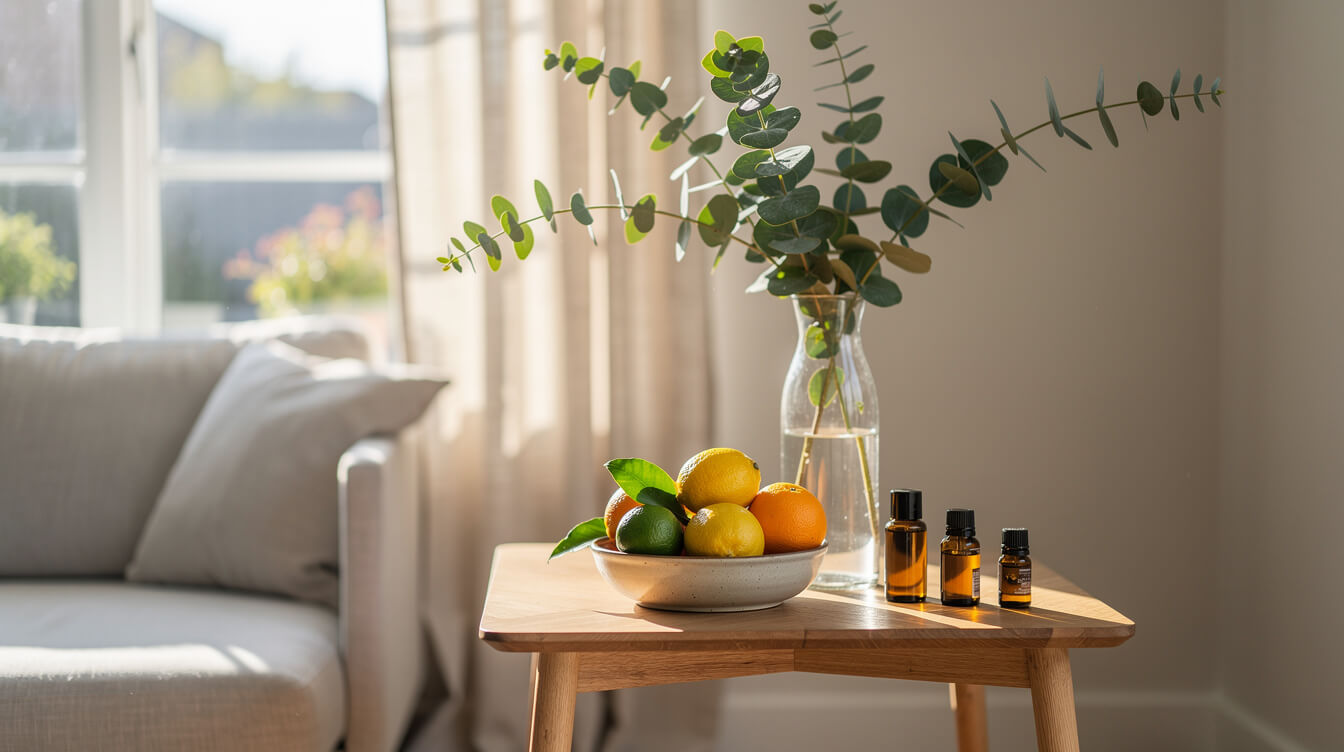
The same oil can feel perfect in one room and wrong in another. A little intentionality about place and time of year makes your scent choices land.
By Room
- Bedroom: calm and restful — lavender, cedarwood, chamomile. Keep the dose gentle.
- Living room: welcoming and balanced — sweet orange with frankincense, or a soft floral-wood blend.
- Kitchen: fresh and clean — lemon, eucalyptus, lemongrass to cut cooking odors.
- Bathroom / spa corner: crisp and spa-like — eucalyptus, peppermint, tea tree.
- Entryway / home office: bright and focusing — rosemary, citrus, peppermint.
By Season
Warm-weather months call for the light, cooling end of the spectrum — citrus, mint, and green herbs that feel like an open window. As the temperature drops, the palette naturally shifts toward resins, woods, and warm spices that make a room feel enclosed and cozy. Rotating your scents with the seasons keeps them feeling fresh rather than wallpaper.
Room size matters too. A pure nebulized aroma covers a surprising amount of space on very little oil, so a large open-plan room may need only a few extra seconds of run time rather than a heavier hand with the bottle. If you are still choosing hardware, our cold-air diffuser buyer’s guide covers coverage and materials in detail, and the ultrasonic diffuser guide explains where water-based units still make sense.
Getting the Most From Your Diffuser Scents: Dosing, Rotation & Care

Join Our Exclusive Member Club to get Big Discounts!
A few habits separate a room that always smells inviting from one that smells of nothing (or too much). They are simple, and they matter more than which oil you own.
How many drops of oil should I use?
With a Nebulizing Diffuser® you need far less than with a water-based unit — the oil is delivered pure, so intensity comes from run time, not volume. Many people fill the glass reservoir with 15–25 drops and then control strength with the diffuser’s dial and timer rather than topping up constantly.
Why can’t I smell my diffuser anymore?
That is olfactory adaptation — your nose stops registering a constant scent within minutes to protect itself from overload. The fix is not more oil; it is pulsing. Run the diffuser for a few minutes, let it rest, then run it again. Intermittent bursts keep the aroma perceptible and stretch your oil dramatically. Rotating between two or three scents across the week has the same anti-fatigue effect.
Can I mix different scents in a diffuser?
Absolutely — that is the whole point of the note pyramid above. Start with two or three oils, follow the top-middle-base structure, and adjust by the drop. Just keep potent oils like cinnamon, clove, and peppermint to a single drop so they do not steamroll the blend.
Finally, clean the glass. Old oil residue oxidizes and muddies every new scent you run, so the aroma slowly turns sour and dull. A quick rinse between oil changes keeps each blend crisp — our walkthrough on how to clean an essential oil diffuser covers the waterless method most guides skip.
Final Thoughts: Build a Scent Wardrobe, Not a Single Bottle
The best scents for a diffuser are not a single “correct” oil — they are a small, well-chosen wardrobe you reach into by mood, room, and season. A few calming oils for the evening, a bright citrus or two for the morning, something fresh for everyday, and a warm resin for cold nights will cover almost any moment. Pair that palette with a method that delivers each aroma pure and intact, layer them with the note pyramid, and pulse rather than blast — and your home will smell exactly the way you pictured it, right down to the last note.
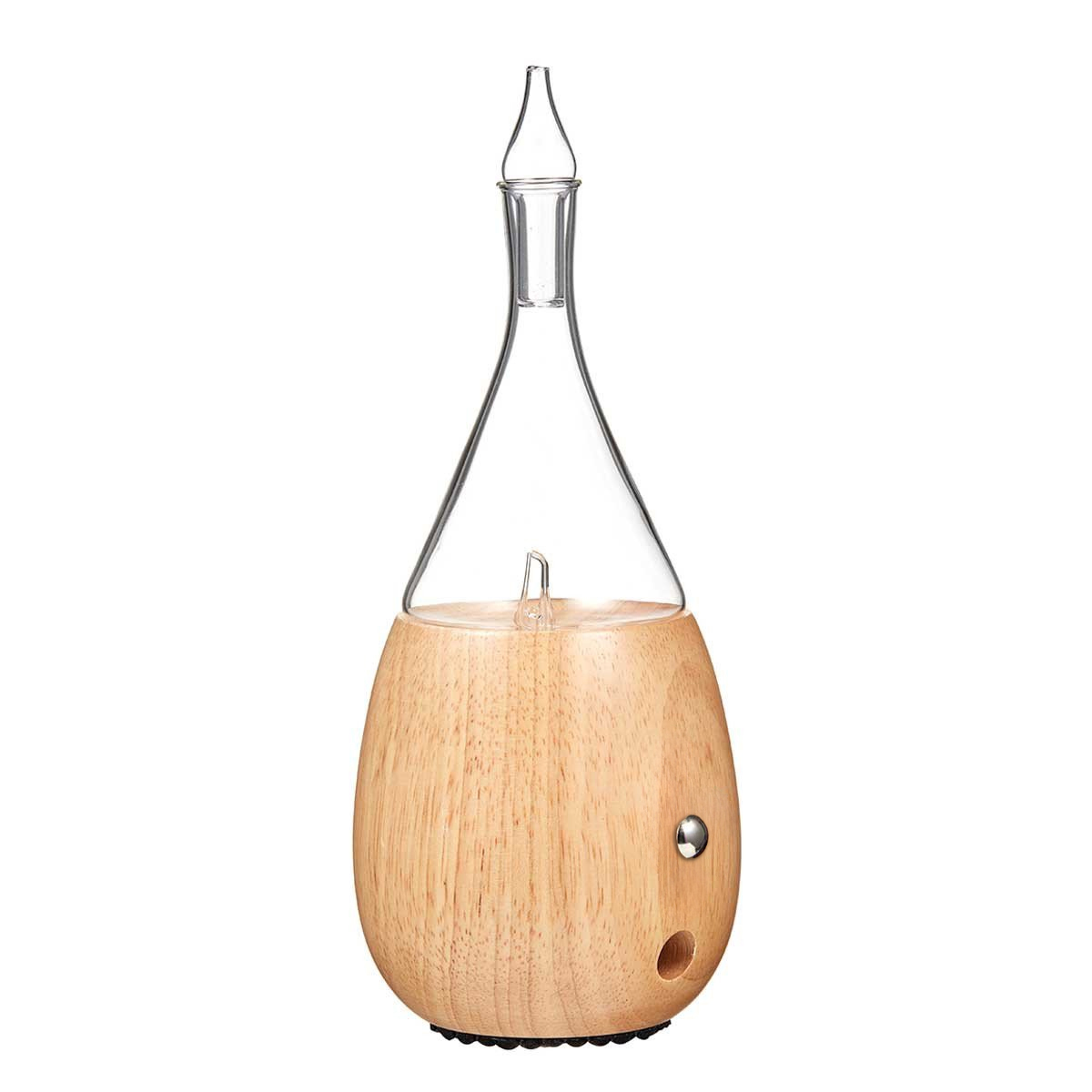
Diffuse Every Scent the Way It Was Meant to Smell
The Raindrop – Smart Nebulizing Diffuser® atomizes pure essential oil with no water and no heat — so every top, middle, and base note reaches the room intact. Handcrafted wood and medical-grade Pyrex glass, whisper-quiet, and app-controlled.