

Ylang Ylang Essential Oil Benefits: The Complete Guide to Nature’s Most Alluring Oil
Few essential oils command attention the way ylang ylang essential oil does. Its benefits span the emotional, the sensory, and the deeply personal — a warm, intensely floral oil that has appeared in Chanel No. 5, traditional Indonesian wedding rituals, and aromatherapy practices stretching back centuries. The ylang ylang essential oil benefits that practitioners have documented over the years are specific, grounded in chemistry, and — when understood properly — transformative in the way you use it.
What most guides on this topic skip is the mechanism. Why does ylang ylang create the effects it does? Which compounds drive which benefits? And why does the delivery method matter so much? This complete guide answers all of it — including the one counterintuitive dosing rule that every ylang ylang user needs to know before they reach for the bottle.
What Is Ylang Ylang Essential Oil? From Cananga Tree to Your Diffuser
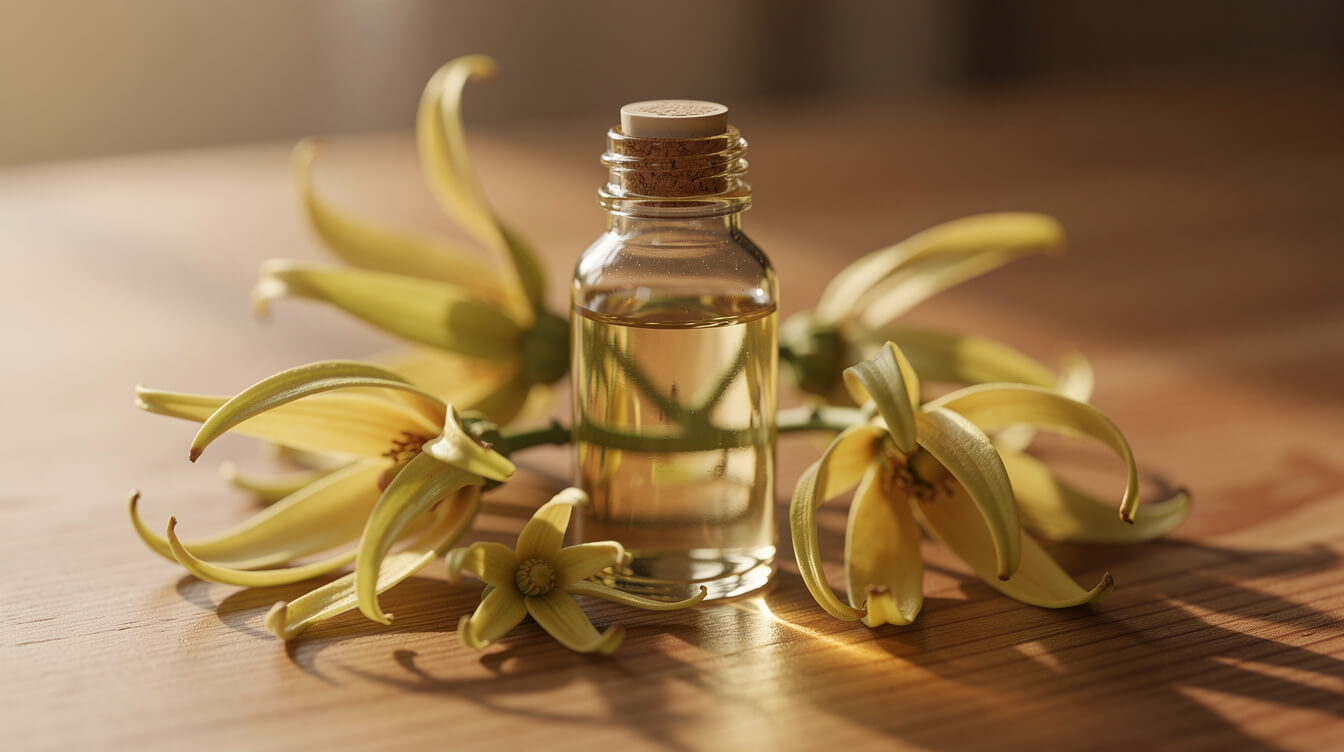
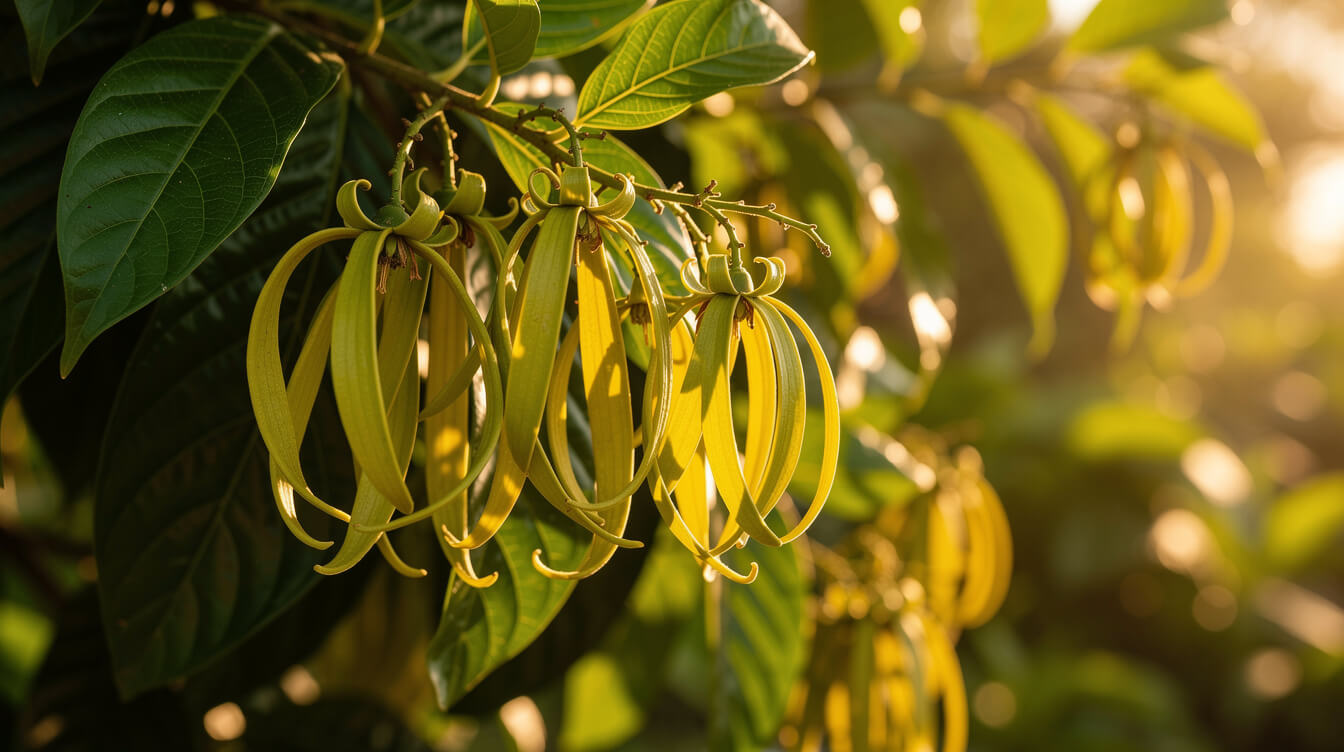
Ylang ylang essential oil is steam-distilled from the freshly harvested blossoms of Cananga odorata, a fast-growing tropical tree native to the Philippines, Indonesia, Malaysia, and Madagascar. The name itself — “ylang ylang” — is Tagalog for “flower of flowers,” a name that telegraphs the oil’s intensity before you’ve even opened the bottle. The trees bloom year-round in humid equatorial climates, with flowers picked before dawn when aromatic compound concentration peaks.
The oil plays a starring role in some of the world’s most iconic fragrances — Chanel No. 5 is the most famous example, where ylang ylang contributes warm, powdery florals alongside rose and jasmine. In the Comoros Islands, ylang ylang cultivation drives the national economy. The islands produce roughly 50–70% of the world’s ylang ylang oil supply, with Nosy Bé in Madagascar providing much of the remainder.
A note on grading — the detail most guides omit: Ylang ylang undergoes fractional distillation, meaning the extraction is interrupted at timed intervals to collect distinct aromatic fractions. “Extra” grade (first 30–90 minutes of distillation) is the most prized fraction for perfumery, with the lightest molecules and highest concentration of linalool. Grades I, II, and III follow in sequence, each progressively heavier and less floral. “Complete” grade — collected across the entire uninterrupted distillation — captures all fractions together and is generally considered the best choice for therapeutic aromatherapy, because it preserves the full spectrum of beneficial compounds in their natural ratio.
The distinction between grades matters when you’re buying oil specifically for its wellness benefits, not just fragrance. If you see “Ylang Ylang Complete” on a label, you’re getting the whole chemical story.
The Chemistry Behind Ylang Ylang Essential Oil Benefits
Ylang ylang’s reputation as a calming, mood-lifting, and sensual oil isn’t folklore — it’s chemistry. Understanding the key compounds in ylang ylang essential oil explains why it works, and how to use it most effectively. Here are the primary constituents that drive the benefits:
Linalool (approximately 15–20%) — The same calming monoterpene alcohol found in lavender, linalool in ylang ylang appears in a markedly different context. Surrounded by heavier, more exotic-smelling esters and sesquiterpenes, ylang ylang’s linalool contributes to relaxation without the clean, herbaceous character of lavender. Research on linalool has explored its interaction with GABA receptor pathways, which are involved in the nervous system’s calming response. Published in Phytomedicine and Frontiers in Behavioral Neuroscience, multiple studies have demonstrated linalool’s ability to modulate nervous system activity in animal models.
Geranyl acetate (approximately 12–15%) — A fruity-floral ester that contributes to ylang ylang’s characteristic sweetness. Geranyl acetate has been studied for its own calming properties and appears prominently in several essential oils prized for emotional support.
Benzyl benzoate (approximately 10–15%) — This ester is one of ylang ylang’s most distinctive markers. Warm, balsamic, and deeply floral, benzyl benzoate contributes to the oil’s characteristic heaviness and has been studied for its sedative potential in low-dose inhalation contexts.
Farnesol (approximately 8–12%) — A sesquiterpene alcohol with noted anti-inflammatory properties in research literature. Farnesol is a marker of ylang ylang quality — it concentrates in the heavier fractions and is therefore most abundant in Complete-grade oil.
β-Caryophyllene (approximately 5–8%) — Shared with black pepper, copaiba, and clove essential oils, β-caryophyllene is the only essential oil compound known to directly interact with the body’s endocannabinoid system (specifically, CB2 receptors) via inhalation. A growing body of research, including a 2021 study in Pharmaceuticals, highlights its broad wellness potential.
Together, these compounds create ylang ylang’s complex, layered effect — and they explain why delivery method matters as much as oil quality. More on that when we get to diffusion.
Sign Up to Get Your FREE
e-Book Here…
Emotional Wellness Benefits of Ylang Ylang Essential Oil
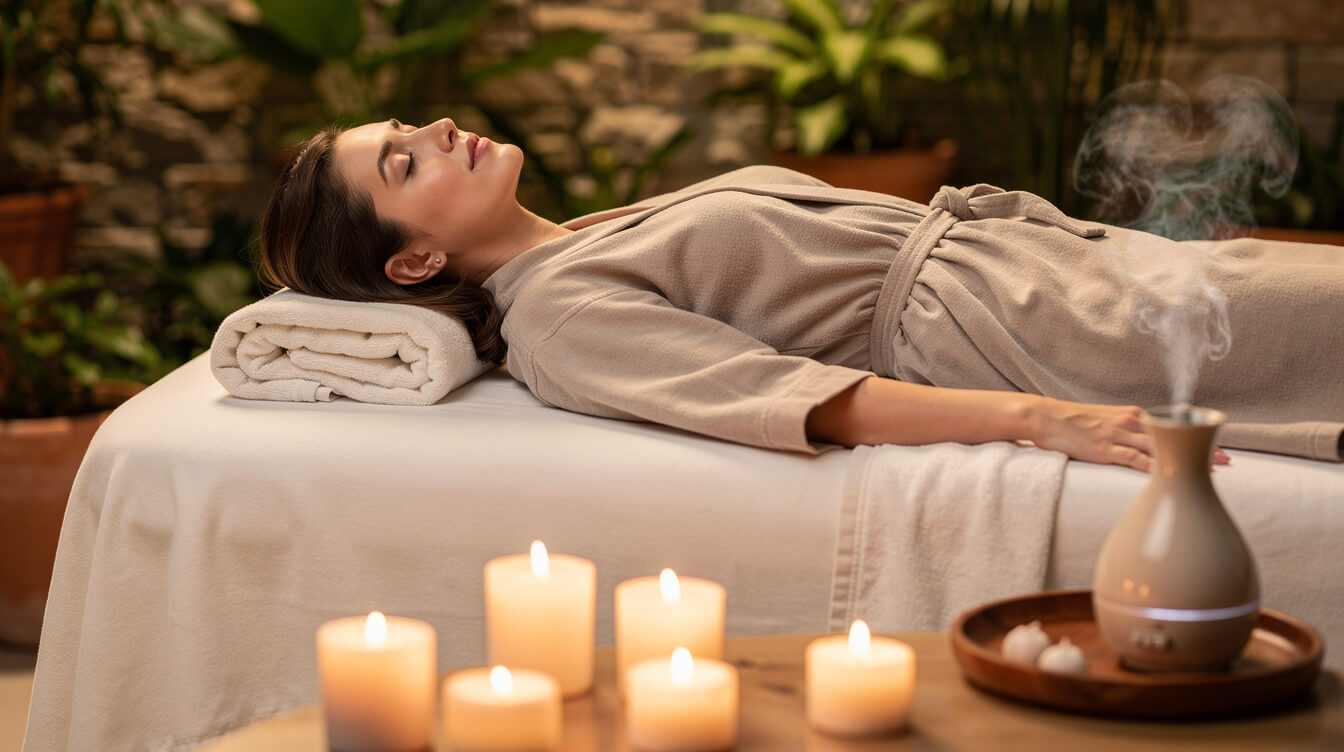
The emotional benefits of ylang ylang essential oil are its most celebrated — and they follow directly from the chemistry above. When inhaled, volatile compounds like linalool, geranyl acetate, and benzyl benzoate interact with olfactory receptors, which connect directly to the limbic system, the brain region governing mood, emotional memory, and arousal. This pathway is why aromatherapy works at all, and ylang ylang engages it with unusual richness.
Creating a calming atmosphere: Ylang ylang is widely used to support relaxation and create environments that feel unhurried and calm. Its compound profile — particularly linalool and benzyl benzoate — may help shift the body toward a more settled, less reactive state. If you find yourself carrying tension at the end of the day, ylang ylang diffused for 30–40 minutes in your living or bedroom space creates a noticeably different sensory environment. Think of it as soundproofing for the nervous system.
Uplifting mood and supporting emotional balance: Despite its calming properties, ylang ylang isn’t sedating — it’s balancing. Many users find it simultaneously relaxing and mood-brightening, which is consistent with the combined action of linalool (calming) and geranyl acetate (uplifting floral quality). This makes it particularly useful during transitional moments: the end of a stressful work day, the beginning of an evening ritual, or any time you want to consciously shift emotional gears.
Supporting romantic and sensual ambiance: Ylang ylang has an ancient reputation as an aphrodisiac in Indonesian and Philippine traditions. On a chemical level, this makes sense: its heavy, exotic floral compounds at low concentration can create an atmosphere of warmth and intimacy. In the fragrance world, ylang ylang consistently appears in oriental and floral oriental accords — scent categories specifically designed to create sensual environments. Used in a Nebulizing Diffuser®, where pure undiluted oil is atomized rather than diluted in water, the aromatic effect is precise and full-bodied.
May help create conditions for restful sleep: Many users incorporate ylang ylang into an evening wind-down routine as a complement to lavender essential oils for sleep. The pair share linalool as a key compound, but ylang ylang adds floral depth that some find more conducive to creating a bedroom atmosphere that feels truly restorative. The key is timing: diffuse before bed, not during sleep. Let the scent set the atmosphere; then allow natural ventilation to clear it before you close your eyes.
Ylang Ylang for Skin and Hair Rituals
Before aromatherapy diffusion became the primary use of ylang ylang, the oil’s most widespread application was topical. The original Victorian-era “Macassar oil” — a hair dressing so popular that Victorian furniture came with “anti-macassar” fabric covers to protect upholstery — was formulated with ylang ylang as a key ingredient. That history reflects genuine observations about the oil’s effect on hair and skin, even if the mechanism wasn’t understood at the time.
For skin: Ylang ylang is traditionally associated with helping balance combination and oily skin types. Its benzyl benzoate content may contribute to a balancing effect on sebaceous activity when used in properly diluted topical applications. The operative phrase is “properly diluted” — ylang ylang should never be applied neat to the skin. A working dilution for most skin applications is 1% in a carrier oil, which equals approximately 6 drops per 30ml (1 oz) of carrier.
Simple ylang ylang skin ritual: Blend 5 drops of ylang ylang Complete with 25ml of jojoba oil (which closely mimics the skin’s natural sebum) and 5ml of rosehip seed oil. Apply a few drops to clean skin as part of an evening routine. The floral aroma creates a genuinely spa-like experience without any synthetic fragrance.
For hair: Ylang ylang’s original Macassar application lives on in modern DIY hair care. To create a nourishing scalp oil, blend 4 drops of ylang ylang into 30ml of coconut or argan oil. Warm slightly in your palms and work through the scalp, focusing on the roots. Leave for 20–30 minutes before washing. The farnesol content in Complete-grade oil contributes to a conditioning effect that leaves hair with a noticeable sheen.
A note on sensitivity: ylang ylang is one of the more sensitizing essential oils for skin. If you’ve experienced reactions to other floral essential oils, do a patch test on the inside of your wrist 24 hours before broader application. Those with sensitive skin may prefer working with lavender or sandalwood for topical use and enjoying ylang ylang primarily through Nebulizing Diffuser® inhalation instead.
Sign Up to Get Your FREE Essential Oils e-Book Here
How to Use Ylang Ylang Essential Oil in Your Nebulizing Diffuser®
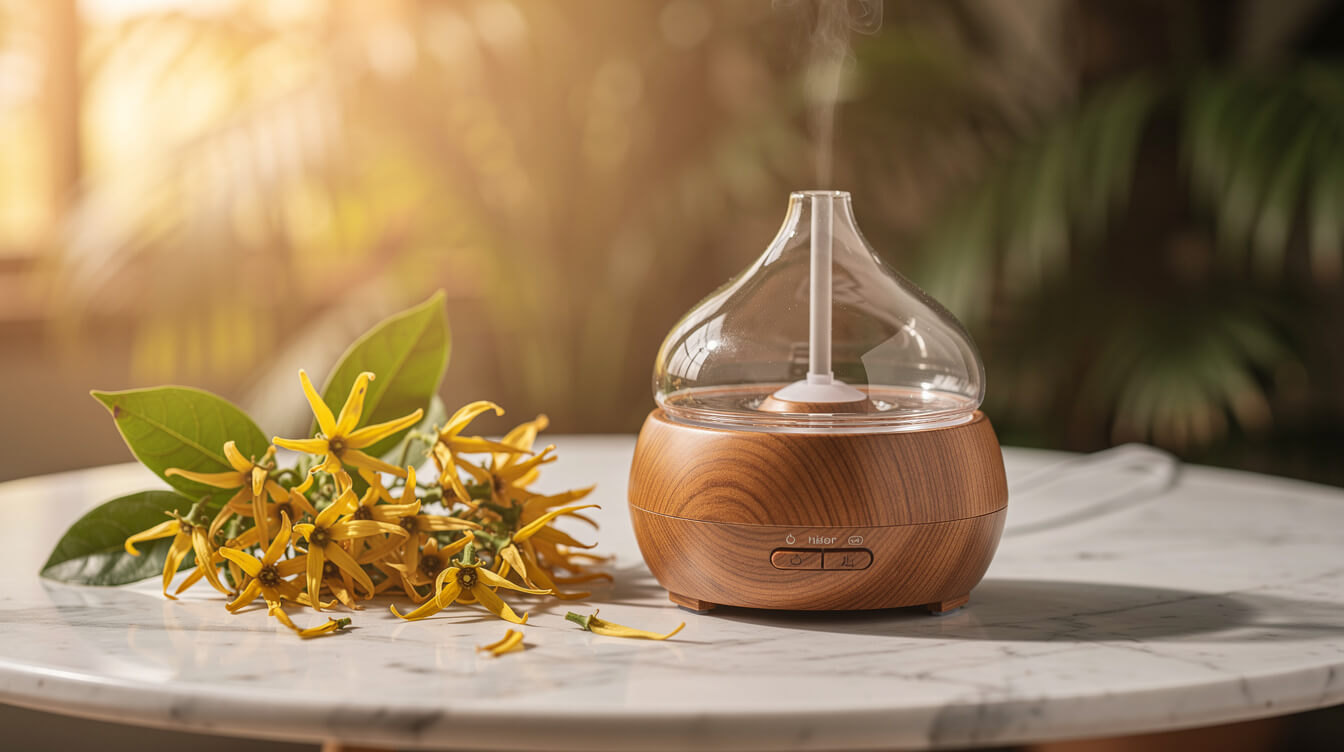
Diffusing ylang ylang essential oil is where the quality of your delivery system makes the most visible difference. Here’s why, and what it means for how you use the oil.
Why delivery method changes everything: Ultrasonic diffusers aerosolize a mixture of water and oil — the water is the primary aerosol, with oil molecules essentially hitchhiking on water droplets. What you’re inhaling is heavily diluted, and heat-sensitive compounds like geranyl acetate begin to degrade within the warm, humid chamber. Candle warmers and plug-in diffusers actively apply heat to the oil, which denatures benzyl benzoate and compromises the aromatic profile almost immediately.
A cold-air Nebulizing Diffuser® operates on Bernoulli’s Principle: a stream of pressurized air passes over the oil’s surface, creating a pressure differential that lifts microscopic oil particles directly into the air. The oil is never heated, never diluted with water, and never significantly altered. What reaches your olfactory receptors is the full, unaltered chemical profile of ylang ylang — linalool, geranyl acetate, benzyl benzoate, farnesol, and β-caryophyllene in their natural ratios.
The practical result: ylang ylang diffused through a Nebulizing Diffuser® versus an ultrasonic diffuser delivers a noticeably more complex, more complete aromatic experience — because the complete chemical story is intact.
The counterintuitive dosing rule: Ylang ylang is an intensifier. Unlike base notes like sandalwood or vetiver, which act as anchors and can be used generously, ylang ylang diffuses at a very low concentration threshold. Three to four drops in a Nebulizing Diffuser®’s glass reservoir is typically sufficient for a 30–40 square meter room. Add more and the fragrance tips from warm and exotic into overwhelming and headache-inducing — a well-documented characteristic of heavy floral oils. Start low, assess at 20 minutes, and adjust from there. Less is genuinely more.
Optimal session length: Diffuse for 30–40 minutes, then pause and allow the space to ventilate for at least 20 minutes before the next session. This rhythm prevents olfactory fatigue (where you stop registering the scent) and ensures you’re experiencing the oil’s full aromatic profile rather than a muddled background note you’ve essentially stopped smelling.
Top Ylang Ylang Essential Oil Blends for Your Nebulizing Diffuser®
These blends are built around one rule: ylang ylang is a heart note that needs to be anchored. On its own, it can read as too sweet or too heavy. In blend context, it becomes the emotional center of a larger aromatic story. These essential oil blends for diffuser treat ylang ylang as the star that other notes frame, not the lead that carries the whole composition.
The Romance Blend (Sensual, Warm, Intimate)
In your Nebulizing Diffuser®’s glass reservoir: 2 drops ylang ylang Complete + 3 drops sandalwood + 2 drops bergamot. Sandalwood provides the creamy, woody base that absorbs ylang ylang’s florals; bergamot adds a bright citrus lift that prevents the blend from becoming too heavy. This is the combination behind many classic oriental fragrance accords, adapted for pure essential oil diffusion.
The Restful Evening (Calming, Floral, Grounding)
1 drop ylang ylang + 4 drops lavender + 2 drops vetiver. This is the most linalool-rich blend in the list — both ylang ylang and lavender contribute the compound, creating a cumulative calming effect. Vetiver’s smoky earthiness grounds the combination and adds longevity. Begin diffusing 45 minutes before bedtime; stop when you get into bed.
The Tropical Uplift (Bright, Festive, Energizing Floral)
2 drops ylang ylang + 3 drops wild orange + 3 drops grapefruit. The citrus notes cut through ylang ylang’s weight and create a bright, festive atmosphere that’s perfect for weekend mornings or social gatherings. This is one of the few blends where ylang ylang’s heaviness is an asset rather than a challenge — it prevents the citrus from being one-dimensional. See more pairing ideas in our essential oil blends for fall collection.
The Grounding Floral (Deep, Resinous, Centering)
1 drop ylang ylang + 3 drops frankincense + 2 drops patchouli. Frankincense’s resinous, slightly medicinal quality and patchouli’s earthy sweetness create a deeply grounding context for ylang ylang’s florals. This is the blend for meditation, journaling, or any practice where presence and calm centeredness is the goal.
The golden rule for all ylang ylang blends: Cap it at 1–2 drops per 10ml of total volume in carrier applications, and at 2–3 drops total in a Nebulizing Diffuser® reservoir. Every experienced aromatherapist will confirm this — ylang ylang punches far above its quantity. Respecting this limit is the single most important thing you can do to experience its benefits rather than its limitations.

Join Our Exclusive Member Club to get Big Discounts!
How to Choose High-Quality Ylang Ylang Essential Oil
Not all ylang ylang essential oil is the same, and the differences in quality have a direct impact on the benefits you experience. Here’s what to look for:
Grade transparency: A quality supplier will specify whether their oil is Extra, Complete, or a specific grade (I, II, III). For therapeutic aromatherapy, look for “Ylang Ylang Complete” — it contains the full chemical profile, including the heavier farnesol and β-caryophyllene fractions that are absent in Extra-grade oil. Extra is optimal for perfumery blending where top-note brightness matters; Complete is optimal for emotional wellness and diffusion.
Botanical name and origin: The label should read Cananga odorata (var. genuina for true ylang ylang). Country of origin matters: the Comoros Islands and Nosy Bé (Madagascar) are considered the premier ylang ylang growing regions. Oils from these origins tend to show the most complete and balanced aromatic profiles.
GC/MS testing availability: Gas chromatography/mass spectrometry testing provides a chemical fingerprint of the oil, verifying that the compound ratios are consistent with authentic Cananga odorata. Reputable suppliers make batch-specific GC/MS reports available on request or downloadable from their website. If a supplier doesn’t offer this, proceed with caution.
Red flags to avoid: “Ylang ylang fragrance oil” is not essential oil — it’s a synthetic substitute that mimics the scent without any of the botanical compounds. Unusually low prices (quality ylang ylang typically costs $15–$35 for a 5ml bottle depending on grade) usually indicate adulteration, dilution with carrier oil, or synthetic substitution. If the price seems too good to be true, it almost certainly is.
For pure, properly sourced essential oils for use in a nebulizing diffuser, look for brands that provide full botanical and batch transparency. The Organic Aromas® essential oil collection is tested for purity and available in GC/MS-verified batches designed specifically for nebulizing diffusion.
Frequently Asked Questions About Ylang Ylang Essential Oil Benefits
What is ylang ylang essential oil good for?
Ylang ylang essential oil is used for creating calming, romantic, and uplifting atmospheres through diffusion; supporting skin and scalp wellness when properly diluted in carrier oils; and as a floral heart note in essential oil blends. Its compound profile — including linalool, geranyl acetate, benzyl benzoate, and farnesol — drives its broad therapeutic reputation.
How many drops of ylang ylang do I use in a diffuser?
For a Nebulizing Diffuser®, start with 3–4 drops in the glass reservoir for a standard room (20–30 sq meters). Ylang ylang is highly concentrated; adding too much creates an overwhelming, potentially headache-inducing experience. Always start conservative and adjust upward in one-drop increments after a 20-minute assessment. In essential oil blends for sleep or wellness purposes, keep ylang ylang to 1–2 drops maximum within the blend.
What does ylang ylang smell like?
Ylang ylang has a rich, sweet, intensely floral scent with warm, slightly fruity undertones and a faint balsamic depth. It’s often described as exotic, heady, and sensual — closer to jasmine or tuberose than to lighter florals like lavender or geranium. The exact scent profile varies by grade: Extra has a brighter, more citrus-floral quality; Complete reads deeper, warmer, and more complex.
Is ylang ylang essential oil safe to use every day?
For diffusion, moderate daily use is generally well-tolerated for most people when sessions are kept to 30–40 minutes with adequate ventilation in between. Those sensitive to strong floral scents may prefer alternating ylang ylang with lighter oils across the week. For topical use, the IFRA (International Fragrance Association) recommends limiting ylang ylang to 0.8% in leave-on skin products due to sensitization potential — always dilute and always patch test first.
What is the difference between ylang ylang Extra and Complete?
Ylang ylang Extra is collected from the first 30–90 minutes of fractional distillation and contains the lightest, most linalool-rich molecules — it’s the brightest, most floral fraction and is the standard in high-end perfumery. Complete grade is collected across the entire uninterrupted distillation, capturing all fractions including the heavier farnesol- and β-caryophyllene-rich sesquiterpene fraction. For aromatherapy and emotional wellness purposes, Complete is generally preferred because it preserves the full chemical profile.
Ylang ylang essential oil rewards patience and intentionality. Used at the right concentration, in the right context, with a delivery system that honors its full chemical complexity, it offers a genuinely distinctive aromatherapy experience — warm, complex, and deeply grounding. Explore the Organic Aromas® Nebulizing Diffuser® collection to discover how cold-air nebulization transforms the way pure essential oils perform.