


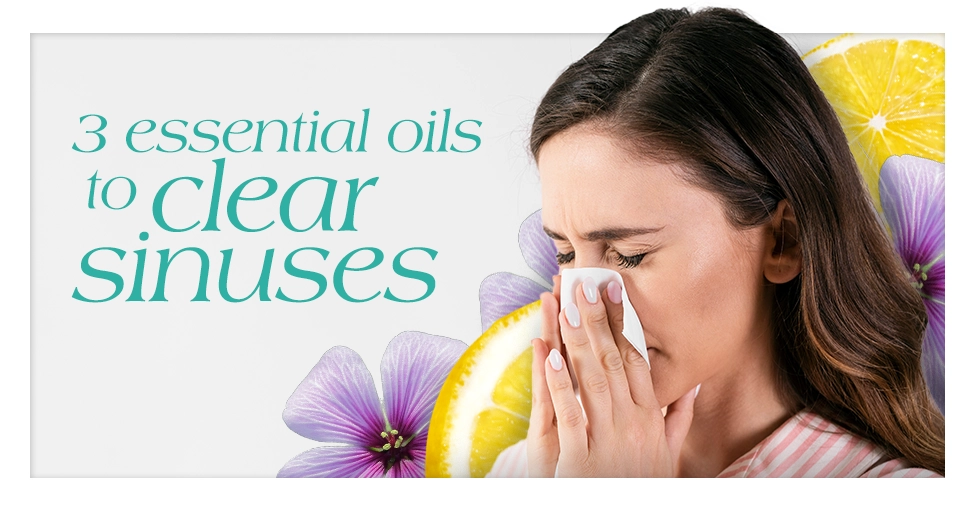
3 Essential Oils to Clear Sinuses
If you have ever felt like someone quietly poured cement behind your cheekbones, you already know why so many people search for essential oils to clear sinuses. That heavy, blocked, foggy-headed feeling can show up in allergy season, on a dry winter flight, or in the middle of a summer cold — and reaching for a plant-based option that smells wonderful is a deeply appealing alternative to yet another decongestant. The good news: a handful of aromatic oils have a long history in aromatherapy for supporting a sense of clear, open breathing, and in 2025 a systematic review in a peer-reviewed otolaryngology journal took a hard look at the evidence. This guide walks through the three oils worth knowing, what the research actually found (and where it stops), and how to use them gently and safely in your home.
A quick, honest note before we begin: aromatherapy is a comfort and wellness practice, not a medical treatment. Nothing here is intended to diagnose or treat any condition. If congestion lasts more than about ten days, comes with a high fever or facial pain, or keeps returning, that is a conversation for a healthcare professional — essential oils are a companion to good care, never a replacement for it.
What Actually Makes Your Sinuses Feel Blocked

It helps to know what you are actually working with. The lining of your nose and sinuses is a thin, richly supplied membrane, and when it meets an irritant it responds by swelling and producing more mucus. That swelling narrows the tiny drainage channels, mucus backs up, and pressure builds — the classic “stuffed” sensation. The trigger varies more than most people assume:
- Allergies — pollen, dust, pet dander, and mold can inflame the lining at any time of year.
- Viral colds — the most common short-term culprit, usually easing within a week or so.
- Dry or stagnant air — heated winter rooms and long flights dry the membrane, making it feel tighter.
- Irritants — smoke, strong synthetic fragrance, and pollution keep the lining on high alert.
There is also a reason mornings often feel worst: lying flat overnight lets mucus pool and the membranes swell, so you wake up feeling most blocked and slowly loosen up as the day goes on and you move around. Knowing your trigger shapes your approach — an allergy flare calls for reducing exposure (closing windows on high-pollen days, running clean air), while a passing cold simply needs time and comfort.
Aromatherapy does not remove any of these triggers. What certain aromatic compounds appear to do is create a cooling, opening sensation as you breathe them in, which is why they feel so welcome when your head is heavy. Across our twelve-plus years of customer blending feedback, eucalyptus- and peppermint-forward blends are among the first things longtime users reach for the moment allergy season arrives — not as medicine, but as a small ritual that makes a stuffy day more bearable. If you want a broader look at the aromatic options here, our guide to the best essential oil for congestion relief covers the wider field; below we focus on the three that earn their reputation.
The 3 Best Essential Oils to Clear Sinuses

Ask ten aromatherapists which oils they reach for when their own breathing feels stuffy, and the same three names come up again and again. Here is why each one has staying power — and the specific chemistry that sets it apart.
1. Eucalyptus — the 1,8-cineole powerhouse
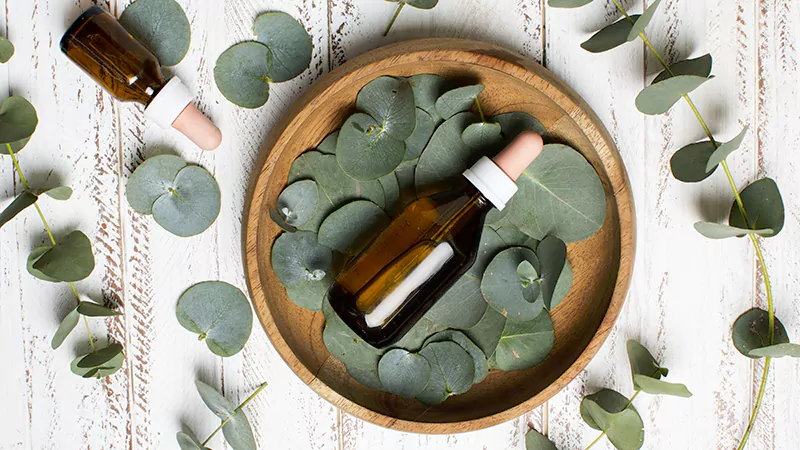
Eucalyptus is the oil most closely tied to that crisp, “I can finally breathe” feeling, and it is not just marketing. Its dominant compound is 1,8-cineole (also called eucalyptol), which in many Eucalyptus globulus oils makes up roughly 70–85% of the oil. Cineole is the exact molecule researchers keep circling back to for respiratory comfort, and it is prized in aromatherapy for its bright, camphoraceous freshness. Learn more in our complete guide to eucalyptus essential oil benefits.
2. Peppermint — menthol’s cooling illusion
Peppermint owes its magic to menthol, which typically makes up 30–45% of the oil. Menthol is a gentle trickster: it activates the cool-sensing TRPM8 receptors in your nasal passages, so the air feels cooler and more open even when airflow has not physically changed. That subjective “my nose just opened” sensation is exactly what makes peppermint so satisfying mid-congestion. A little goes a long way — see our peppermint essential oil diffuser drop-count guide for the right amount.
3. Tea Tree — the clean, green supporting act
Tea tree (Melaleuca alternifolia) brings a fresh, medicinal-green note and is valued for its terpinen-4-ol content, which drives its well-studied cleansing reputation. It is less about the cooling “whoosh” and more about rounding out a blend with a crisp, purifying character. Our roundup of the important benefits of tea tree essential oil goes deeper. A note of caution: tea tree is best kept out of reach of pets, especially cats.
Sign Up to Get Your FREE
e-Book Here…
What the Research Actually Says (2025 Update)
Most articles wave vaguely at “studies show.” Here is the specific, current picture. In June 2025, researchers published a systematic review of essential oils for acute rhinosinusitis in Laryngoscope Investigative Otolaryngology (Matl et al., DOI: 10.1002/lio2.70189). They pooled five randomized controlled trials and reported statistically significant improvements in sinus-related symptoms across every study reviewed, with only minimal side effects — the most common being mild gastrointestinal upset.
That sounds like a slam dunk, so here is the honest nuance almost no one mentions: the trials tested standardized oral capsules, not diffusion. The star ingredient was again 1,8-cineole, and one of the studied products, Myrtol (ELOM-080), is a capsule blending eucalyptus, sweet orange, myrtle, and lemon oils, credited with secretolytic and mucolytic (mucus-thinning) properties. In other words, the strongest clinical evidence is for swallowing precise, pharmaceutical-grade doses under supervision — which is a very different thing from breathing an oil for comfort at home.
So what does that mean for your nebulizing setup? Inhaling eucalyptus or peppermint will not deliver a measured clinical dose, and you should never drink your essential oils. But the same cineole and menthol that earned attention in the lab are what create that genuine feeling of cooler, easier breathing when you inhale them — a real, welcome comfort even if it is not a cure. Setting that expectation honestly is the whole game. For the bigger evidence picture, see our look at what the research says about essential oils and immunity.
How to Use Essential Oils for Sinus Comfort

The delivery method matters as much as the oil. These approaches, from gentlest to most intense, let you match the experience to how blocked you feel:
- Nebulizing diffusion — a Nebulizing Diffuser® disperses pure, undiluted oil as a fine, dry mist using nothing but pressurized air. No water, no heat, so the delicate cineole and menthol reach the air unchanged. This is the cleanest way to fill a room with aroma.
- Steam inhalation — add one drop to a bowl of hot (not boiling) water, drape a towel, close your eyes, and breathe gently for a minute. Intense and immediate; keep it brief.
- Personal inhaler or tissue — one drop on a cotton pad or blank inhaler for discreet, on-the-go freshness.
- Shower steam — a drop of eucalyptus on the shower floor (away from the stream) turns your morning routine into a spa-like reset.
Why we favor nebulizing over water-based misters for this: heat and water can dull or dilute an oil’s brightest top notes, and ultrasonic units add humidity that a stuffy room may not need. If you are weighing your options, our diffuser vs humidifier breakdown explains the trade-offs. Reaching for a single oil to start? A high-quality Eucalyptus Essential Oil (100% Pure Organic) is the most versatile first bottle for a sinus-season kit.
Join Now and Get a Coupon for 10% Off!
Oils to Approach With Caution — and Safety Basics

Potent aromatic oils deserve respect. A few ground rules keep the experience pleasant for everyone in the home:
- Peppermint and eucalyptus around young children — the menthol and cineole that feel bracing to adults can be too strong for babies and toddlers, whose airways are far more sensitive. Keep concentrated diffusion out of nurseries and never apply these oils near a small child’s face.
- Pets — tea tree and, for cats especially, many strong oils are best avoided in shared air. Diffuse in a ventilated room and give animals a way to leave.
- Skin — never apply undiluted (“neat”) oil to skin. Our how to dilute essential oils chart gives safe carrier-oil ratios.
- Less is more — with a nebulizer, a short session of a few minutes is plenty. Overdoing a cooling oil can leave a room feeling harsh rather than fresh.
If you want the wider safety context on filling a room with aroma, our evidence-based guide to whether essential oil diffusers are safe covers ventilation, session length, and who should take extra care.
A Simple Sinus-Season Blend for Your Nebulizing Diffuser®
Once you have the three oils, this balanced blend layers cooling, opening, and clean-green notes into one satisfying breath. Add the drops directly to the glass reservoir of your Nebulizing Diffuser® — no water, no carrier:
- 3 drops Eucalyptus — the bright, cineole-rich foundation.
- 2 drops Peppermint — the cool lift that makes the air feel open.
- 1 drop Tea Tree — a crisp, purifying finish.
Run it for five to ten minutes in a well-ventilated room, ideally in the morning when congestion tends to feel heaviest. Because a nebulizer disperses pure oil in short, potent bursts, you get the full aromatic character from just six drops.
Two Variations to Match Your Time of Day
Once the base blend feels familiar, adjust it to the moment. In the morning, lean brighter — swap the tea tree for a drop of lemon or spearmint for a clean, energizing lift that pairs well with your first coffee. In the evening, when you want the open-airway feeling without the buzz, drop the peppermint to a single drop and add one drop of lavender for a softer, more restful character. The lavender rounds off eucalyptus’s sharp edge beautifully, turning a functional blend into something you actually want to wind down with.
A quick word on consistency: essential oils are volatile, so store your bottles tightly capped, away from heat and direct light, and they will hold their character for years. A cloudy or sharp-smelling oil past its prime simply will not deliver the same crisp, cooling note — freshness is half the experience.
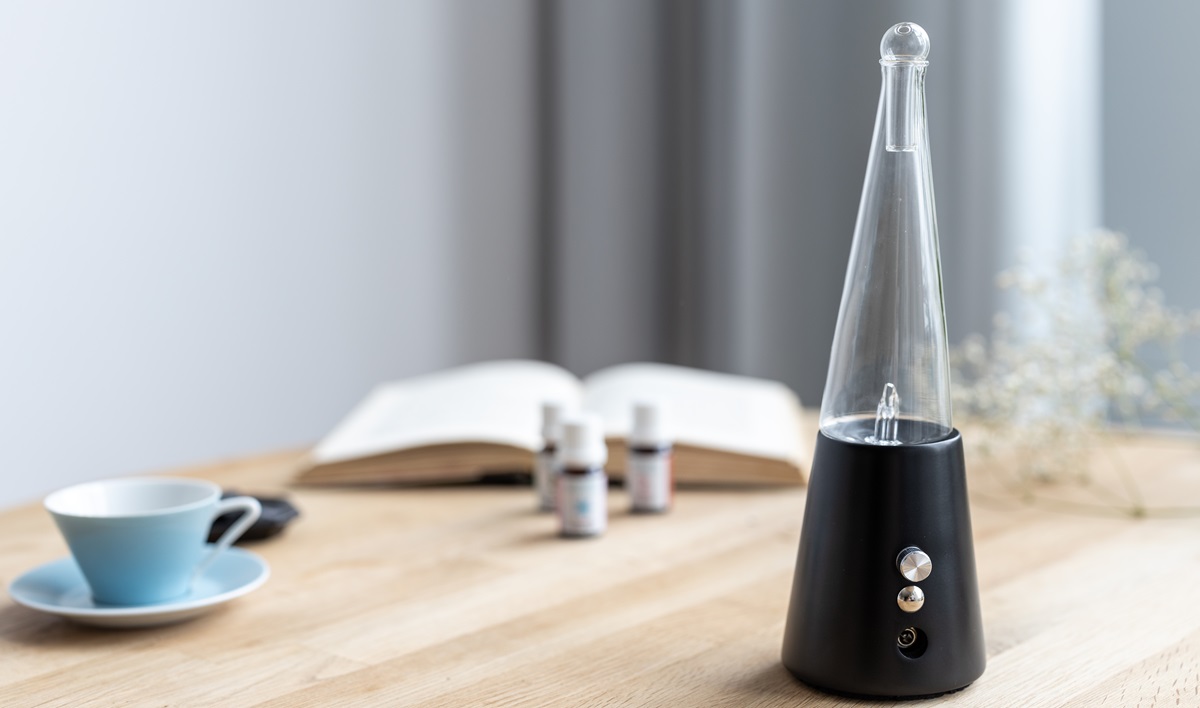
Give Pure Oils the Diffuser They Deserve
Our handcrafted Nebulizing Diffuser® — real wood and medical-grade Pyrex glass — disperses undiluted essential oils with no water and no heat, so every note of your sinus-season blend reaches the air exactly as nature intended.

Join Our Exclusive Member Club to get Big Discounts!
Frequently Asked Questions
Which single essential oil is best for clearing sinuses?
Eucalyptus is the most popular first choice because of its high 1,8-cineole content, which produces that signature cool, open feeling. Peppermint is a close second for its fast menthol “lift.” Many people find a small blend of the two more satisfying than either alone.
Can I put essential oils directly in my nose or drink them?
No. Never apply undiluted oils inside the nostrils and never ingest essential oils at home. The clinical studies that used oral oils relied on standardized pharmaceutical capsules taken under supervision — that is not the same as consumer essential oils. For home use, stick to inhalation and diffusion.
How long should I diffuse oils for sinus comfort?
With a Nebulizing Diffuser®, five to ten minutes is usually plenty, since it disperses pure, concentrated oil. Diffuse in a ventilated space, take breaks, and stop if the aroma starts to feel harsh rather than refreshing.
Are these oils safe around kids and pets?
Use extra caution. Concentrated peppermint and eucalyptus can be too strong for babies and young children, and tea tree in particular is risky for cats. Diffuse in a shared, ventilated room, keep sessions short, and always give pets a way to leave.
Do essential oils help allergy congestion or just colds?
The comforting cool-air sensation feels similar whether your stuffiness comes from a cold or from allergies, because it works on how the air feels as you inhale it. What aromatherapy cannot do is address the underlying allergic trigger — for that, reducing exposure and following your clinician’s guidance does the real work. Think of aromatherapy as the comfort layer on top.
Can I use these oils in a smart or waterless diffuser?
Yes — in fact a waterless Nebulizing Diffuser® is ideal, because it disperses the pure oil without heating or diluting it, preserving the very cineole and menthol notes you want. Add the drops directly to the glass reservoir; there is no water to mix in. Ultrasonic (water-based) diffusers work too, but they add humidity and can mute an oil’s brightest top notes.
The Bottom Line
Eucalyptus, peppermint, and tea tree have earned their place in the sinus-season toolkit — not because they cure anything, but because their signature compounds create a genuine feeling of cooler, clearer breathing, and because filling your home with a pure, natural aroma simply feels good when you are under the weather. Pair them with honest expectations, gentle safety habits, and a Nebulizing Diffuser® that respects the oils, and you have a small, sensory ritual worth returning to. And if congestion lingers or worsens, let a healthcare professional take the next step — aromatherapy is the comfort alongside good care, never a substitute for it.



Hi, here on the forum guys advised a cool Dating site, be sure to register – you will not REGRET it [url=https://bit.ly/384HTnk]https://bit.ly/384HTnk[/url]
can u put on ur body to help with sinus
I use on my sinus (face). It helps clearing for better breathing.
Place a few drops of either eucalyptus, tea tree, or peppermint essential oil along with lavender, & rosemary in a carrier oil (sunflower, almond, olive, etc), shake or stir & massage into bottom of clean feet at bedtime.
Do not use essential oils if you have asthma! They could trigger symptoms, as they are highly potent. Always, make sure you do a breathing test with a drop of essential oil on a napkin to make sure you are not allergic!
Also, never ever touch oils directly to skin without a carrier oil, and use them very carefully or you could develop a sensitivity.
Be very careful using them around pets and. Children, some could have negative effects! Never use essential oils around babies, period!
I’ve been suffering with phlegm and sinus issues for a long time. Can’t breathe or smell through my nose at all and I have asthma so when the phlegm gets stuck in my throat it’s hard for me to breathe and I end up at the hospital and but all they do is give me a breathing treatment and more medicine to take. I still can’t breathe through my nose or smell and I do the steam thing over the stove every morning and night to get a little relieve. I just bought eucalyptus and peppermint oil along with some natural herbs today to put in my steam hopefully it helps me. Wish me luck ! I just want to breathe better
I have had sinus issues for years and just bought me a diffuser. I got samples of oils with my diffuser and I tried the peppermint first. Oh my goodness it made me feel so much better. For the last month, I have been having a problem with sores in my nose too and trying everything to get rid of them and since I used the diffuser with the peppermint they are finally healing. So glad I found this post…
I woke up with a sinus infection like I had a few months ago. I use good oils and take three in a capsule. Oregano, lemon and thieves. When I went to bed my nose starting running and sneezing and I knew it wasn’t going to be a good night. I tried the teetree oil, eculiptus and peppermint oil around my nose and immediately it worked all through out the night. Woke up feeling better. I’ll remember this. Thank you.
Yes you can use all three of these oils together however you will only need about two drops of each oil in a diffuser. Tea tree oil peppermint and eucalyptus are great together as they offer antibacterial and anti inflammatory properties.
I see lots of questions, but no replies. Would love to have answers to these questions.
What oil can I use if my nose is red and sore ?
Net specialist I was sent discouraged use of neti pot for sinuses. She said it spread infection throughout sinuses.
Can anyone help me with a question please?
With essential oils is it safe to rub them under the stuffy nose?
I love using peppermint oil for sinus congestion it works wonders, I like to put it on my temples and a tiny bit on my nose it really does relive my sinuses and stuffy nose
All work great!! If thinking of diffusing when children are present, you should replace the eucalyptus with lemon since it can be hazardous to children. Essential oils are wonderful, but should be studied and used with caution. 🙂
Have always done this with lavender over the years works better than medicinal drugs
When smell wears off repeat
I find putting one or two drops on neck of tee shirt or top where your are breathing in the oils good no need for diffuser
Hi Sandy,
I have put the oils in my humidifier in a pinch… or when one of the kids are congested. I hope this helps.
This is much neede information. I have the oils but no diffuser. I need quick relief. Is there a way to set up a homemade diffuser or use the oils topically?
I always appreciate when people share important information about essential oils. It shows a real generosity of spirit. I prefer peppermint essential oil. There is so much we can do with it from uplifting our mood, to cleaning the house. And it can even help in the grieving period for giving us a bit of a mental lift when we’re feeling down.
Going out to purchase oil diffuser this week after reading this!
Long time allergy and sinus sufferer.
And am Sooo Tired of doctors shoving pills or steroid nasal sprays my way, which I refuse b/c they can cause other issues. Been on every variation of allergy pill since a kid.
Older I get, less allergy and more sinus issues every Nebraska winter. Sinus infections every year. Stuffed up or runny nose depending on which OTC med I take, and sometimes sneezing in winter which don’t quite get except had in past been told may have dust & mold allergy but now doesn’t show up on skin tests, only inside nose sensitive.
Do Neti Pot when desperate
Or pop the OTC meds as needed only.
So trying this along with my huge floor model humidifier and hoping to cure my every winter sinus issues!
Tried this for me and my husband tonight and it works!
I used what I had because I was so desperate. Peppermint oil and Tea Tree oil and it worked. Will add the eucalyptus oil the next time. Thanks much!
I am so glad that I found this helpful post. The essential oil can help us live a healthier life. I always use eucalyptus essential oil to clear sinuses.
Good morning
Can the three oil (peppermint + tea tree + Eucalyptus) be mixed and in what quantity should we get
Please reply
I’m going to have to try these, right now the allergies here have me all kinds of stuffed up and miserable!
hubby suffers terribly Thankyou for the get information
Most of my family suffer from allergies and I need to try these oils to see if they can get relief.
Thankfully I no longer suffer with sinus infections, but I do enjoy those three oils for other benefits.
I live in the Mississippi Delta. As I’ve gotten older, sinus issues have gotten to be a year round problem. Planting and harvesting soybeans, cotton, corn and rice puts so much in the air along with crop dusters and the chemicals they spray. It’s never ending. After reading this, it is something I’d be willing to try. Any relief is good relief!
Great oil choices! When unwell, I usually pour a splash of Australian Eucalyptus oil in the corner of the shower. The warmth and steam of the shower is great at distributing the oils, and your airways are open to receive the full effects.
I’ve tried peppermint oil, but the smell makes me nauseous. However, my son suffers from severe allergies, so I’m going to try the others out and see how that works!
Would love to try these for the winter months my nose gets so stuffy and dry.
I definitely need to try this for my sinuses.
This is very interesting. My mom always told us growing up benefits from peppermint. I will have to try it.
I would love to try these!
I would love these. I get bad allergies and bas sinus infections.
This was so helpful! Thank you!
Great!
I use Peppermint Essential Oil to clear my sinuses and it’s great!
There are so many health benefits we can get from essential oils. Having a more natural approach to treating my sinus issues is great. Love your products. I will happily try the suggestions in this article. Thank you for posting such a helpful article
I will have to try…so bad right now!!!
Peppermint is very potent in my new Light Radiance, no more clogged sinuses!
Peppermint and eucalyptus are my favorite oils to use all the time!
pepermint<eucuplatys and teatree oil i will have to try these.
Those are three good essential oils for the sinuses.
I bought the diffuser from here and it is my favorite one I own. I love how oils in different ways and with allergy season here it’s a must. I love making inhalers.
A word of caution; some people are allergic to Melaleuca trees so before using any essential oils do a test to see if you’re allergic.
Thanks my sinuses feel like they are always clogged to one extent or another. Rarely are both nasal passages fully open.
Definitely going to try these out.
Peppermint
Clove
Lavender
I have used oregano oil, ecyluptus oil,and tea tree oil with carrier oil on tips putting two in each side for 15 min per Helped a lot for infection. But, I have allergies bad as well and the sinus infection never completely goes away. Taking allergy shots as well.