


5 Amazing Benefits of Citronella Essential Oil: The Complete 2026 Guide
When most people think of citronella essential oil, they picture tiki torches and backyard bug spray. That image undersells it considerably. Citronella essential oil benefits span everything from natural pest deterrence to home cleaning, mood uplift, and artisan aromatherapy blending — and the chemistry behind each one is genuinely interesting. This guide covers the five benefits worth knowing, the science, the two varieties most producers never explain, and exactly how to use citronella effectively in a Nebulizing Diffuser®.
What Is Citronella Essential Oil? Two Varieties, One Distinctive Aroma

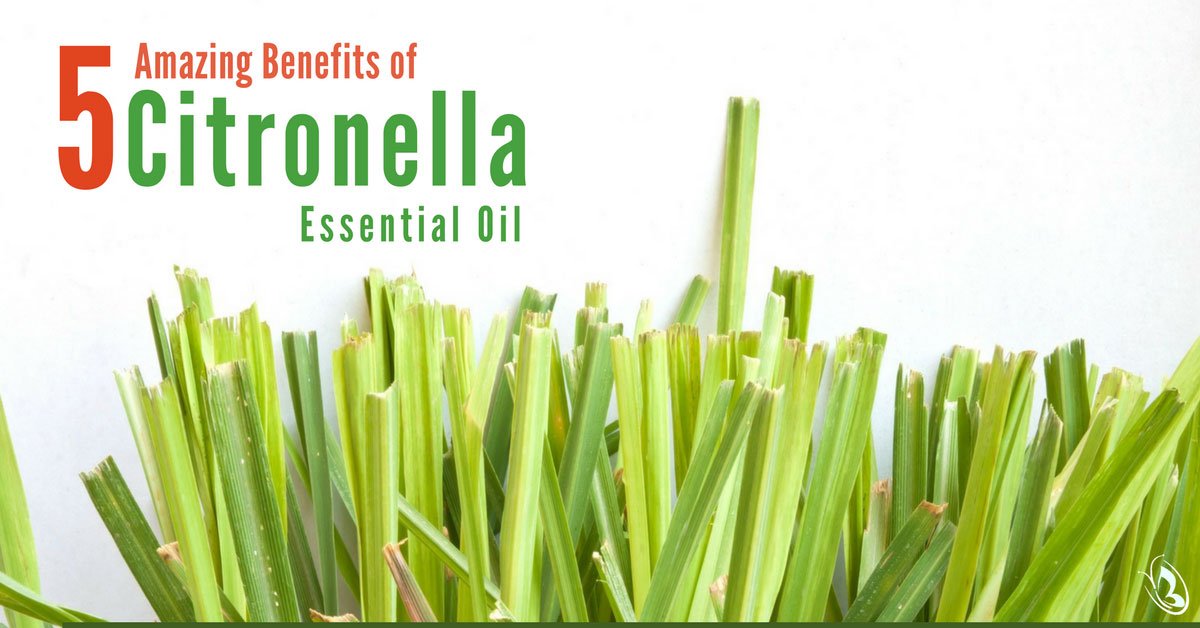
Citronella essential oil is steam-distilled from the fresh-cut leaves and stems of two closely related grasses in the Cymbopogon genus. They look similar at a glance, but their chemical profiles are notably different:
- Ceylon citronella (Cymbopogon nardus) — geraniol-dominant (often 60%+). This variety produces a softer, faintly rose-like warmth beneath the signature lemony brightness. It is favored in fragrance and skincare formulations.
- Java citronella (Cymbopogon winterianus) — citronellal-dominant (35–45%). This is the variety most commonly used in bug-deterrent applications because citronellal is the compound primarily responsible for masking the human body odors that attract mosquitoes.
Both are true steam distillations — pressurized steam passes through the plant material, carrying the volatile aromatic compounds into the collection flask. The result is a pale yellow to colorless oil with the bright, clean, lemon-citrus scent that is impossible to mistake once you have encountered it.
Understanding which variety you are using matters for blending. Check your supplier’s botanical name: C. nardus or C. winterianus will tell you everything about the dominant chemistry.
The 5 Amazing Benefits of Citronella Essential Oil
Here are the five citronella essential oil benefits that stand up to scrutiny — along with the specific compounds and mechanisms that make each one real.
1. Natural Bug Deterrence — The Compound-Level Explanation
Java citronella’s citronellal disrupts the olfactory signaling mosquitoes rely on to locate hosts. Research in Pest Management Science indicates that citronellal interacts with insect ionotropic receptors, suppressing the signals that alert mosquitoes to carbon dioxide and lactic acid — both primary host-location cues. Topical application provides 30–60 minutes of meaningful deterrence before the volatile compounds disperse; continuous diffusion into surrounding air extends that coverage without reapplication. For outdoor settings, a continuously running Nebulizing Diffuser® maintains ambient citronellal concentration more reliably than a single topical application. See our DIY natural insect repellent guide for blend ratios and topical dilution guidance.
2. Antibacterial and Antifungal Properties for Home Surfaces
Citronellal and geraniol both demonstrate antibacterial and antifungal activity in laboratory studies, particularly against common household pathogens. This makes citronella essential oil a fragrant addition to DIY surface sprays and floor cleaners. Add 10–15 drops per cup of water with a splash of white vinegar for a kitchen-safe spray that actually smells pleasant. It is especially useful in bathrooms and mudrooms where mold-prone surfaces benefit from regular essential oil cleaning support.
3. Uplifting, Energizing Atmosphere
The bright citrus-lemon aroma of citronella has long been used in aromatherapy to support an energized, focused atmosphere. Diffusing citronella in the morning or during a work session creates a clean, open-air ambiance that many users find mentally refreshing — closer in effect to lemon or lemongrass than to heavier florals. It pairs especially well with peppermint and eucalyptus for a “clear the air” diffuser blend that feels invigorating without being overwhelming.
4. Natural Deodorizer and Air Freshener
Because citronella’s volatile compounds are genuinely antibacterial rather than just fragrant, diffusing it in enclosed spaces — closets, bathrooms, pet areas — addresses odor at the source rather than simply masking it. The high geraniol content in Ceylon citronella adds a pleasant lingering warmth, making it more elegant than most commercial air fresheners.
5. Remarkable Blending Versatility
Few essential oils combine as flexibly as citronella. Its dominant lemon-citrus note acts as a mid-note bridge in blends, brightening heavier base notes like vetiver or patchouli while softening sharp top notes like spearmint. This makes it a surprisingly valuable tool in custom aromatherapy formulations — something 12+ years of customer blending data from the Organic Aromas collection consistently confirms.
Sign Up to Get Your FREE
e-Book Here…
Citronella Essential Oil as a Natural Bug Deterrent: The Outdoor Diffusion Approach
The EPA has classified citronella as a minimum-risk pesticide ingredient under FIFRA Section 25(b) — exempt from full pesticide registration because its safety profile is well-established. That regulatory status reflects what aromatherapy users have known for generations: citronella creates a more comfortable outdoor environment.
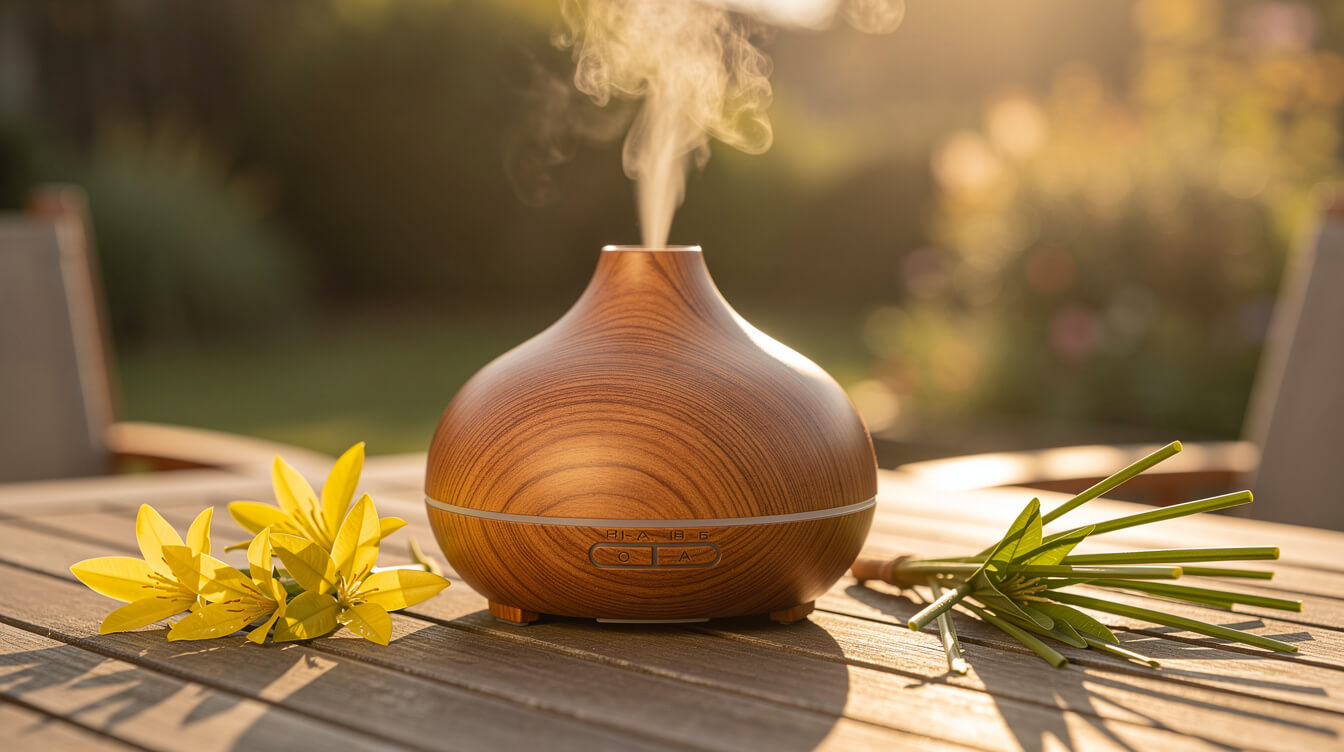
The key is delivery method. A topical application on skin gives roughly 30–60 minutes of effectiveness before enough citronellal disperses that coverage drops. Running a Nebulizing Diffuser® outdoors — on a covered porch, gazebo, or patio table — maintains a continuous ambient citronellal presence throughout your time outside. No reapplication. No carrier-oil residue on skin. Just clean oil atomizing into the air around you.
Citronella also complements other pest-deterrent oils effectively. Pairing it with lemongrass (which adds the aldehyde citral) creates broader-spectrum coverage that works across different insect-attraction pathways. Our guide to essential oils for roaches and essential oils for ants document similar mechanisms at work with other pest-deterrent oils — useful reading if you are building a complete home-defense blend.
How to Use Citronella Essential Oil in a Nebulizing Diffuser®
The Nebulizing Diffuser® operates on Bernoulli’s Principle — an airstream passes over a narrow tube submerged in oil, drawing the liquid up and atomizing it into micro-droplets without water or heat. Because no heat is involved, the full chemical spectrum of citronella — including the more fragile geraniol esters — reaches the air intact. Ultrasonic diffusers dilute the oil with water, reducing active-compound concentration; heat diffusers can alter volatile compounds before they ever leave the device.
For citronella specifically, here is how to get the best results. For indoor use, start with 5–10 drops in the reservoir and run for 15–30 minute sessions. The aroma is bright and can be assertive — intermittent sessions are usually preferable to continuous long runs indoors. For outdoor use, run continuously in a covered area. Ambient air movement dilutes the concentration naturally, so the oil disperses at a pleasant level rather than building up. Cordless, rechargeable Nebulizing Diffusers® are ideal here — no power outlet required, and they go wherever the evening takes you. For blended use, add 3–4 drops citronella with 5–6 drops of lemongrass or eucalyptus in the same reservoir. The oils blend in the reservoir and diffuse as a composite, broadening the aromatic profile and the deterrent spectrum simultaneously.
For a deeper comparison of how nebulizing diffusion compares to other diffusion methods, see our guide to the best aromatherapy oils for diffusers.

Sign Up to Get Your FREE Essential Oils e-Book Here
Blending Citronella Essential Oil: 3 Recipes Worth Trying

Citronella is a team player in blends. Its mid-note lemon brightness lifts compositions without dominating them. Here are three specific blends developed from OA’s blending research:
Recipe 1: The Outdoor Sanctuary
Combine 4 drops citronella (Java preferred), 3 drops lemongrass, 2 drops eucalyptus, and 1 drop peppermint. The citronellal and citral combination provides broader-spectrum deterrence, while eucalyptus and peppermint add a refreshing camphor-mint layer. Best for covered patios and outdoor gatherings.
Recipe 2: The Morning Focus Blend
Combine 4 drops citronella (Ceylon preferred), 3 drops bergamot, and 2 drops rosemary. The geraniol warmth of Ceylon citronella softens the bergamot and bridges beautifully into rosemary’s herbal clarity. Good for home offices and morning routines. This is an indoor blend — the Ceylon variety’s lower citronellal content is the tradeoff for a more elegant indoor aroma.
Recipe 3: The Clean Home Blend
Combine 5 drops citronella, 3 drops lemon, and 2 drops tea tree. Run during and after cleaning for 20–30 minutes. Tea tree broadens the antimicrobial spectrum; lemon brightens the blend and amplifies the citrus freshness. The result is a home that smells genuinely clean, not just fragrant.
Citronella Essential Oil Safety and Dilution Guidelines
Citronella essential oil is well-tolerated by most people when used as directed. A few guidelines apply to get the best out of it safely.
Always dilute before skin application. Use a 1–2% dilution: 6–12 drops of citronella per ounce of carrier oil. Jojoba, fractionated coconut oil, and sweet almond oil all work well. Undiluted essential oils can cause skin irritation or sensitization over time. Patch test first — apply a small diluted amount to the inner forearm and wait 24 hours before broader use, especially if you have sensitive skin.
As a general precaution with concentrated citrus-family oils, avoid applying high concentrations to skin before prolonged direct sun. Keep diffusion sessions in cat-free zones — citronellal is toxic to cats, so ensure the space is well-ventilated and cats can freely exit. Citronella is for aromatic and topical use only — never ingest essential oils.
For more guidance on safe topical application, see our guide to essential oils for insect bites, which covers dilution principles for sensitive skin use cases in detail.
Join Now and Get a Coupon for 10% Off!
Frequently Asked Questions About Citronella Essential Oil Benefits
What does citronella essential oil smell like?
Citronella has a bright, lemony-citrus aroma with a faint grassy or herbal undertone. It is similar to lemon or lemongrass but slightly softer and more complex. Ceylon citronella has a gentle rose-like warmth beneath the citrus; Java citronella is crisper and more directly lemon-bright. Most people find it immediately pleasant — the scent equivalent of clean, open air.
Is it safe to diffuse citronella essential oil indoors?
Yes, with normal diffusion practices. Use intermittent diffusion (15–30 minutes on, 30–60 minutes off) in a ventilated room. The aroma is bright and can be assertive in enclosed spaces, so shorter sessions with breaks are often preferable to continuous all-day diffusion.
How long does citronella work as a bug deterrent?
Applied topically in a diluted carrier oil, citronella provides meaningful deterrence for approximately 30–60 minutes before the volatile compounds disperse. Continuous diffusion in the surrounding air extends coverage indefinitely by maintaining ambient oil concentration — which is why a Nebulizing Diffuser® is particularly well-suited to outdoor pest deterrence.
Can I mix citronella with other essential oils in my diffuser?
Absolutely. Citronella blends beautifully with lemongrass, eucalyptus, peppermint, lavender, bergamot, geranium, and tea tree. Its mid-note lemon character makes it flexible — it can anchor citrus blends, brighten herbal blends, or act as a bridge between heavier florals and lighter top notes.
What is the difference between citronella and lemongrass essential oil?
Both come from Cymbopogon grasses, but they are different species with different key compounds. Lemongrass is dominated by citral (geranial plus neral), giving it a more intense, direct lemon character. Citronella is dominated by citronellal or geraniol depending on variety, giving it a softer, more complex lemon profile. For bug deterrence they are complementary — blending them creates broader-spectrum coverage than either alone.
Citronella essential oil has earned its place in the aromatherapy toolkit well beyond its reputation as a mosquito deterrent. Understanding the two varieties, using the right delivery method, and blending it thoughtfully opens up a range of practical and sensory applications that stand up to the chemistry every time.
Experience Citronella in Pure Form
A Nebulizing Diffuser® delivers the full chemical spectrum of citronella — citronellal, geraniol, limonene — without water dilution or heat degradation. No plastic. No water. No heat. Shop the collection.






another great article…thank you
Wow impressive just received my first bitte today its now my fav oil happy healing xo
Impressed with the results of HBNO™ Citronella Essential Oil.
I did not know citronella essential oil has the ability to remove toxins throughout the body that can sometimes cause pain and inflammation,
wow I am dumbfounded.
I had no idea this was an anti-inflammatory.
A lot of uses for this product, didn’t know
Have always loved citronella, but didn’t realize all of it’s uses.
Wow I’m amazed I was aware of being beneficial for inflammation and of course to soothe but the other benefits are shocking
Love the different uses for the citronella oil especially for mold. I love using oils they smell so good too
I didn’t know that it was useful against depression!
I had no idea!! I thought that Citronella was strictly a bug deterrent. I am so very impressed!
Wow so many uses
I really appreciated learning about some of the benefits of Citronella Essential Oil. I am definitely more interested in using it as a result of having read this blog post.
This is amazing I need help with several of these issues
I had no idea that Citronella Oil could do all of these things!
I had no idea it had so many benefits!
I didn’t realize this oil had so many good benefits. I like that it helps depression & insomnia. I remember when we were kids sitting outside, my mom had the citronella candles on the table.
I bugs didn’t like it but I never knew all the other benefits.
I love all the health benefits
So many Great benefits. Amazing
Fighting against depression is something that hits home for me. Like that there is a natural options too.
I never knew there were so many benefits to using Citronella Essential Oil. I like that it can relieve anxiety and stress and fight insomnia.
Great post, lots of useful info.
I’ve used citronella candles in the past as a pest repellant but I had no idea it had so many other uses! Its definitely worth looking at herbal remedies before medicinal/chemical alternatives they can yield amazing results!
I never knew that Citronella Essential Oils could help with depression & insomnia, that’s really impressive! It’s amazing just how much it can do!
i love the smell of citronella ive always used it on holiday to keep the insects away but I had no idea it had all these other benefits!
Great and informative.
Amazing
Impressive
LOVE THE REPPELING PROPERTIES FOR BUGS
I can’t wait to try the Nebulizing Diffuser!
Love using Citronella instead of sprays. Ty for the chance
Very informative
Wow, I didn’t know citronella essential oil could do all of this. Would love to try it!
I had no idea it was a grass!!
And all this time I only knew it was a bug repellent!
I didn’t know citronella had so many uses. I thought it was good only for outdoors. I will send the diffuser link to my neighbor who enjoys spending evenings on her patio.
Sure didn’t know it was a grass… Learn something new daily….
I knew about the bugs and insects but I didn’t know the others! Thank you for the info!
A brilliant oil…..with many different benefits !
This would be perfect for my family! I knew it repelled bugs, but didn’t know the rest of it!! Thanks for the info!
it does a lot more than i thought it did
nice
Citronella is one of my favourite essential oils, I didnt’ know it could be used internally for things like UTI’s though, very interesting!
I adore Citronella – it has a beautiful fragrance