

Tuesday Blend: The Last Basil Before the Cold — Sweet Basil, Lime & Copaiba for the Supper Hour
There’s a night every autumn when the basil turns. The leaves go dusky at the edges, and the plant smells sharper when you brush past it, as if it knows the season is ending.
This week’s pour: 4 drops sweet basil, 5 drops lime, 3 drops copaiba in your Nebulizing Diffuser®. That’s twelve drops in total. Basil carries the melody, lime brightens it, and copaiba keeps the room from going thin once the citrus lifts off.
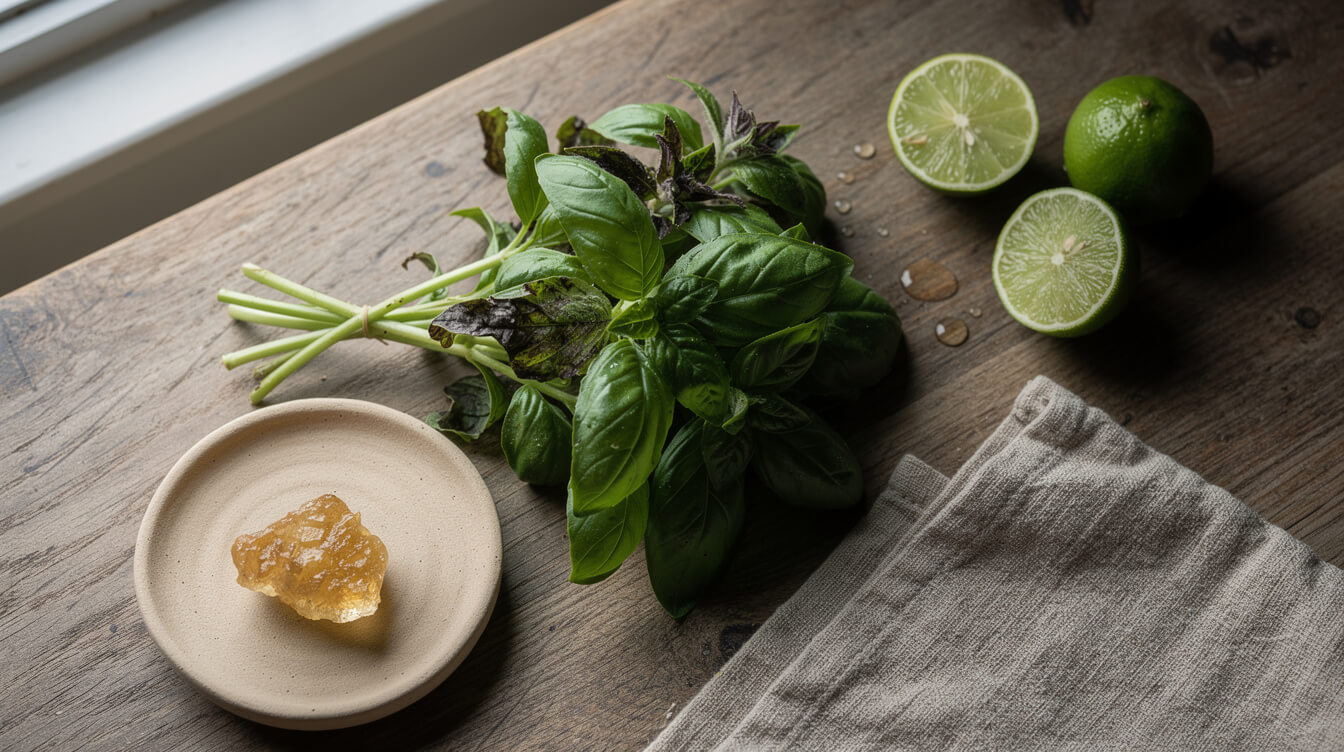
Here’s the jewel. Basil doesn’t wait for frost to fall. It’s a warm-climate plant, and once nights sit below roughly 10°C (50°F), its leaves start to bruise dark and spotty. Growers call it chilling injury, and it’s the same reason a bunch of fresh basil blackens in the fridge. Across much of the Northern Hemisphere, late October brings the last basil harvest, often weeks before the first real frost. A bottle of the oil keeps that summer leaf after the plant is gone.
Not every basil smells alike, either. Thai basil and other anise-leaning types are rich in methyl chavicol (estragole), which gives them their licorice edge. The sweet basil we carry is the linalool type. Linalool is the soft floral-wood note you also know from lavender, so this basil smells green and gentle rather than sharp. A trace of eugenol, the warm note in clove, gives it a faint spice as it settles.
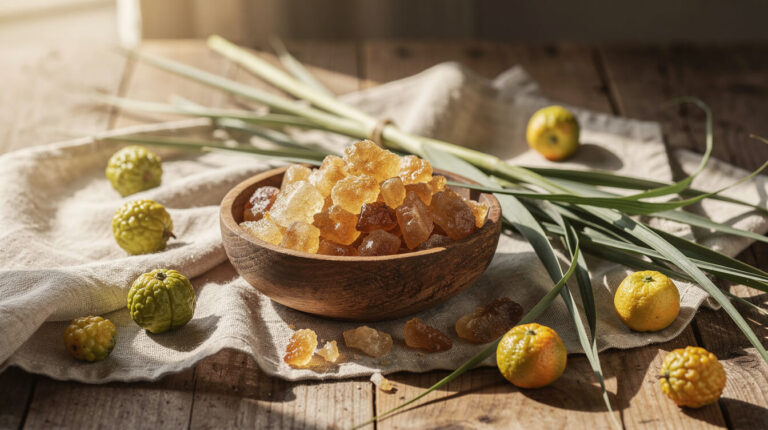
Lime works like a squeeze over a plate of pesto pasta: it’s the first thing you notice, and it wakes everything else up. Copaiba says very little on its own. It’s distilled from the oleoresin tapped from Amazonian Copaifera trees, and it’s often around half β-caryophyllene, a woody, peppery molecule that basil also carries in small amounts. Because the two share that thread, copaiba doesn’t sound like a third voice. It smells like the basil’s own stem. Diffuse for about 20 minutes while something warm simmers for supper. If “same plant, different smell” has ever puzzled you, our rosemary chemotype guide explains how it works.
Sign Up to Get Your FREE Essential Oils e-Book Here
The garden lets go of basil a little earlier every year. The bottle keeps it. Warmly, Chad