

Vetiver Essential Oil Benefits: The Base-Note Oil That Gums Up Every Diffuser Except One Type
Vetiver essential oil benefits show up in nearly every grounding, focus, and evening-wind-down blend recommendation you’ll find — and most of them are earned. But the same molecular weight that makes vetiver so deeply calming and long-lasting on the skin also makes it one of the most misunderstood oils in a home diffuser. Before you add a bottle to your cart, it’s worth understanding why this root oil behaves so differently from the citrus and floral oils you’re used to, and which diffusion method actually lets you use it the way it was meant to be used.
This isn’t another generic 12-benefits listicle. We’re going to walk through vetiver’s unusual chemistry, the real evidence behind its grounding and focus reputation, the specific hardware problem that quietly frustrates diffuser owners for months before they figure out what’s wrong, and exactly how to blend, buy, and store this oil so it keeps performing for years instead of gumming up in the bottle.
What Makes Vetiver Essential Oil Different: A Root Oil With an Unusually Heavy, Slow-Evaporating Profile
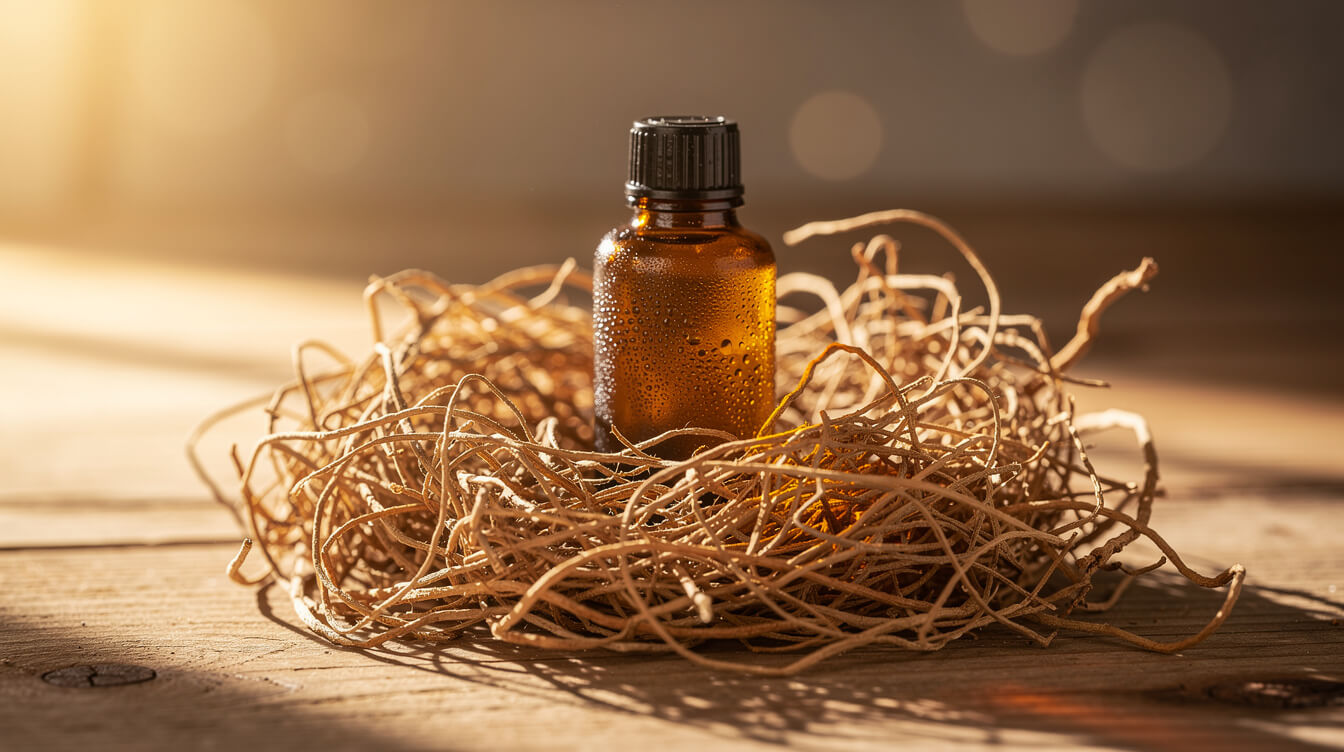
Most essential oils you diffuse — lemon, peppermint, eucalyptus — are distilled from leaves, peels, or flowers, and they’re built from small, volatile monoterpene molecules that evaporate almost as soon as they hit warm air. Vetiver is not that kind of oil. It’s steam-distilled from the tangled, fibrous root system of Chrysopogon zizanioides, a perennial grass native to India that’s also grown commercially in Haiti and Java. Root oils are chemically built for the opposite job a leaf oil does: instead of dispersing quickly, they’re dense, resinous, and engineered by the plant to hold their scent in soil for months at a time.
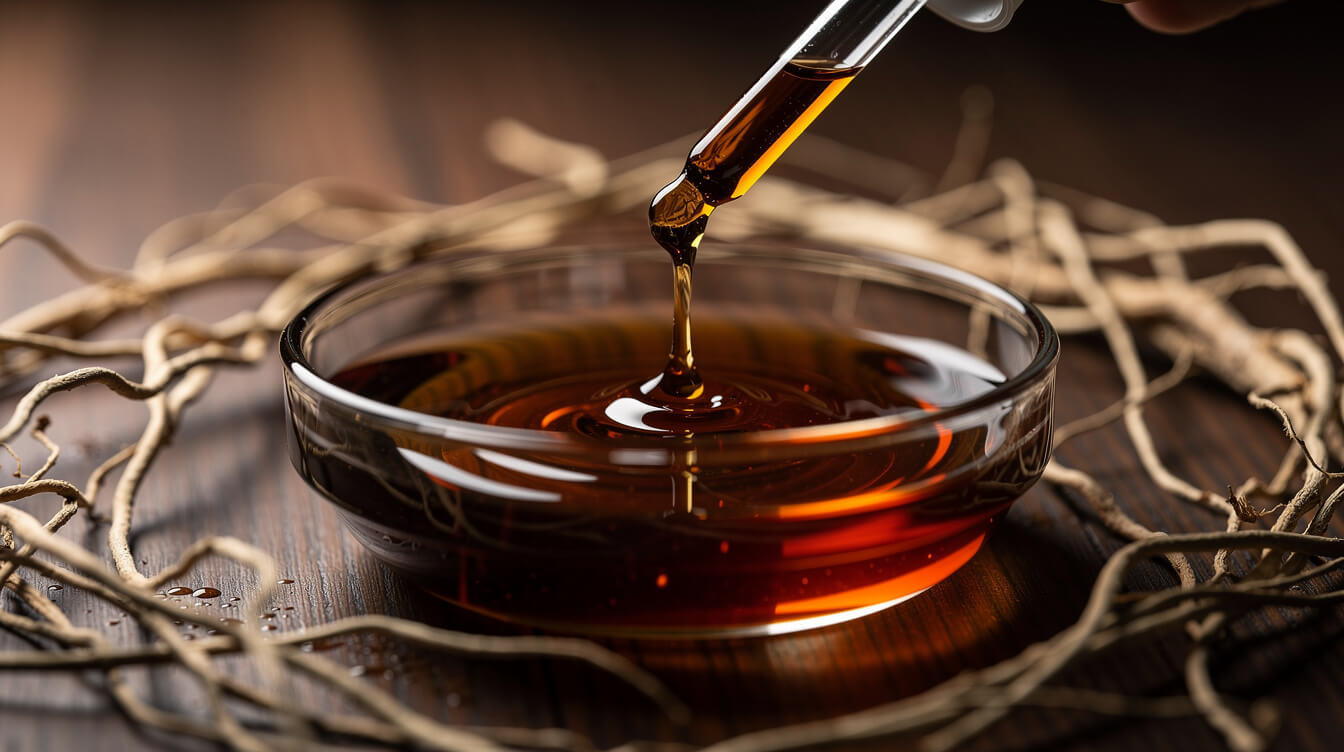
That density shows up immediately in the lab. Vetiver oil is dominated by heavy sesquiterpene alcohols and ketones — vetiverol, vetivone, and khusimol are the three most-cited constituents — each with a molecular weight roughly double that of the linalool in lavender or the limonene in orange oil. Heavier molecules have dramatically higher boiling points and lower vapor pressure, which is a technical way of saying vetiver simply doesn’t want to become airborne on its own. In perfumery terms, it’s classified as a true base note: the scent that’s still present eight-plus hours after the top and heart notes have faded. It’s also part of why raw vetiver oil is thick and viscous at room temperature, closer to honey than to the thin, watery consistency of a citrus oil.
How Vetiver Oil Is Actually Extracted
Extraction time is the other giveaway. Citrus peel oils are typically cold-pressed in minutes; light floral and herb oils are usually steam-distilled in one to three hours. Vetiver root requires 14 to 24 hours of steam distillation to coax the oil out of the root fibers, and even then, yield is low — often under 1% by dry weight of root material. That long, slow extraction pulls out a far broader and heavier range of compounds than a quick distillation ever could, which is exactly why the finished oil behaves more like a resin than a typical essential oil.
Vetiver Essential Oil Benefits: What the Grounding and Focus Claims Actually Hold Up
The reputation vetiver has for grounding, focus, and steadiness isn’t marketing invention — it tracks with what’s known about how base-note aromas interact with the olfactory system. Because vetiver’s heavy molecules linger in the air (and in the nasal passages) far longer than a top note, the scent signal reaching the brain’s limbic system is sustained rather than a quick spike-and-fade. Small aromatherapy studies on vetiver and related earthy sesquiterpenes have reported modest reductions in self-reported restlessness and improvements in sustained attention during seated tasks, which lines up with why it’s such a common pairing in study-focus and end-of-day wind-down blends. If you want the fuller research picture on scent and concentration, we’ve broken down the evidence in our guide to essential oils for focus.
The most commonly reported effects, in rough order of how consistently people report them, are:
- A settled, grounded mood — often described as an antidote to a scattered or restless afternoon
- Support for sustained focus during study or deep-work blocks, especially paired with a citrus top note
- A steadier, slower feeling in the body that many people use as part of a pre-sleep wind-down ritual
- An earthy, woody backdrop that makes other oils in a blend feel more complex and long-lasting
What the research does not support is treating vetiver as a substitute for medical care around attention or sleep disorders — it’s a mood-and-atmosphere tool, not a treatment. Used honestly, vetiver’s real strength is as a settling anchor scent: something to diffuse during a wind-down ritual, a study block, or a slow Sunday reset, where its job is to make the room feel steadier, not to fix a diagnosis.
Sign Up to Get Your FREE
e-Book Here…
Why Vetiver Clogs Ultrasonic Membranes and Heat-Diffuser Wicks Over Time

Here’s the part almost nobody selling vetiver oil tells you: the same viscosity that gives vetiver its staying power on skin and in a room is exactly what causes trouble in most diffuser types. Ultrasonic diffusers work by vibrating a submerged ceramic disc at a high frequency to break a water-and-oil mixture into a fine mist. That disc has an oil-facing membrane with microscopic pores designed around thin, low-viscosity oils that emulsify easily in water. Vetiver’s dense sesquiterpene load doesn’t emulsify cleanly — it tends to sit on top of the water rather than disperse through it, and repeated use leaves a gummy residue on the membrane that dulls output and can eventually stop the unit from misting at all.
Heat-based and reed diffusers have the same problem from a different angle. A heat diffuser relies on a wick or ceramic plate absorbing oil and releasing it as it warms; thick vetiver oil moves through a wick far more slowly than a citrus oil, and what does travel through tends to caramelize slightly under sustained heat, leaving a sticky, darkened residue in the wick channel. Reed diffusers fare no better — the reeds themselves can partially seal over, throttling scent output within a few weeks.
If you’ve ever noticed a diffuser running noticeably weaker after a few weeks of using a heavy base-note oil, this buildup is very often the reason — and it’s worth ruling out before assuming the oil itself has gone bad or the unit is defective. Our guide on how to clean an essential oil diffuser walks through the isopropyl-based process most manufacturers recommend for clearing this kind of residue from a membrane or wick.
How Nebulizing Diffusion Handles Base Notes Without the Buildup
A Nebulizing Diffuser® sidesteps this problem structurally rather than through extra maintenance. Instead of a membrane or a wick, it uses an open glass venturi tube: a stream of air moves across the mouth of a thin glass tube submerged in pure, undiluted oil, and Bernoulli’s Principle pulls the oil up and atomizes it directly into micro-droplets — no water, no heat, and critically, no absorbent surface for a heavy oil to coat and clog. Because there’s nothing for vetiver’s dense sesquiterpenes to stick to, the glass tube stays clear with routine rinsing, and the oil is dispersed at room temperature, which also protects those larger, more heat-sensitive molecules from the mild thermal degradation a wick or hot plate can cause over time.
This is also why undiluted diffusion actually matters for a root oil like vetiver: because nothing is cut with water, you get vetiver’s full aromatic complexity in the air rather than a thinned-out fraction of it. This is precisely why base-heavy oils — vetiver, patchouli, and sandalwood among them — are the oils nebulizing diffusion was built for. If you’re comparing diffusion technologies more broadly, our honest nebulizing vs. ultrasonic diffuser comparison covers the full tradeoff picture, not just how each handles thick oils.

Join Now and Get a Coupon for 10% Off!
Blending Vetiver: Pairing a Heavy Base Note With Citrus and Floral Top Notes

Because vetiver is a true base note, it works best in a blend the same way a bass line works in a song: underneath everything else, giving the composition weight without taking the melody. A reliable starting ratio for a home diffuser blend is 1 part vetiver to 3 parts top or heart notes — vetiver’s intensity means a little goes a long way, and overdoing the base note can make a blend smell muddy or damp rather than grounded. Citrus oils (sweet orange, bergamot, grapefruit) brighten and lift a vetiver base beautifully, while florals like ylang ylang or geranium add roundness without competing for attention.
Three Vetiver Blends Worth Trying
- Amber Evening: 4 drops sweet orange, 2 drops ylang ylang, 2 drops vetiver — a warm, autumn-evening profile that reads as grounded rather than heavy
- Focus Session: 3 drops bergamot, 3 drops rosemary, 1 drop vetiver — a bright, alert blend with just enough weight to keep attention from drifting
- Slow Sunday Reset: 3 drops lavender, 2 drops cedarwood, 2 drops vetiver — a deep, woody wind-down blend for a late-afternoon pause
Vetiver shares this base-note diffusion behavior with two other oils worth exploring if you like this register — our guides on sandalwood essential oil benefits and patchouli essential oil uses cover the same heavy-oil considerations in more depth, including how each compares to vetiver in weight and longevity.
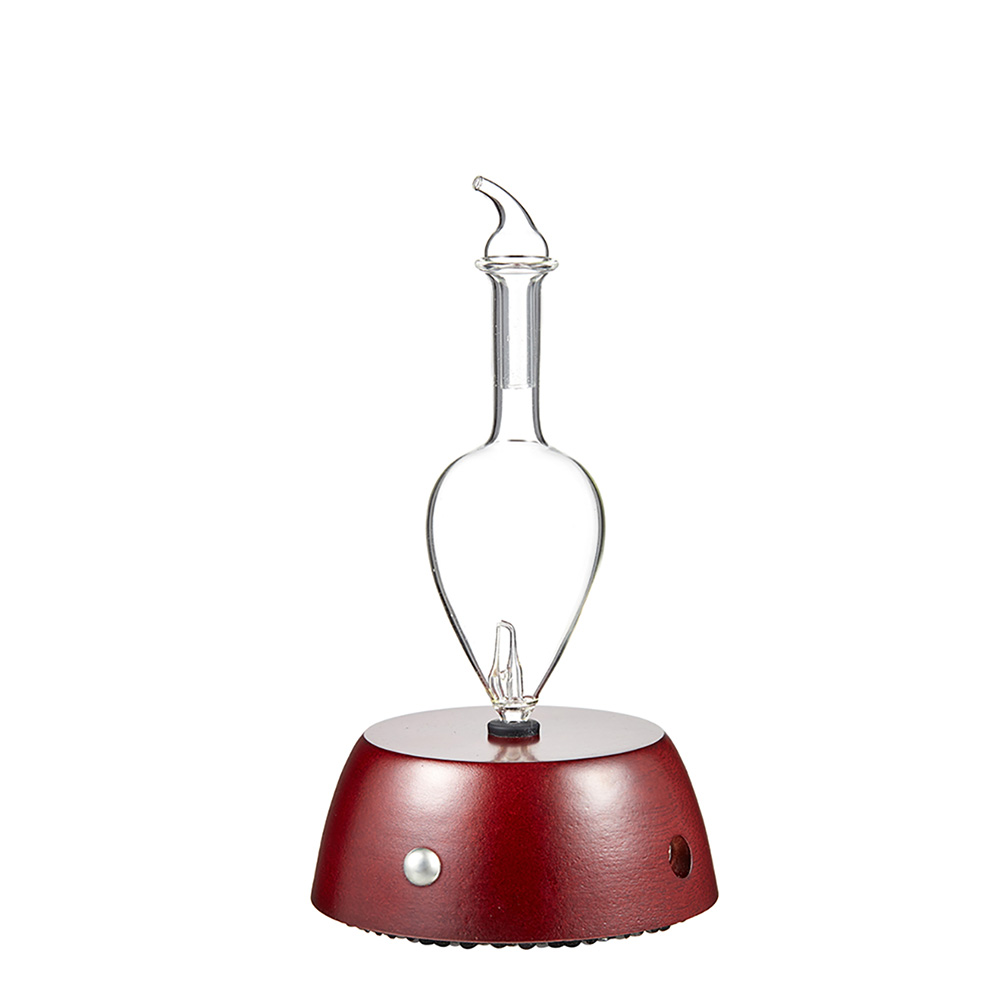
Give Base Notes Like Vetiver a Diffuser Built for Them
Our handcrafted Nebulizing Diffuser® uses an open glass venturi — no membrane, no wick, no water — so vetiver, sandalwood, and patchouli disperse at full strength without residue buildup.
Buying and Storing Vetiver Oil: It Darkens and Thickens Further With Age
Vetiver is one of the few essential oils that’s genuinely prized for aging, much like a fine whisky — reputable suppliers sometimes hold stock for a year or more before bottling, because the aroma deepens and rounds out over time. That also means fresh vetiver will keep darkening and thickening in your cabinet, which is normal and not a sign of spoilage. A few storage habits keep it performing well for years:
- Keep it in its original amber or cobalt glass bottle — clear glass and plastic both let in light and, for plastic, can slowly degrade from the oil’s solvent properties
- Store away from direct sunlight and heat sources; a cabinet or drawer at stable room temperature is ideal
- Cap it tightly and immediately after each use — vetiver oxidizes slowly, but oxygen exposure still speeds up thickening
- Expect the oil to thicken and darken over 1–2 years — this is normal aging, not spoilage, unless the scent turns sour or rancid
Always dilute vetiver in a proper carrier before any topical use, and never apply it undiluted to skin — our carrier oil guide and drop-ratio blending guide both cover safe dilution math in detail.
When you’re ready to buy, look for oil labeled with its country of origin (Haitian vetiver tends to run greener and smokier, Javanese vetiver more woody-sweet) and steam-distilled rather than solvent-extracted. Our own Vetiver Essential Oil, 100% Pure is steam-distilled and bottled for exactly the kind of slow, grounding diffusion blends covered in this guide.

Join Our Exclusive Member Club to get Big Discounts!
Frequently Asked Questions About Diffusing Vetiver Essential Oil
Can I use vetiver oil in any diffuser I already own?
Yes, but expect an ultrasonic or heat diffuser to need more frequent cleaning when you run vetiver regularly, since its viscosity is more likely to leave residue on the membrane or wick than a lighter oil would.
Why does my vetiver oil smell different after a year in the bottle?
That’s expected aging, not spoilage — vetiver deepens and darkens over time the way a fine whisky does. Only discard it if the scent turns sharply sour, rancid, or noticeably ‘off’ rather than simply richer.
How much vetiver should I use in a blend?
Start with roughly 1 part vetiver to 3 parts lighter top or heart notes. Its intensity means a small amount goes a long way, and too much can make a blend feel muddy rather than grounded.
Is it fine to diffuse vetiver around pets?
Vetiver is generally considered one of the gentler oils for passive, well-ventilated diffusing around dogs and cats compared to phenol-heavy oils, but every pet’s sensitivity is different. Run any diffuser in a room your pet can freely leave, keep sessions short, and watch for signs of discomfort the first few times you introduce a new oil.
Final Thoughts: Vetiver Rewards the Right Setup
Vetiver essential oil benefits — grounding, focus, a settled evening atmosphere — are real, but they’re only worth chasing if your diffuser can actually handle the oil’s unusual chemistry. Skip the membranes and wicks that clog over time, blend it thoughtfully with citrus and florals, and store it the way you’d store a good whisky, and vetiver becomes one of the most rewarding oils in a home aromatherapy collection rather than a bottle that quietly ruins your diffuser.