

Peppermint Essential Oil Benefits: The Chemistry Behind the Buzz
Most “peppermint essential oil benefits” roundups repeat the same short list of claims without ever explaining why peppermint feels the way it does. The real answer sits in one molecule: menthol binds directly to a cold-sensing receptor in your nose and skin, which is why a single breath of peppermint reads as an instant, physical jolt of alertness rather than just a pleasant smell. That mechanism, not folklore, is what makes peppermint one of the most reliably energizing scents in aromatherapy.
This guide covers the actual chemistry behind peppermint essential oil benefits, what controlled research says (and doesn’t say) about its effect on alertness and mood, how it’s grown and distilled, why peppermint is one of the most commonly adulterated oils on the market and how to spot a cut bottle, how to diffuse it so you get the crisp top note instead of a muted version of it, three tested blend recipes, and the safety details that matter if you’re diluting it for topical use.
Why Peppermint Essential Oil Benefits Feel So Immediate

Peppermint essential oil (Mentha piperita) is steam-distilled from a natural hybrid of watermint and spearmint. Menthol makes up roughly 30–55% of the oil depending on growing conditions and harvest timing, and it’s the reason peppermint feels categorically different from a floral or woody oil.
Menthol activates a receptor called TRPM8 — the same cold-sensing channel your skin uses to register a cool breeze — even though nothing about the room’s actual temperature has changed. That’s why inhaling peppermint reads as an instant “wake up” rather than a slow build. The rest of the profile (menthone for softness, 1,8-cineole for a clean herbal edge, trace limonene for brightness) rounds out the aroma, but menthol and TRPM8 are doing the heavy lifting behind nearly every peppermint essential oil benefit people describe.
Because menthol is a relatively light, volatile molecule, it also fades fast when heat is involved — one reason a no-heat Nebulizing Diffuser® preserves that crisp top note better than a candle or wax warmer, which cooks off the sharpest aromatic compounds before they ever reach your nose.
Peppermint’s growing season also affects the profile you end up with. Oil distilled from plants harvested at peak flowering — typically mid-to-late summer in most growing regions — carries the highest menthol concentration. Plants harvested earlier lean sweeter and greener, closer to spearmint’s carvone-forward profile, which is one reason two bottles labeled “peppermint” from different harvest years can smell noticeably different even from the same farm.
What the Research Actually Shows About Peppermint and Alertness
A lot of “peppermint benefits” content leans on vague claims. The honest version is narrower and more interesting: a controlled driving-simulation study (Raudenbush et al., 2001, published in the North American Journal of Psychology) found that participants exposed to peppermint aroma reported greater alertness, less frustration, and reduced fatigue during a sustained driving task compared to an unscented control group.
That’s a study about self-reported alertness and mood during a demanding task — not a treatment claim, and not evidence peppermint oil does anything for a diagnosed medical condition. Read fairly, it supports what most people notice anecdotally: a whiff of peppermint tends to sharpen attention and lift mood in the moment, which is exactly the kind of ambient, wellness-support effect aromatherapy is suited for.
If you want a low-effort way to test this yourself: diffuse peppermint for two minutes before a task that needs sustained attention (studying, a long email session, a late-afternoon meeting) and notice whether the room feels different to work in. That’s the honest, non-clinical way to evaluate whether peppermint essential oil benefits your own focus — not a substitute for sleep, hydration, or a break when you actually need one. See our full guide to essential oils for studying and focus for how peppermint compares to rosemary and citrus oils for this specific use case.
Good times to reach for it: the first hour at a desk, a mid-afternoon slump, before a study session, or anytime a room has gone stale and you want it to feel awake again. It pairs naturally with citrus and herbal notes (see the blend recipes below) rather than heavier florals, which tend to mute its brightness.
Sign Up to Get Your FREE
e-Book Here…
Peppermint Purity: Why This Oil Gets Cut More Than Most
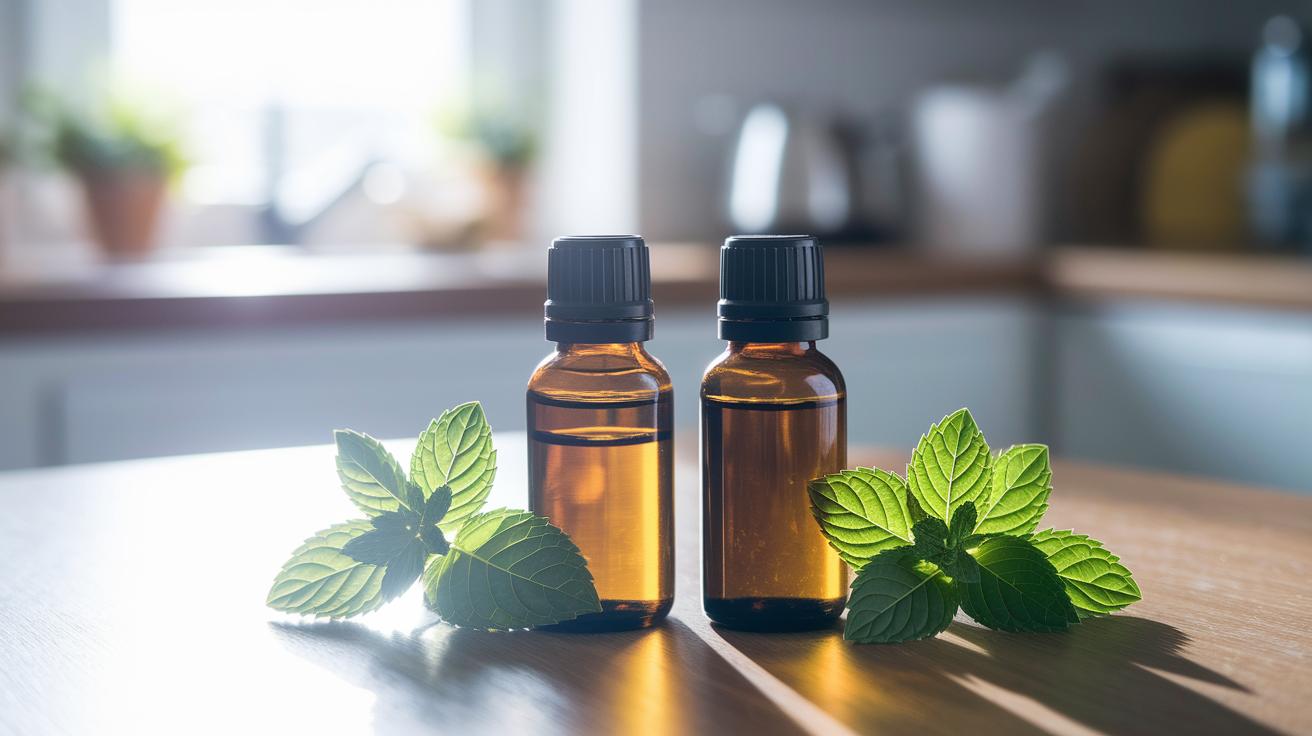
Peppermint is one of the most commonly adulterated essential oils on the market — a detail almost no “benefits” article mentions. Because true Mentha piperita oil is more expensive to produce than related mint species, some suppliers extend it with cornmint oil (Mentha arvensis), a cheaper relative with a harsher, more medicinal edge, or with isolated synthetic menthol crystals added back into a thinner base oil.
A cut bottle is hard to spot by smell alone, but there are tells: an aroma that feels sharp and one-note instead of layered (real peppermint has a soft sweetness under the menthol bite), a price that undercuts the cost of legitimate small-batch distillation, and a supplier who can’t produce GC/MS (gas chromatography-mass spectrometry) testing documentation on request. Reputable producers, including Organic Aromas, test each batch and can show you what’s actually in the bottle rather than just what the label claims.
This matters practically, not just ethically: a cut oil changes the ratio of menthol to the rest of the profile, which changes how it performs in a Nebulizing Diffuser®. A harsher, thinner-smelling bottle is often a sign you’re not getting the oil the label describes.
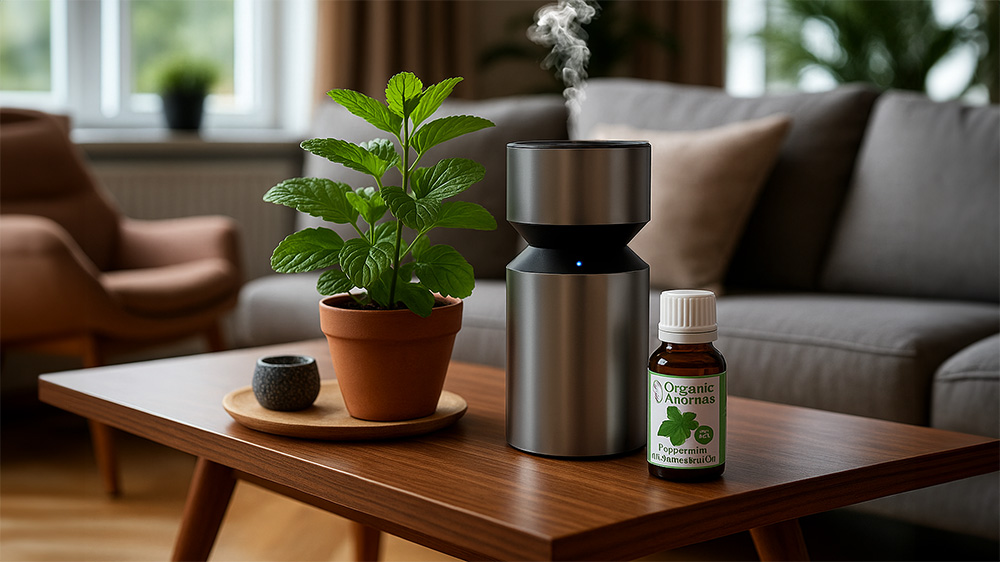
Because menthol is so volatile, how you diffuse peppermint also changes what you actually smell. An ultrasonic diffuser dilutes the oil into a water tank, which mutes the top note and shortens how long it lasts in the room. A Nebulizing Diffuser® atomizes the undiluted oil directly, with no water and no heat, so the full menthol-forward brightness reaches the air instead of getting diluted or cooked off.
| Method | Peppermint drops | Water/carrier | Typical result |
|---|---|---|---|
| Nebulizing Diffuser® | 3–5 drops | None (pure oil) | Sharp, true-to-bottle top note; strongest and fastest to fill a room |
| Ultrasonic diffuser | 8–10 drops | ~100 mL water | Softer, shorter-lasting aroma; note diluted by water vapor |
| Topical blend | 1–2 drops per teaspoon | Carrier oil | Localized scent only; always patch-test first |
Our 100% Pure Organic Peppermint Essential Oil is unlikely to gum or clog the atomizer the way thicker resinous oils can, which makes it an easy everyday oil to run in a Smart Mobile Mini Nebulizing Diffuser® at a desk or in a small home office. For a deeper look at drop counts and blend ratios specifically for diffusing, see our peppermint essential oil for diffuser guide.
Peppermint Blend Recipes for Focus, Energy, and Calm
These are diffuser-forward blends built around peppermint’s brightness, designed for a Nebulizing Diffuser®. Each uses whole-number drop ratios so they’re easy to scale to your reservoir size.
- Morning Focus Blend — 3 drops peppermint, 2 drops rosemary, 1 drop lemon. A bright, herbal-citrus combination for the first hour at a desk.
- Peppermint-Eucalyptus Reset — 4 drops peppermint, 2 drops eucalyptus. A cool, clean pairing for a mid-afternoon energy dip.
- Evening Balance Blend — 2 drops peppermint, 3 drops lavender. Peppermint’s brightness softened by lavender’s floral base note, for a transition-to-evening atmosphere rather than an energizing one.
For topical use, a roller blend of 5 drops peppermint and 2 drops eucalyptus in 10 mL of carrier oil (always dilute before skin contact) makes an easy on-the-go pulse-point option, though the aroma won’t carry nearly as far or last as long as diffusing it.
A note on blending ratios generally: peppermint is a top note, meaning it evaporates and is perceived fastest of any layer in a blend. If you’re building your own combination beyond the three above, start with peppermint at no more than 40–50% of the total drop count, or it will dominate every other oil in the mix regardless of how strong they are individually.
Join Now and Get a Coupon for 10% Off!
Peppermint Safety and Dilution: What to Know Before Topical Use

Peppermint’s menthol content makes it one of the stronger essential oils on skin, so a few honest precautions matter:
- Always dilute before topical use. Mix 1–2 drops of peppermint into 1 teaspoon of carrier oil and patch-test on your inner forearm, waiting up to 24 hours before wider use — see our full dilution chart and ratios guide for other oils and use cases.
- Keep it away from eyes, broken skin, and infant or toddler skin. Menthol’s cooling sensation can be sharp and uncomfortable on sensitive areas.
- If you’re pregnant or nursing, check with your healthcare provider first. Research on peppermint oil use during pregnancy and breastfeeding is limited, so caution is the honest position rather than a blanket “it’s fine.”
- Watch for skin irritation on first use — redness, burning, or itching means it’s time to wash the area and stop, not push through it.
- Keep diffusers out of reach of curious pets. Cats in particular process certain aromatic compounds more slowly than humans or dogs, so ventilate the room and give them the option to leave if you’re diffusing around them.
Organic Aromas essential oils are formulated for diffusion and diluted topical use, not for ingestion — we don’t recommend taking any essential oil internally, and peppermint oil is not an exception.
Frequently Asked Questions About Peppermint Essential Oil Benefits
What are the main peppermint essential oil benefits?
Peppermint is best known for its bright, energizing aroma — people diffuse it for a sense of alertness, mental clarity, and mood lift, driven by menthol’s activation of cold-sensing receptors. It’s an ambiance and mood tool, not a treatment for any medical condition.
Is peppermint essential oil good for focus?
Controlled research (Raudenbush et al., 2001) found peppermint aroma was associated with greater self-reported alertness and reduced fatigue during a sustained task. Many people diffuse it while working for that reason, though individual response varies.
Can I use peppermint essential oil on my skin?
Only diluted in a carrier oil, and only after a patch test. Undiluted peppermint oil is strong enough to irritate skin, especially around the eyes or on children.
Why does peppermint smell weaker in my ultrasonic diffuser?
Ultrasonic diffusers dilute oil into a water tank, which mutes menthol’s sharp top note. A Nebulizing Diffuser® atomizes the undiluted oil, so the aroma reads closer to what’s actually in the bottle.
How do I know if my peppermint oil has been cut or adulterated?
Look for an aroma that feels sharp and one-note rather than layered, a price well below legitimate small-batch distillation costs, and a supplier who won’t provide GC/MS testing documentation.
Can I diffuse peppermint every day?
Yes, in moderation — most people run it for focused stretches (an hour or two) rather than continuously, both to keep the aroma feeling fresh and because a strong scent running all day tends to fade into the background anyway.
Sign Up to Get Your FREE Essential Oils e-Book Here
Final Thoughts
Peppermint essential oil benefits come down to one molecule doing real, explainable work: menthol activating cold-sensing receptors for an instant sense of alertness, backed by at least one controlled study on mood and fatigue, not just tradition. Diffuse it undiluted through a Nebulizing Diffuser® to get the full crisp top note, buy from a supplier who can prove purity, dilute it properly before it touches skin, and treat it as what it honestly is — a bright, energizing addition to your day, not a medicine cabinet substitute.
Shop our 100% Pure Organic Peppermint Essential Oil, pair it with a Nebulizing Diffuser® built to carry its brightest notes intact, and explore our full guide to essential oils for focus for more desk-side blends.