


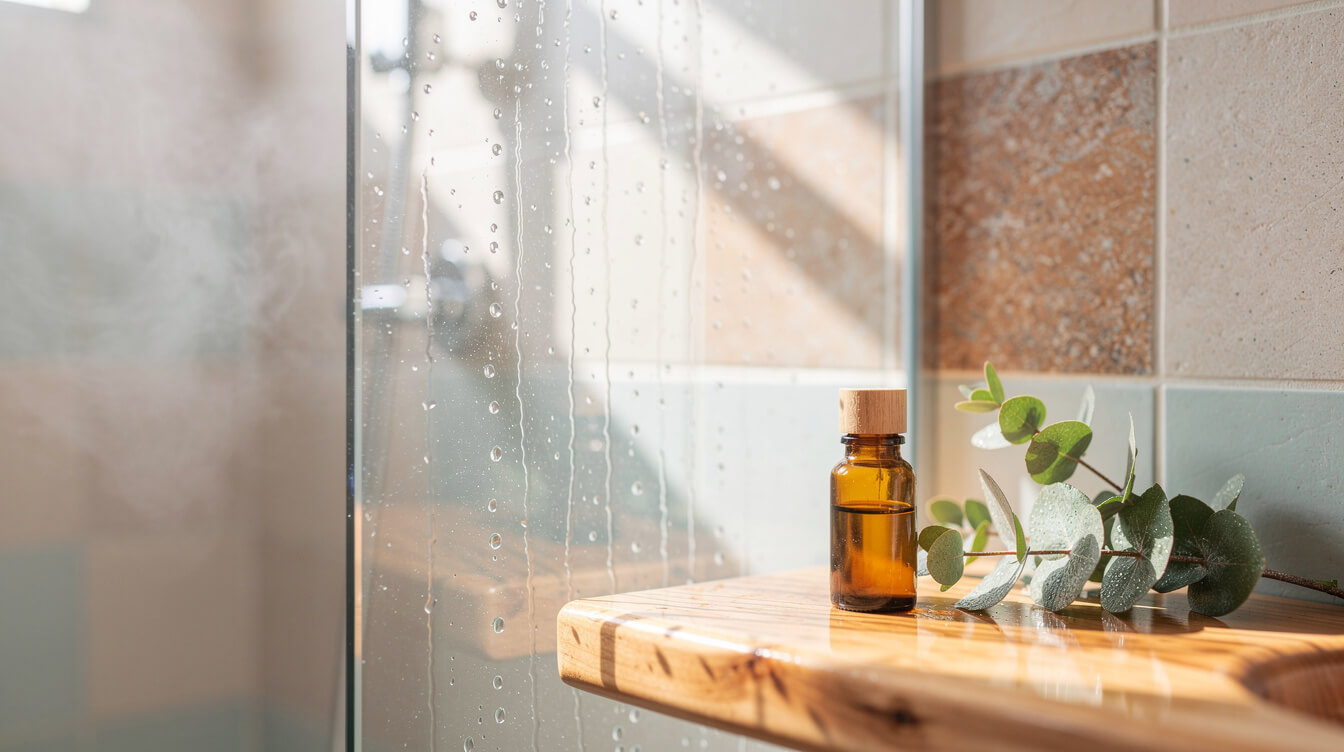
Essential Oils for Shower Steamers: Blends, Safe Ratios & the Heat Trade-Off
Search essential oils for shower steamers and you will find hundreds of near-identical recipes: baking soda, citric acid, water, a handful of drops, done. What almost none of them tell you is that the hot, humid environment you are dropping those oils into is quietly working against them. A shower steamer is one of the fastest, most dramatic ways to fill a room with aroma — and also one of the least efficient ways to actually deliver an essential oil intact.
This guide covers the blends that genuinely perform in a hot shower, the safe drop ratios most recipes get wrong, and the one thing every DIY tutorial skips: the heat trade-off. By the end you will know exactly which essential oils for shower steamers are worth your drops, how to make a batch that actually holds its scent, and when a room-temperature method will simply serve you better.
How Shower Steamers Actually Work
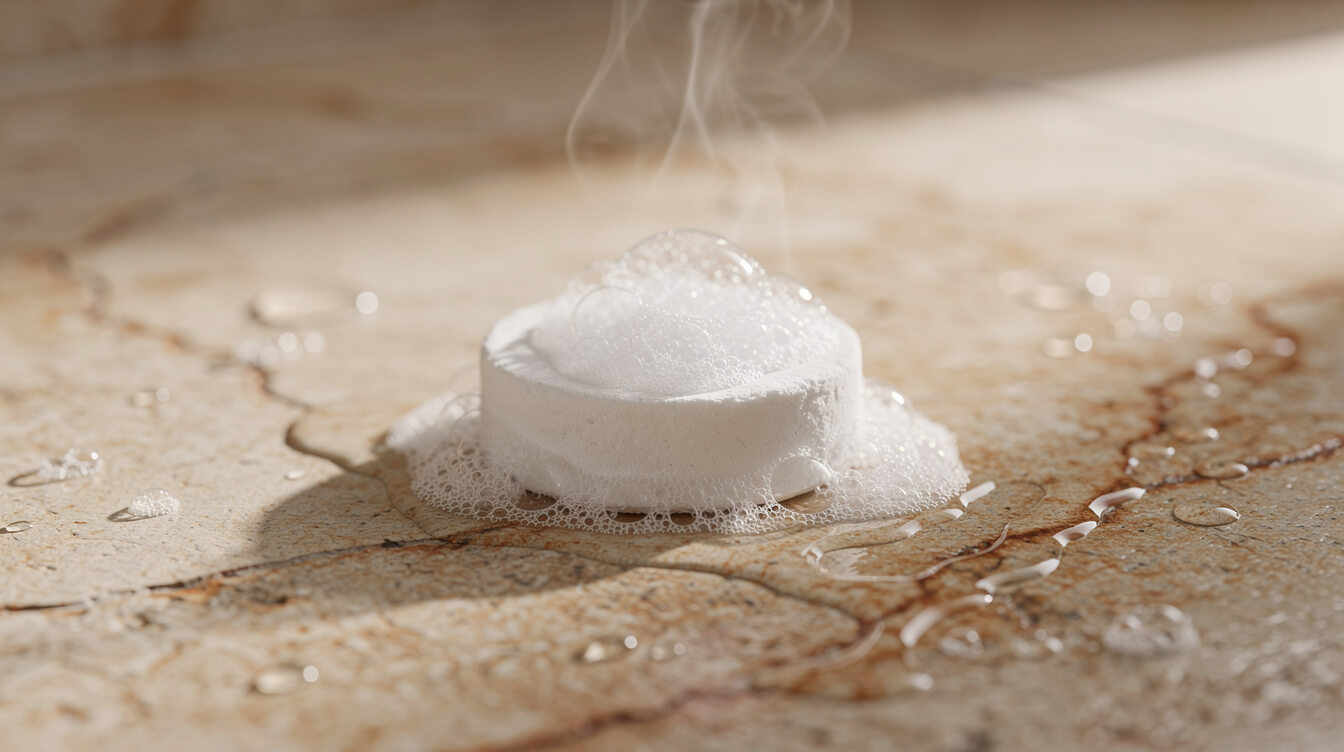
A shower steamer is a small, firm tablet made mostly of two ingredients: baking soda (sodium bicarbonate) and citric acid. On their own, sitting dry in a jar, they do nothing. The moment water hits them, the two react and release carbon dioxide — the same fizzing reaction that powers a bath bomb. That effervescence is not just for show. As the tablet bubbles apart, it flings the essential oil trapped inside it into the air as a fine mist, and the rising steam from your shower carries that mist up to nose height.
This is the key difference between a shower steamer and a bath bomb. You are not meant to stand under the water with it. Place the tablet on the shower floor, off to the side and out of the direct stream, so it dissolves slowly rather than washing away in seconds. The warm, moving air does the delivery work; the tablet is simply the fuel.
It is a genuinely clever bit of kitchen chemistry, and it explains both the appeal and the limitation. The appeal is instant, immersive scent. The limitation is that the whole performance is over in a few minutes — and, as we will see, the oils pay a price for that speed.
The Heat Trade-Off Nobody Mentions
Essential oils are not a single substance. Each one is a cocktail of dozens of volatile aromatic molecules, and those molecules evaporate at very different rates. Perfumers sort them into top notes (bright, light, fast to flash off — citrus, eucalyptus), middle notes (the heart of a blend — lavender, rosemary), and base notes (heavy, slow, grounding — cedarwood, patchouli). Volatility is exactly what a shower steamer exploits, and exactly where it stumbles.
Why hot steam front-loads and then flattens your scent
Heat accelerates evaporation. Drop a citrus-and-eucalyptus blend into a hot, steamy shower and the light top notes flash off almost instantly — you get a bright, gorgeous burst in the first thirty to sixty seconds. But those same molecules are gone just as fast. What is left is a thinner, heavier smell, and within a few minutes even that fades. The steamer does not release its aroma at a steady pace; it dumps the fast molecules first and the party ends early.
There is a second, subtler cost. Heat and humidity together speed up oxidation, the chemical ageing that turns a fresh oil dull and, in some cases, more likely to irritate skin. Citrus oils such as lemon and sweet orange are especially prone to it — their limonene content oxidises readily. A pre-made steamer that has sat in a warm bathroom for weeks, then meets a blast of hot vapour, is not delivering the same oil you would drip from a fresh bottle. For more on how oils change over time, our overview of what essential oils actually are is a useful primer.
None of this makes shower steamers worthless — a three-minute aromatic rush is a lovely thing. It just means you should choose oils that survive the heat well, and keep your expectations honest about how long the scent will last.
Sign Up to Get Your FREE Essential Oils e-Book Here
The Best Essential Oils and Blends for Shower Steamers
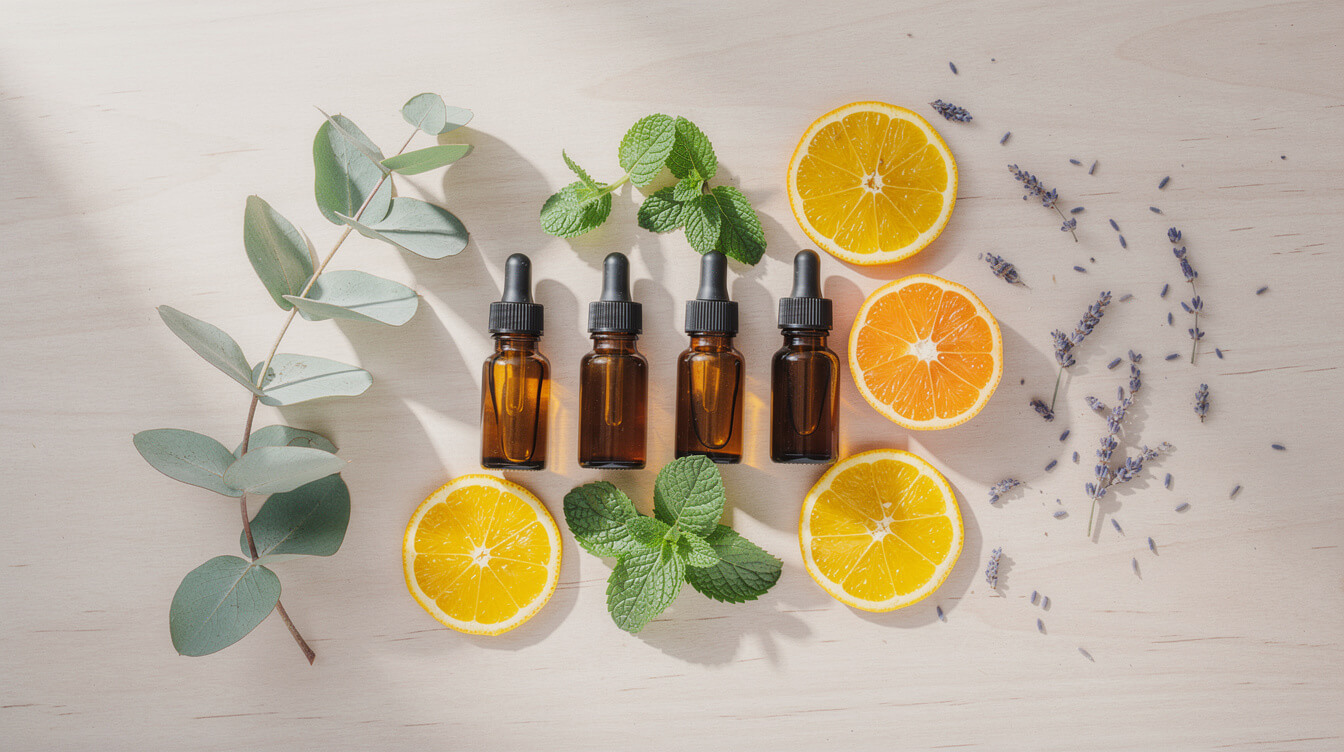
The oils that shine in a shower steamer are the ones with bright, assertive top and middle notes that can punch through steam. Heavy base notes largely go to waste here — they evaporate too slowly to register before the tablet is spent. Here are the workhorses, and what makes each one worth its drops:
- Eucalyptus — the classic steamer oil, rich in 1,8-cineole (often 60–85% of the oil). It reads instantly as fresh, cool and open, which is why it pairs so naturally with a warm shower. See our full eucalyptus essential oil guide for its chemistry and safe use.
- Peppermint — menthol delivers a genuine cooling sensation and cuts through humidity better than almost anything. A little goes a very long way; one or two drops per tablet is plenty.
- Lavender — the go-to for an evening wind-down ritual. Its calming reputation rests largely on linalool and linalyl acetate; we break down that ratio in our piece on lavender for sleep.
- Citrus (sweet orange, grapefruit, lemon) — instantly uplifting and morning-friendly, but the fastest to flash off and oxidise. Use them fresh and pair them with a slower partner.
- Rosemary and spearmint — herbaceous, clarifying middle notes that add staying power to a bright blend.
Three blends that survive the steam
These ratios are built for a batch of roughly ten to twelve tablets, so they translate to only one to two drops per steamer once divided — more on why that matters in the next section.
- Morning Wake-Up: 8 drops peppermint + 8 drops sweet orange + 4 drops rosemary. Bright, cooling and energising for a spa-like start to the day.
- Spa Escape: 10 drops eucalyptus + 6 drops spearmint + 4 drops lavender. The full steam-room feeling of clean, open air.
- Evening Wind-Down: 10 drops lavender + 6 drops sweet orange + 4 drops cedarwood. A softer, calming blend for a relaxing pre-bed shower.
If you want the same aromas to last well beyond the shower, the same blends work beautifully in a waterless Nebulizing Diffuser® in the bedroom — a natural handoff from a three-minute shower ritual to a whole calm evening.
Safe Ratios: How Many Drops (and Why More Backfires)
The single most common mistake in DIY shower steamer recipes is overdosing the oil. It feels intuitive that more drops mean more scent — but a shower steamer aerosolises everything you put in it and sends it straight to your face and airways in a small, enclosed, humid room. That changes the safety math.
A sensible target is 15 to 25 total drops of essential oil per batch of 10 to 12 tablets — roughly one to two drops per steamer. That is noticeably less concentrated than a leave-on skin product, and deliberately so, because you are inhaling the result rather than applying it. Menthol-heavy oils like peppermint should sit at the low end of that range.
Who should go easy, and why
- Young children: keep strongly menthol or 1,8-cineole oils (peppermint, eucalyptus) out of steamers used around babies and toddlers — these compounds can feel overwhelming in a small, steamy space. Gentle lavender or citrus is a kinder choice.
- Pregnancy and sensitive airways: if you are pregnant or prone to respiratory sensitivity, start with a single drop, keep the bathroom door cracked, and stop if anything feels harsh.
- The citric-acid factor: the fizz itself throws a fine acidic mist into the air. For most people it is a non-issue, but if you notice a tickle or cough, you are using too large a tablet in too small a room — size down.
The broader principle — that dose and delivery matter as much as which oil you pick — is the same one behind good diffusion practice. Our guide to how many drops of essential oil to use and our dilution chart both dig deeper into getting the amount right.
Sign Up to Get Your FREE
e-Book Here…
How to Make Shower Steamers: A Step-by-Step Recipe
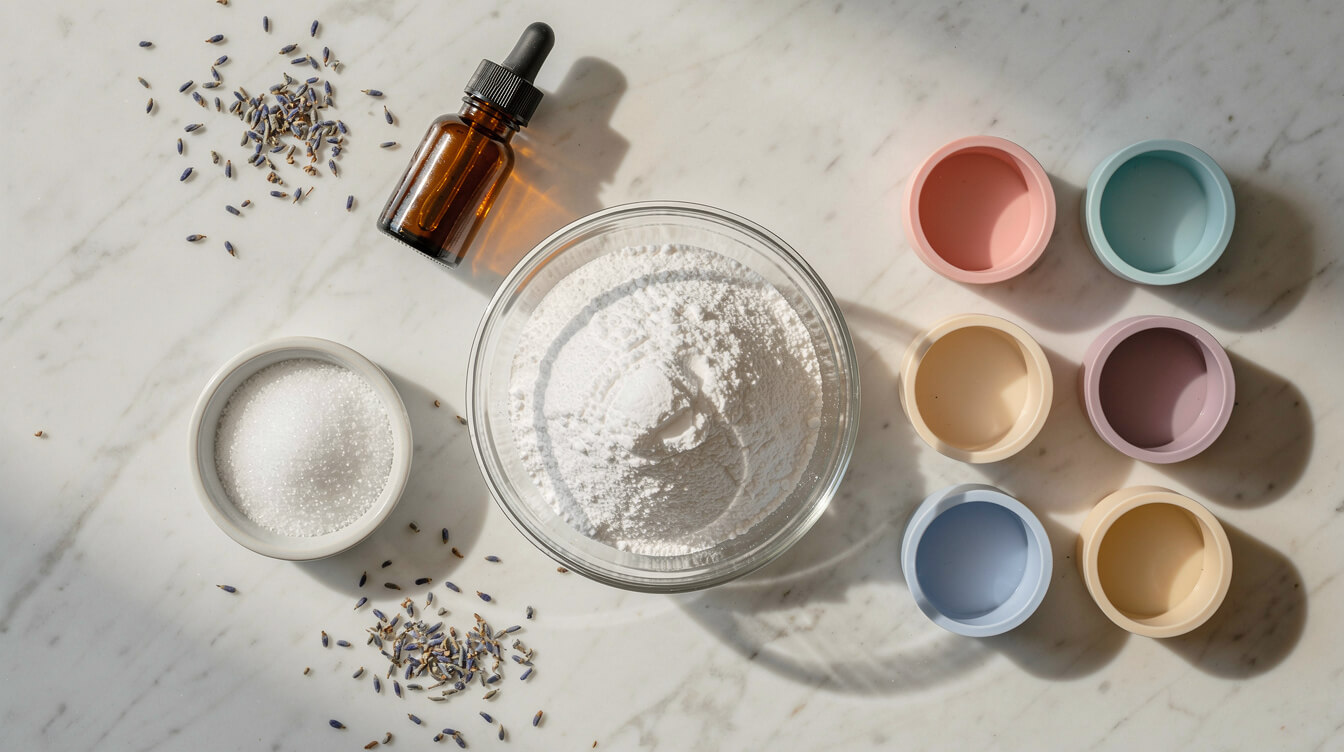
Making your own is cheaper than store-bought, and — crucially — it lets you add the oils last, so they are as fresh as possible when they finally meet the steam. Here is a reliable base recipe.
What you need
- 1 cup baking soda
- 1/2 cup citric acid
- 2–3 tablespoons cornstarch (optional, for a slower, longer fizz)
- A spray bottle of water or witch hazel
- Your essential oil blend (15–25 drops total)
- Silicone molds or a muffin tin
The method
- Mix the dry ingredients thoroughly in a bowl, breaking up any citric-acid clumps with the back of a spoon.
- Spritz, do not pour. Add water one light mist at a time, stirring fast, until the mix just holds together when squeezed — like damp sand. Too much liquid triggers the fizz early and the tablets will not set.
- Add the oils last and fold them in quickly and evenly. Adding them at the end keeps the volatile top notes intact.
- Press firmly into the molds — the harder you pack, the slower they dissolve.
- Cure for 24 hours before unmolding, then store in an airtight container away from heat and humidity. Use within about two to three weeks, while the oils are still fresh.
That last line is the quiet catch. Because the oils begin oxidising the moment they are exposed to air, heat and moisture, even a perfectly made steamer is a short-shelf-life product. A sealed bottle of pure oil, by contrast, stays viable far longer — which points to the trade-off at the heart of this whole method.
A Room-Temperature Alternative That Keeps the Whole Scent
If your real goal is aromatherapy — the full, intact character of an essential oil, delivered gently and lasting more than a few minutes — then heat is the wrong tool. Every gain a shower steamer gives you in drama, it takes back in efficiency: fast oils flash off, delicate molecules oxidise, and the whole experience is finished before your conditioner is rinsed out.
This is exactly the problem a Nebulizing Diffuser® is built to solve. Instead of heat or water, it uses a burst of air across a glass reservoir — Bernoulli’s Principle — to atomise pure, undiluted essential oil into an ultra-fine mist at room temperature. Nothing is diluted, nothing is cooked, and nothing is aerosolised alongside citric acid. You breathe the oil as the plant made it, and the aroma fills a room for as long as you run it. Our handcrafted Smart Nebulizing Diffuser® does this in real wood and medical-grade Pyrex glass, with no plastic anywhere in the vapor path.
There is a reason ultrasonic units — the ones that mist water and oil together — cannot match this. Water dilutes the aroma and only carries the lightest fraction of the oil. If you want the honest comparison, our breakdown of the nebulizing diffuser versus ultrasonic diffuser lays it out, and our look at whether diffusers are safe covers the method side.
The most satisfying setup is not either-or. Use a shower steamer for the quick, invigorating rush that fits a morning routine — and let a Nebulizing Diffuser® carry the calm, full-bodied aroma through the rest of your evening.
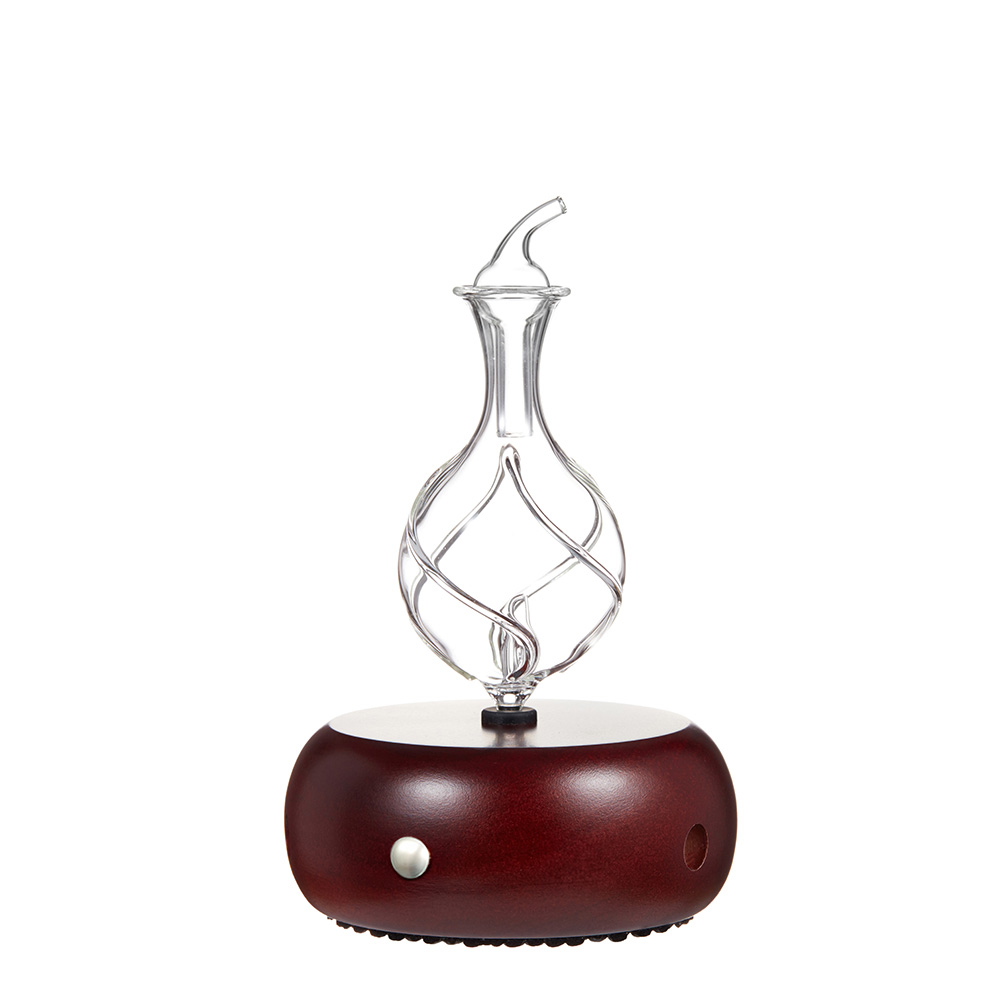
Skip the Heat. Keep the Whole Scent.
Our handcrafted Nebulizing Diffuser® disperses pure, undiluted essential oil at room temperature — no water, no heat, no citric-acid aerosol. You get the full aromatic profile, and it lingers all evening instead of vanishing in three minutes.

Join Our Exclusive Member Club to get Big Discounts!
Frequently Asked Questions
Can I just drop essential oils straight onto the shower floor?
You can, but it is wasteful and uneven. Without the baking-soda-and-citric-acid base to aerosolise the oil, most of it simply washes down the drain, and neat oil on a wet floor can be a slip hazard. A proper steamer — or a Nebulizing Diffuser® outside the shower — gives you far more scent per drop.
How many drops of essential oil per shower steamer?
Aim for one to two drops per tablet, which works out to roughly 15 to 25 drops across a batch of ten to twelve. Menthol-rich oils like peppermint belong at the lower end, especially in a small bathroom.
Why does my shower steamer lose its scent so quickly?
Two reasons: heat flashes off the light top notes almost immediately, and the tablet releases everything at once rather than pacing itself. If long-lasting aroma is what you are after, a room-temperature Nebulizing Diffuser® will hold a scent for hours rather than minutes.
Which essential oils are best for shower steamers?
Bright, steam-friendly oils perform best: eucalyptus, peppermint and spearmint for an invigorating spa feel, lavender for winding down, and citrus for a morning lift. Save heavy base notes like patchouli for a Nebulizing Diffuser®, where their slow evaporation is an asset rather than a waste.
The Honest Bottom Line
Essential oils for shower steamers can turn an ordinary shower into a brief, immersive ritual — as long as you respect what the format is and is not. Choose oils that survive heat, keep your drop counts modest, add the oils last, and use your steamers while they are fresh. Do that, and a homemade tablet delivers a genuine spa moment for pennies.
Just remember the trade-off written into every fizzing tablet: speed and drama on one side, intact oils and lasting aroma on the other. When you want the quick rush, reach for the steamer. When you want real, undiluted aromatherapy that lingers, let a Nebulizing Diffuser® do what heat never can — deliver the whole scent, exactly as the plant made it.