

Cedarwood Essential Oil Benefits: The Complete Autumn Aromatherapy and Diffusion Guide
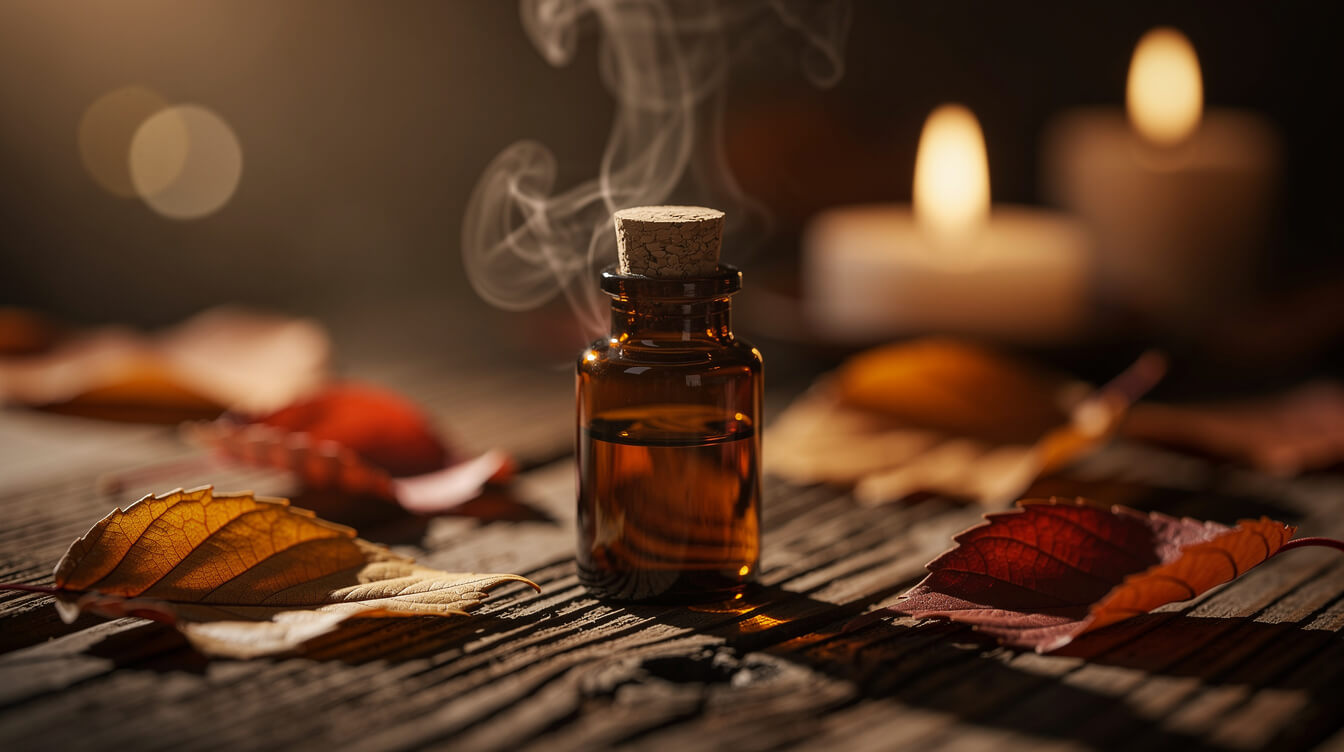
Cedarwood essential oil benefits have been celebrated for thousands of years, but the best reason to diffuse cedarwood right now is one almost no one talks about: timing. As autumn arrives and the air shifts from the bright volatility of summer to something denser, warmer, and more grounded, one essential oil mirrors that transition more perfectly than any other. Cedarwood is the quintessential autumn aromatherapy oil — not because of marketing, but because of chemistry.
This guide goes deeper than the standard benefits list. You will learn why the specific variety of cedarwood in your bottle matters enormously, which molecule defines “autumn forest air” and why nebulizing diffusion preserves it better than other delivery methods, five tested blend recipes from twelve years of customer aromatherapy rituals, and a simple bedtime protocol built on how cedrol interacts with the resting nervous system. No medical claims. Just chemistry, sourcing, and sensory ritual.
Atlas vs. Virginian Cedarwood: Cedrol Content and Why Your Choice Matters
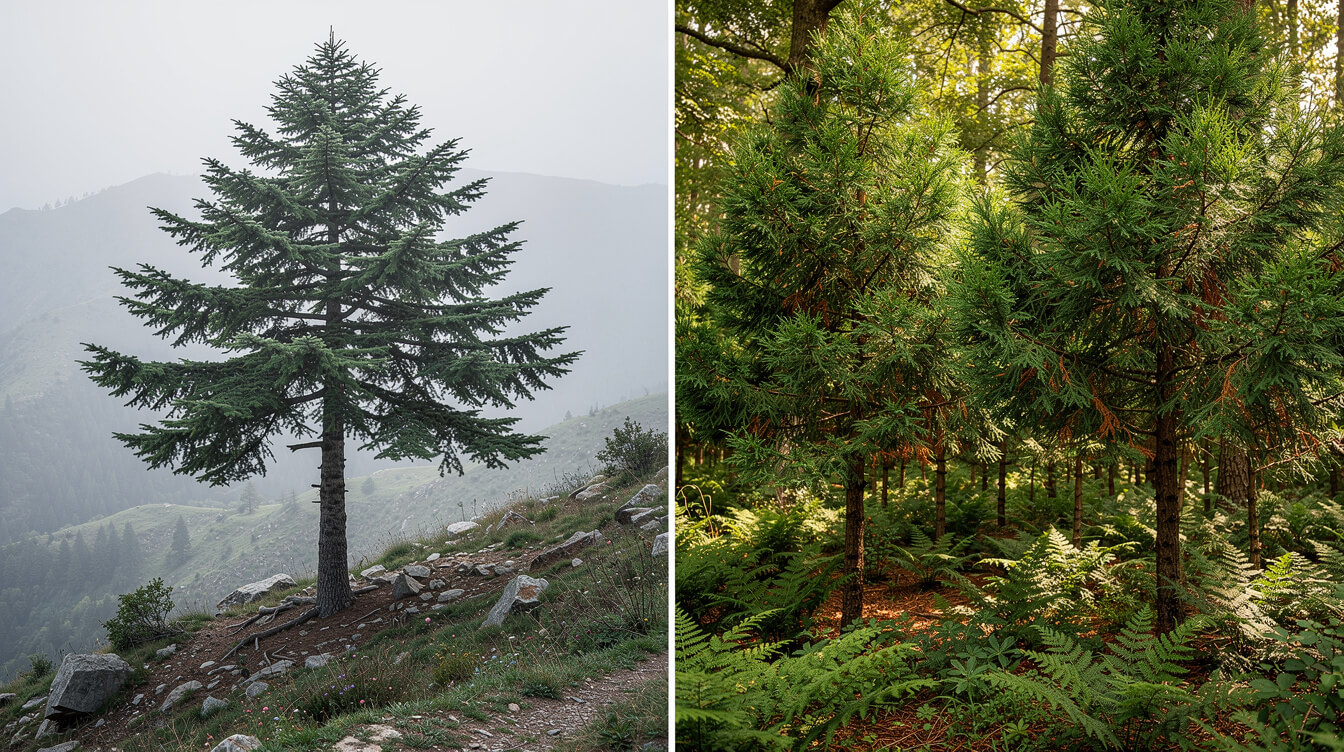
Walk into almost any essential oil retailer and you will find “cedarwood essential oil” on the shelf — one label, no qualifier. What that label conceals is that two very different botanical species are bottled under that name, and they differ in both sustainability profile and therapeutic aromatic character.
Atlas Cedarwood (Cedrus atlantica) is the species most associated with ancient aromatherapy — it is the cedar of biblical accounts and North African tradition, native to the Atlas Mountains of Morocco and Algeria. Its aroma is deep, tenacious, and slightly camphorous. The problem: Cedrus atlantica is classified as Endangered on the IUCN Red List. Wild-harvested Atlas cedar is under pressure from over-extraction, habitat loss, and climate-driven drought stress. Reputable suppliers source Atlas cedarwood from certified sustainable plantations, but it is worth asking before you buy.
Virginian Cedarwood (Juniperus virginiana) — botanically a juniper rather than a true cedar — is the ecologically responsible choice for everyday aromatherapy use. It is abundant across eastern North America, grows in disturbed and marginal lands, and is frequently a byproduct of lumber and fencing operations, meaning the oil is derived from wood that would otherwise be waste. Its aroma profile is warmer, softer, and woodier than Atlas, with a more pronounced sweetness. And crucially: Virginian cedarwood typically contains the highest cedrol content of any commercial cedarwood essential oil — often 20–35% cedrol by GC analysis — compared to Atlas cedar at 15–20%.
Cedrol is the sesquiterpene alcohol that defines cedarwood aromatherapy. It is the molecule most studied in human olfaction and autonomic nervous system research involving cedarwood oil. If you want the deepest, most grounded, most authentically “autumn forest” aromatherapy experience, Virginian cedarwood (Juniperus virginiana) with verified GC/MS testing is the better choice — for both efficacy and environmental responsibility.
Look for third-party GC/MS results when purchasing. Authentic cedarwood oils will show cedrol alongside cedrene (a sesquiterpene hydrocarbon), with no synthetic camphor or cedryl acetate additions. Any supplier unwilling to share test results should be treated with caution.
Cedarwood Essential Oil Benefits: Calm, Grounded Presence, and Skin Support
The aromatic benefits of cedarwood essential oil cluster around a single dominant character: grounding. Where citrus essential oils lift and brighten the mood and eucalyptus clears and sharpens the mind, cedarwood drops the room several degrees lower in the best possible way — quieting mental restlessness, encouraging a sense of rootedness, and anchoring a space in warmth.
When inhaled through a pure-air diffusion method, cedarwood’s primary active compounds — sesquiterpenes including cedrol, alpha-cedrene, and beta-cedrene — reach the olfactory epithelium and trigger the limbic system response associated with calm and settled attention. Inhaled cedrol in particular has been associated in preliminary research with reduced sympathetic nervous system activation, which is the “fight-or-flight” state that underlies stress, light sleep, and restless evenings.
For aromatherapy purposes (not topical skin care), cedarwood is valued for:
- Emotional grounding: The base-note quality of cedarwood in blending is unmatched. It anchors brighter top and middle notes — sweet orange, bergamot, frankincense — and prevents a blend from feeling insubstantial or fleeting.
- Atmosphere creation: A single drop of cedarwood in a blend transforms a room from generically pleasant to deeply atmospheric — the olfactory equivalent of candlelight on old timber.
- Focus and creative work: The grounding quality that aids sleep in high doses becomes meditative clarity at low doses, making cedarwood an underrated oil for writing sessions, reading, or slow creative work.
- Evening transition rituals: Diffusing cedarwood as daylight ends signals a physiological shift from active to receptive — a prompt to the nervous system that the day’s vigilance can soften.
For skin care applications (topical, always diluted in a carrier oil), cedarwood has a long history of use for supporting scalp health and oil balance. This is a separate subject from aromatherapy and beyond the scope of this guide; consult a trained aromatherapist or dermatologist for topical protocols.
Sign Up to Get Your FREE
e-Book Here…
The Autumn Chemistry of Cedarwood: Why Cedrol Smells Like Fall
Cedrol (C₁₅H₂₆O) is a sesquiterpene alcohol — part of the broader family of aromatic compounds that define the oldest, most stable plant fragrances on Earth. Unlike monoterpenes such as linalool or limonene, which are light, volatile, and evaporate quickly, sesquiterpenes are heavy molecules with high boiling points. This molecular weight is exactly why cedarwood smells the way it does: it lingers.
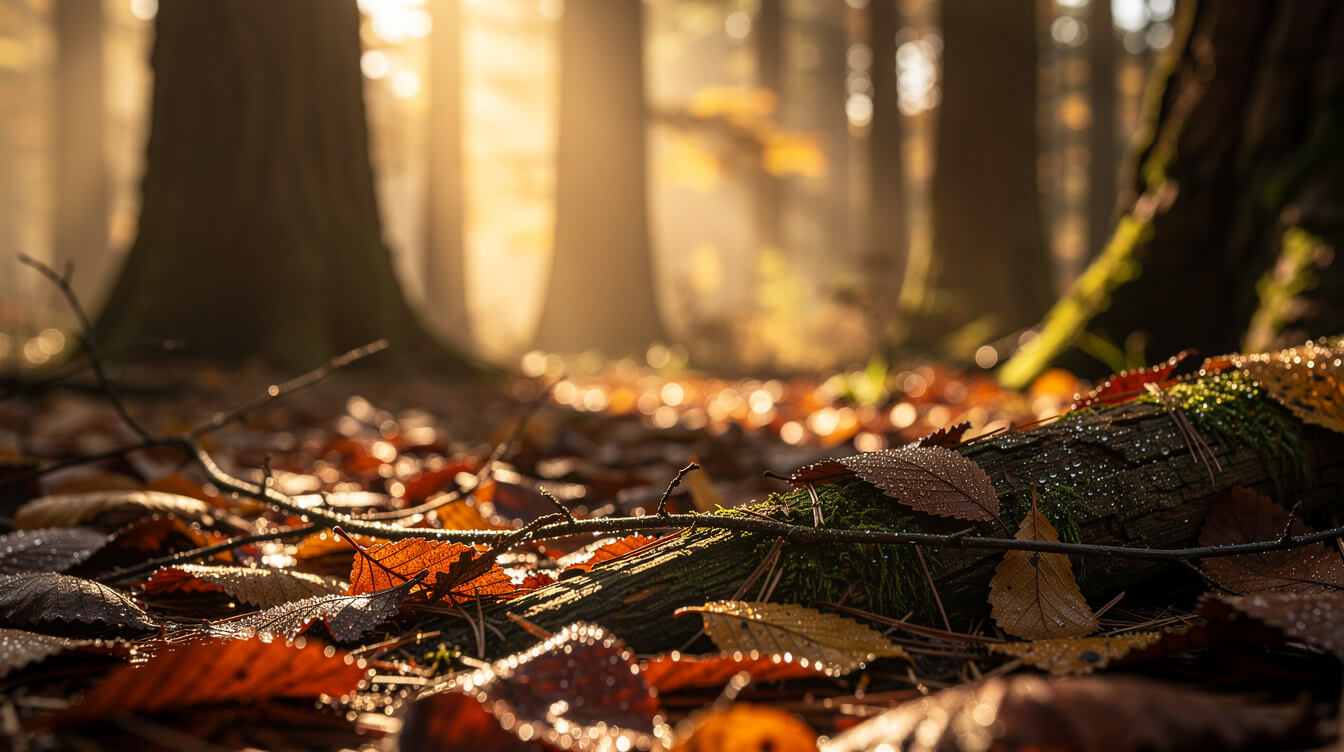
The olfactory character of cedrol is inseparable from what humans perceive as “autumn forest air.” The scent of fallen leaves, aged timber, the first morning that genuinely feels cold — these aromas carry sesquiterpene signatures, and cedrol is among the most recognizable. Forest bathing researchers studying Japanese hinoki cypress (a cedar relative) have identified cedrol as a primary olfactory cue for the “forest air” effect associated with reduced cortisol and extended expiration in breathing patterns.
Why does this matter for aromatherapy timing? Because the autumn sensory environment — shorter days, cooler air, the compression of daylight into gold and amber — is the natural context for grounding aromatherapy. Cedarwood does not merely complement autumn; it chemically encodes it. Diffusing high-cedrol Virginian cedarwood in late September is essentially an olfactory reminder to the nervous system of the forest floor — a deeply familiar, deeply calming environmental cue.
The sesquiterpene family also includes beta-cedrene and alpha-cedrene, which contribute the more camphor-adjacent, slightly medicinal facet of cedarwood’s profile. Together with cedrol, they create the characteristic three-dimensionality of the oil: woody on the surface, subtly sweet in the heart, gently tenacious in the dry-down. This complexity is what makes cedarwood a foundational note in essential oil blending — it performs differently at different concentrations and drop counts.
One important distinction: sesquiterpenes’ high boiling points (200–290°C, compared to 140–175°C for many monoterpenes) mean they are the compounds most vulnerable to heat-based diffusion methods. Candle warmers, plug-in diffusers, and even some ultrasonic devices with warm baseplates can degrade sesquiterpene structures before the aroma fully volatilizes. Cold-air, pressure-driven diffusion — which operates at room temperature — preserves these heavier molecules intact.
Five Tested Autumn Blend Recipes with Cedarwood (From 12 Years of Customer Rituals)
These blend ratios come from patterns observed across Organic Aromas’ customer aromatherapy community over more than a decade — thousands of home diffuser users sharing what works for autumn evenings, sleep preparation, creative focus, and grounding after difficult days. Each recipe is calibrated for a Nebulizing Diffuser® reservoir. Adjust proportionally if your diffuser has a different reservoir size.
For context on autumn essential oil blends more broadly, our full seasonal blending guide covers additional oils beyond cedarwood. The recipes below focus specifically on cedarwood as the anchor note.
1. The Autumn Hearth (Grounding, Evening)
The most popular cedarwood blend in our 12-year corpus. Warm, resinous, and immediately atmospheric.
- Cedarwood (Virginian): 3 drops
- Frankincense (Boswellia serrata): 2 drops
- Sandalwood (Australian Santalum spicatum): 2 drops
- Sweet Orange: 2 drops
This blend layers a grounding base (cedarwood + sandalwood), a resinous heart (frankincense), and a warm top note that lifts without brightening excessively (sweet orange). The result is a room that smells like a firelit library. Total drops: 9.
2. Forest Morning (Focus, Mid-Day Calm)
Lighter than Autumn Hearth — designed for daytime use when presence and gentle focus matter more than deep relaxation.
- Cedarwood (Virginian): 2 drops
- Bergamot (FCF, furocoumarin-free): 3 drops
- Rosemary (ct. camphor): 2 drops
The bergamot and rosemary add brightness and mild cognitive clarity without competing with the cedarwood anchor. Total drops: 7.
3. Deep Sleep Anchor (Bedtime)
Paired with lavender’s linalool/linalyl acetate profile, cedarwood’s cedrol adds a sedating depth that lavender alone does not achieve. This is a low-light, high-depth blend.
- Cedarwood (Virginian): 3 drops
- Lavender (Lavandula angustifolia, high-linalool): 3 drops
- Roman Chamomile: 1 drop
Use with the 2-minute on/off intermittent protocol described in Section 6. Total drops: 7.
4. Cozy Reading Nook (Late Afternoon, Ritual Transition)
- Cedarwood (Virginian): 2 drops
- Vanilla (CO₂ extract or oleoresin): 1 drop
- Clove Bud: 1 drop
- Sweet Orange: 2 drops
This is a spice-forward blend that reads as “mulled cider.” The clove bud is intentionally restrained at 1 drop — it is a hot, dominant oil and overpowers easily. Total drops: 6.
5. Rain and Cedar (Introspective, Studio)
- Cedarwood (Virginian): 3 drops
- Petrichor-profile blend: Vetiver 1 drop + Patchouli 1 drop
- Juniper Berry: 2 drops
This is an unusual, challenging blend for those who find most aromatherapy too sweet. It is deeply earthy, with a green/mineral facet from the juniper berry. Diffuse in small spaces for maximum effect. Total drops: 7.

Sign Up to Get Your FREE Essential Oils e-Book Here
Why Nebulizing Diffusion Is Best for Cedarwood: The Sesquiterpene Science
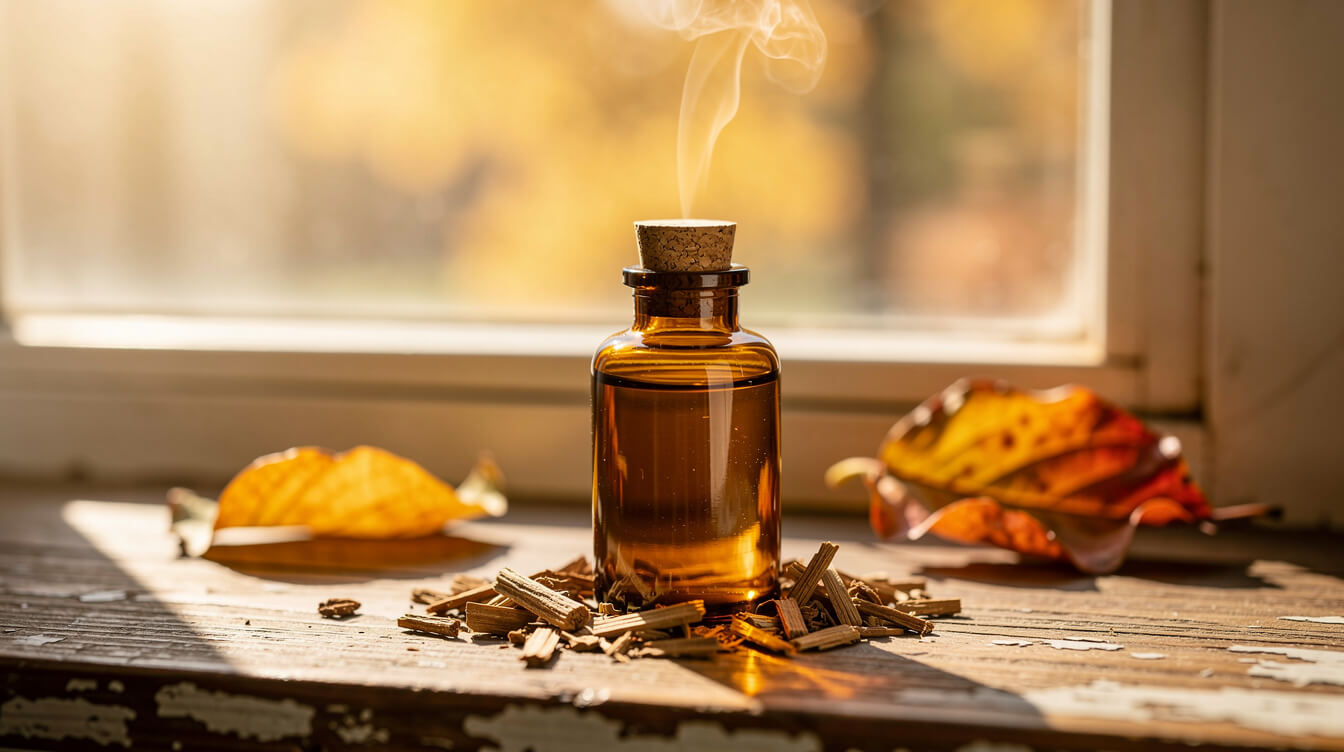
Not all diffusers treat an essential oil the same way. For cedarwood specifically — an oil whose defining character is built on heavy sesquiterpene molecules — the delivery method makes a meaningful difference in what you actually experience.
The fundamental difference between diffusion technologies lies in what they do to the oil before it reaches the air. Nebulizing Diffusion vs. Ultrasonic Diffusion covers the full physics, but the relevant comparison for cedarwood comes down to temperature and molecular integrity.
Ultrasonic diffusers work by adding water to the oil and using ultrasonic vibration to break the mixture into a cool mist. The water dilutes the oil — typically 5–10 drops of essential oil per 300–500 ml of water — and the resulting mist carries a heavily diluted aromatic profile. For high-vapor-pressure monoterpenes like limonene or linalool, this dilution is manageable. For low-vapor-pressure sesquiterpenes like cedrol, the water dilution effectively strips the heaviest, most therapeutic molecules from the mist. What you smell from an ultrasonic cedarwood diffusion is a lighter version of the oil — the volatile top fractions, not the full sesquiterpene depth.
Heat-based methods (candle warmers, plug-in diffusers, heated reed diffusers) present a different problem: temperature. Cedarwood’s sesquiterpenes have boiling points in the 200–290°C range. Gentle heat applied through a candle or warming element may partially volatilize lighter fractions while leaving heavier cedrol molecules behind in the oil reservoir. More importantly, prolonged heating can drive oxidation of the sesquiterpene structures, altering the aroma profile and reducing the oil over time.
Nebulizing Diffusers® operate on Bernoulli’s Principle: compressed air passes through a narrow tube at high velocity, creating a low-pressure zone that draws essential oil up from the reservoir and atomizes it into a fine, dry mist — with no water, no heat, and no dilution. The entire oil is volatilized as a complete molecular spectrum. This means the full sesquiterpene profile of cedarwood — cedrol, alpha-cedrene, beta-cedrene — reaches the air intact, at the ratios present in the bottle, at room temperature.
The result is richer, denser, longer-lasting cedarwood aromatherapy compared to ultrasonic or heat methods. For a high-sesquiterpene oil like Virginian cedarwood, the difference is not subtle. The tenacious, grounding depth that defines cedarwood aromatherapy is carried by precisely the molecules most compromised by water dilution and heat — which is why diffusion technology matters when cedarwood is the anchor note in your autumn blend.
The Nebulizing Diffuser® Collection at Organic Aromas uses precisely this cold-air Bernoulli atomization method — no plastic in the oil path, medical-grade Pyrex glass reservoir, handcrafted hardwood housing. For cedarwood aromatherapy, it is the delivery method the oil’s chemistry calls for.
Cedarwood for Sleep: The Intermittent Diffusion Protocol That Works
The most common misuse of cedarwood as a sleep aid is also the simplest: running the diffuser continuously for hours while you lie in bed and wondering why you eventually find the aroma irritating rather than calming. The problem is not cedarwood. The problem is continuous exposure.
Olfactory fatigue — the well-documented phenomenon where the nose’s receptors temporarily desensitize to a constant aroma — sets in within 20 to 45 minutes of continuous diffusion. After that point, you are no longer meaningfully perceiving the oil. For a detailed protocol on using essential oils for sleep more broadly, our guide to essential oils for sleep covers the full four-stage bedtime approach.
For cedarwood specifically, the intermittent diffusion protocol works significantly better than continuous diffusion:
- Begin 30 minutes before intended sleep: Add 4–6 drops of cedarwood (or a cedarwood blend) to your Nebulizing Diffuser® reservoir.
- Run for 2 minutes: One short, concentrated burst fills the room with the full sesquiterpene spectrum.
- Off for 28–30 minutes: The aroma lingers because cedarwood’s sesquiterpenes are persistent. Your olfactory receptors reset during the pause.
- Optional second burst: If you are still awake after the first 30-minute cycle, one more 2-minute burst. Rarely needed.
This 2-minutes-on, 28-minutes-off cycle prevents olfactory adaptation, uses far less oil (two short bursts versus continuous run), and keeps the aroma fresh and perceptible rather than background noise.
The blend most effective for this protocol from our customer corpus: cedarwood 3 drops + lavender 3 drops + Roman chamomile 1 drop. The lavender’s linalool supports the transition to sleep; the chamomile ester adds a gentle soporific quality at low dosage; the cedarwood grounds the blend and extends its duration in the air.

Join Now and Get a Coupon for 10% Off!
Choosing Pure Cedarwood Essential Oil: Sourcing, Purity Markers, and What to Avoid
The cedarwood market has a significant adulteration problem, primarily because the oil’s primary molecule, cedrol, can be synthesized inexpensively and added to low-grade or diluted oil to pass casual olfactory testing. This is why GC/MS (gas chromatography/mass spectrometry) testing matters more for cedarwood than for many other essential oils.
When evaluating a cedarwood essential oil, look for:
- Species declaration: The label should state Juniperus virginiana (Virginian) or Cedrus atlantica (Atlas). “Cedarwood” with no botanical name is insufficient.
- GC/MS results: Any quality supplier should make batch-specific gas chromatography results available. Virginian cedarwood should show cedrol at 20–35%, cedrene fractions at 15–30%, with no synthetic camphor or cedryl acetate additions.
- Country of origin: Virginian cedarwood: USA (particularly Texas, Kansas, eastern states). Atlas cedarwood: Morocco, Algeria (verify sustainable plantation sourcing).
- Extraction method: Steam distillation of heartwood. Cold-pressed “cedarwood” does not exist as a commercial product.
- Price check: Cedarwood is an affordable oil — there is no reason to pay premium prices for a standard Virginian cedarwood. If a supplier is charging dramatically more than market rate, they are likely over-relying on marketing rather than quality. Conversely, suspiciously cheap oils may be adulterated or misrepresented species.
The Organic Aromas pure essential oil range sources Virginian cedarwood (Juniperus virginiana) from US-based distillers with full GC/MS documentation. All oils are tested for purity before filling — the same standard applied to every oil in the collection. When you purchase a pure essential oil from Organic Aromas, you are buying the chemistry, not just the label.
Bringing It All Together: Your Autumn Cedarwood Practice
Cedarwood essential oil is not a new discovery. It is one of the oldest aromatic substances humans have used intentionally — found in ancient Egyptian embalming resin, documented in Ayurvedic and traditional Chinese practice, built into the fragrance traditions of nearly every culture that had access to cedar forests. What is new is understanding why it works: the cedrol molecule, the sesquiterpene architecture, the physics of diffusion that determines how much of that architecture actually reaches you.
The autumn timing is not accidental. Cedarwood’s warm, grounding, forest-floor character is chemically aligned with the seasonal shift happening right now: shorter days, cooler temperatures, the year moving inward. An evening diffusion of Virginian cedarwood — high in cedrol, delivered intact by a Nebulizing Diffuser® using the intermittent protocol — is one of the simplest, most accessible ways to create an atmosphere that invites the nervous system to settle.
Start with the Autumn Hearth recipe above: cedarwood 3 drops, frankincense 2, sandalwood 2, sweet orange 2. Set your diffuser to run for two minutes, then let the room breathe for thirty. Pick up a book. Light a candle. The rest follows. For more seasonal aromatherapy ideas, explore our guide to essential oil blends for fall or dive into the full range of Nebulizing Diffusers® and pure essential oils at Organic Aromas.