

Pet Safe Air Freshener: Why Pet Odor Comes Back on Humid Days (and What Actually Clears It)
Searching for a pet safe air freshener usually starts the same way. The room smells fine all week, then a rainy afternoon arrives and suddenly the living room smells like the cat, or the dog, or both. You reach for something that promises freshness without putting your animals at risk, and the shelf is full of labels saying pet safe, pet friendly and non-toxic.
This guide takes a different route. Before we talk about any product, we’ll look at what those labels actually mean, and at the chemistry of why pet odor keeps coming back on humid days. Once you see what’s going on in the carpet, the answer to “which air freshener?” changes. You fix the source first, then the air, and only then decide whether you want scent at all. If you do, we’ll show you the most controllable way to add it.
What “Pet Safe” on an Air Freshener Label Actually Means
Here is the uncomfortable starting point: in the United States there is no single regulated definition of “pet safe” on an air freshener label. The same goes for “pet friendly,” “non-toxic” and “natural.” These are marketing terms. A brand can print them without meeting any shared test standard, and two products with the same claim can contain completely different ingredients.
Ingredient disclosure doesn’t help as much as you’d hope, either. Fragrance mixtures can be listed simply as “fragrance.” In a widely cited 2010 study in Environmental Impact Assessment Review, Anne Steinemann and colleagues analyzed the emissions of 25 top-selling fragranced products, including air fresheners. They found 133 different volatile organic compounds, an average of 17 per product. Twenty-four of them are classified as toxic or hazardous under U.S. federal law, and every product emitted at least one. Products marketed as “green” or “organic” weren’t significantly different. Very few of those compounds appeared on the labels.
How to read a label anyway
Look for what the claim is attached to. “Safe for use around pets when used as directed” is a narrower promise than it sounds. Read the directions: many say to keep animals out of the room during use or until the spray has dried or settled.
Look for full ingredient lists. A brand that names every component, including what’s in its “fragrance,” is giving you something to check with your vet. “Fragrance” alone tells you nothing.
Notice the format before the scent. As you’ll see below, how a product releases scent (continuously, with heat, as an aerosol, from a liquid a pet can reach) often matters more than which scent it is.
Treat third-party marks for what they are. Programs like the EPA’s Safer Choice review ingredients against human health and environmental criteria. That’s useful, but it isn’t a pet-specific safety test.
Why Pet Odor Comes Back on Humid Days
If your home smells fine in a dry week and noticeably “pet” after rain, you’re not imagining it, and no air freshener will fix it on its own. Pet odor is mostly a chemistry problem sitting in your floors and furniture, not a fragrance problem floating in the air.
Ammonia: the smell bacteria make later
Fresh urine from a healthy pet doesn’t smell especially strong. The sharp, eye-watering smell develops afterwards. Urine is rich in urea, and common household bacteria carry an enzyme called urease that splits urea into ammonia and carbon dioxide. That reaction needs moisture. While a spot is wet, the bacteria keep working. When it dries, they slow almost to a stop, which is why a dried accident can seem to disappear.
Cats have their own odor chemistry
Cat urine has an extra ingredient that dog urine doesn’t. In a 2006 study in Chemistry & Biology, Masao Miyazaki and colleagues at Japan’s RIKEN institute showed that cats excrete a protein called cauxin, made only in the kidneys of cats and their close relatives. Cauxin produces a compound called felinine. Felinine itself is odorless. But when the researchers left cat urine at room temperature, felinine slowly broke down into sulfur-containing volatile compounds, including 3-mercapto-3-methyl-1-butanol. Those compounds give cat urine its unmistakable “catty” smell. Mature males produce the most, and the pathway switches on at around three months of age.
That’s the reason a cat accident can smell worse days later than it did on the first day. The odor is still being manufactured in the carpet.
The “uric acid crystals” story, honestly
Nearly every cleaning-product page blames “uric acid crystals.” It’s partly true, but it’s overstated for most pets. Uric acid is very poorly soluble in water (roughly 60 mg per liter at room temperature), so where it’s present it does linger. However, most dogs and cats convert uric acid into allantoin, which dissolves easily. The famous exception is the Dalmatian, along with other dogs carrying the same gene variant. Cornell’s veterinary college describes these dogs as unable to convert uric acid to allantoin. So for the typical cat or dog, the lingering residue is mostly a mix of urea, salts, proteins and, in cats, felinine.
The humidity trigger
Here’s the part that ties it together. Dried urine leaves a residue of salts and organic matter deep in carpet pads, upholstery foam, grout and unsealed wood. That residue is hygroscopic: it pulls water out of the air. On a humid day it quietly re-wets itself. Bacteria start producing ammonia again, cat-urine compounds volatilize more readily, and the smell comes back as if the accident had just happened.
This also explains why scent alone fails. A spray, plug-in or candle adds a top layer of fragrance over a source that is still producing odor. The next humid day, the source wins again.
Sign Up to Get Your FREE Pets
e-Book Here…
Fix the Source First: Cleaners, Litter Boxes and Airflow
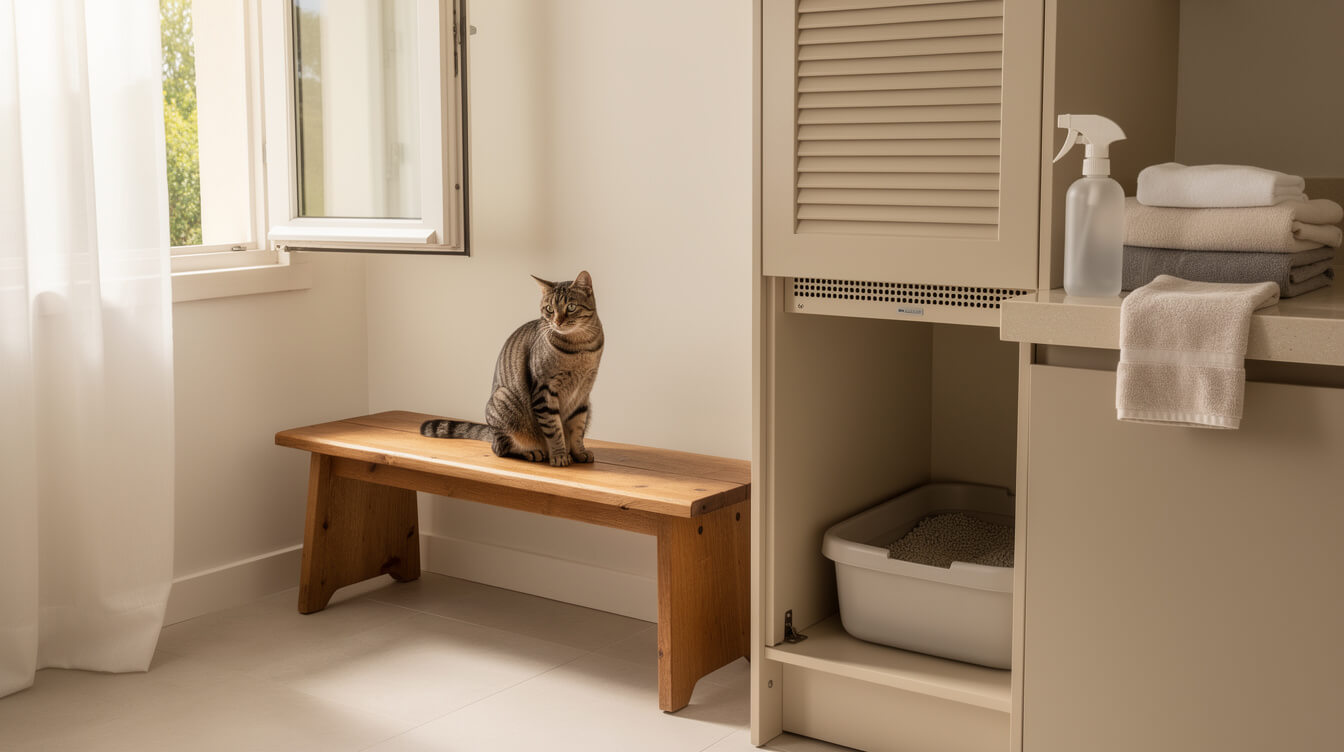
The most effective pet odor strategy has three layers, in this order: remove the source, move the air, then (optionally) add scent. Most advice jumps straight to the last step.
1. Use an enzymatic cleaner, and use it properly
Enzymatic (or bio-enzymatic) cleaners contain enzymes or beneficial bacteria that break down the proteins, urea and other organic residues behind the smell, rather than covering it. They work, but only if they reach everything the urine reached.
Blot, don’t scrub. Press out as much fresh urine as you can with paper towels. Scrubbing pushes it deeper and spreads it wider.
Go as deep as the accident went. Urine soaks through carpet into the pad. A light mist on the surface treats the fibers and leaves the source untouched. Saturate the area generously, a little wider than the visible stain.
Give it time, then let it dry slowly. Enzymes need contact time and moisture to work. Follow the product’s dwell time, and cover the spot loosely so it doesn’t dry in minutes. Don’t add other cleaners on top, because many will deactivate the enzymes.
Skip ammonia-based cleaners. To an animal’s nose, ammonia can read as urine and invite a repeat visit to the same spot.
Find the spots you can’t see. A UV blacklight in a darkened room makes old urine residue glow. It’s the fastest way to find the corner behind the sofa that keeps “mysteriously” smelling after rain.
For surface-by-surface methods on carpet, laminate, hardwood and sofas, see our guide to removing pet odors for good.
2. Manage the litter box and bedding
Scoop at least daily, and wash the tray itself regularly with mild unscented soap and water. Put the box somewhere with airflow rather than a closed cupboard, and keep it away from the main living area. Wash pet bedding, throws and washable sofa covers weekly. Fabric holds skin oils and dander as well as accidents.
3. Move and clean the air
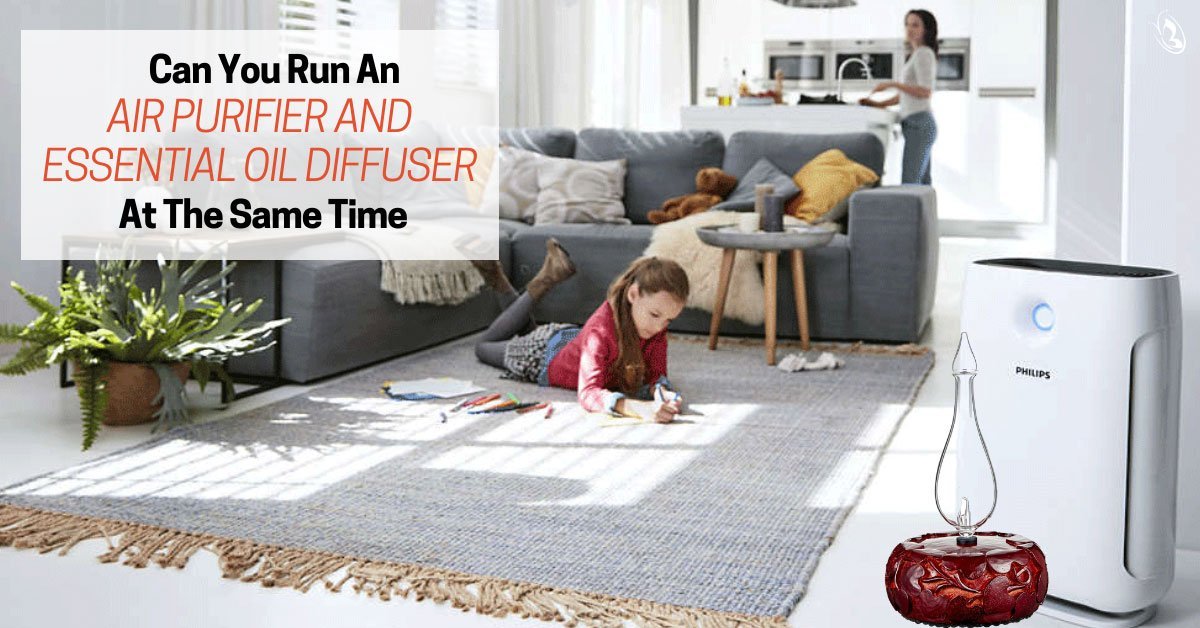
Open windows for a cross-breeze whenever the weather allows, even for ten minutes, and run kitchen and bathroom extractor fans. If you use an air purifier, check what it actually captures. A HEPA filter traps particles such as dander and hair, but it doesn’t remove gases like ammonia. For odor, look for a unit that also has a substantial activated carbon stage, and replace the carbon on schedule.
Pet Safe Air Freshener Formats, Ranked by Control
Once the source is handled, many homes need far less fragrance than before. If you still want scent, the format you choose matters as much as the scent itself. The useful question isn’t “is this pet safe?” (as we’ve seen, nobody can promise that). It’s “how much control do I have over when, where and how much?” Here’s how the common formats compare in a home with animals, from least to most controllable.
Plug-in fresheners. They run continuously and unattended, usually with gentle heat, and they sit in outlets near the floor, right at a pet’s nose height. Your animal can’t escape a scent that never stops, and you can’t easily see how much is being released.
Aerosol sprays. Droplets drift down onto floors, furniture and fur, which is why so many labels say to keep pets out of the room. That fur-and-grooming route is covered in detail in our pet diffusion safety guide, so we won’t repeat it here.
Reed diffusers. They sit on low surfaces with an open bottle of fragrance in a solvent carrier. A swishing tail or curious paw can tip one over, leaving liquid on the floor to be stepped in and licked off.
Gels, beads and solid fresheners. Slow and steady, but they look like treats or toys to some animals, and they’re often placed within reach.
Candles and wax melts. Open flames and hot wax are a physical hazard around tails and jumping cats, and combustion adds soot to indoor air. Our diffuser vs candle comparison explains the chemistry.
Simmer pots. Fine for a short, supervised afternoon, but a stovetop is no place for a curious cat, and they need constant attention.
Ultrasonic diffusers. They release oil in water vapor from a tank that can be knocked over, spilling oily water onto the floor. Many run for hours by default.
A Nebulizing Diffuser® on a timer. No water, no heat, no flame and no open liquid at floor level. A Nebulizing Diffuser® uses Bernoulli’s Principle to turn pure essential oil into a fine mist inside a glass reservoir, and it can be switched off, scheduled and limited to short cycles. That controllability is its advantage. The flip side is honest, too: because the oil is undiluted, a little goes a long way, and it needs more restraint around animals, not less. Control is only worth something if you use it.
Our natural air freshener guide covers how heat and dilution change a scent, if you’re weighing these formats for a pet-free home too.
Join Now and Get a Coupon for 10% Off!
If You Want Scent: A Controllable Setup for Pet Homes
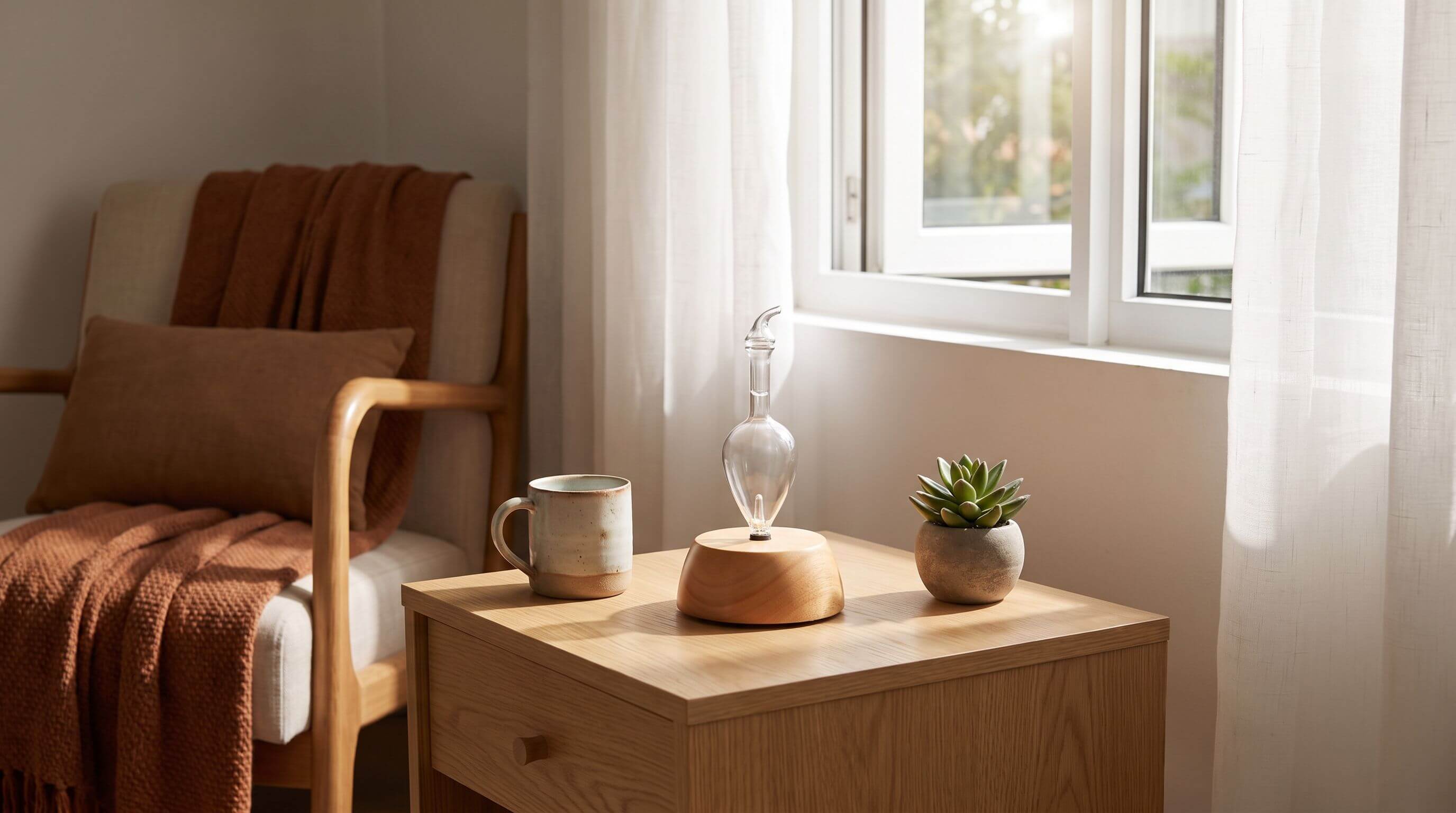
If you’ve cleared the source and still want your home to smell of something lovely, here’s the setup we suggest. It’s built around one principle: your animal should always be able to choose not to smell it.
Choose a room your pet can leave, or one it doesn’t use. A home office, a bedroom with the door ajar or an entryway works better than the room where your dog naps or your cat’s litter box lives. If you have birds, keep scent out of their room entirely. Their respiratory systems are especially sensitive, as our guide to essential oils around birds explains.
Keep an escape route open. Leave the door open so the animal can walk away, and open a window a crack for ventilation.
Run short, timed cycles. On classic Nebulizing Diffusers®, use interval mode, around 2 minutes on and 1 minute off. On a Smart Nebulizing Diffuser®, schedule brief sessions in the app. Our care guide estimates 15 to 30 drops for one to two hours on a low setting; in a pet home, use the lower end and keep sessions to 20 to 30 minutes. Our article on how long to diffuse essential oils goes deeper on timing.
Place it up high and stable. Choose a sturdy shelf or table away from edges, where it can’t be knocked down, with the oil bottle stored in a closed cupboard.
Choose oils with care. Which oils to avoid depends on the species. Cats in particular process many aromatic compounds differently from dogs and people. Rather than repeat the lists here, see our guides to essential oils and pets, essential oils and cats and oils to avoid around dogs.
Watch your animal, and talk to your vet. Watch for drooling, pawing at the face, sneezing, watery eyes, unusual restlessness, or any change in breathing. If you notice any of these, switch off, ventilate and move your pet to fresh air. Call your veterinarian if the signs don’t settle quickly. Ask your vet before introducing any scent if your pet is very young, elderly or has health concerns.
The Raindrop Smart Nebulizing Diffuser® is a good fit for this approach: it’s rechargeable, it can be scheduled from your phone so sessions stop on their own, and it’s handcrafted from wood and medical-grade Pyrex glass with no plastic reservoir. You’ll find every model in our handcrafted Nebulizing Diffuser® collection. Keep the glass clean between oils with our Nebulizing Diffuser® cleaning guide.
Pet Safe Air Freshener: Frequently Asked Questions
Is there a truly pet safe air freshener?
No product can promise that, and “pet safe” has no regulated meaning on a label. The safest approach is to remove odor at the source, ventilate, and add only a small, controllable amount of scent in a room your pet can leave.
Is Febreze safe for pets?
Febreze states that ASPCA veterinary toxicologists consider its fabric freshener products safe for households with pets when used as directed. As with any spray, follow the directions, let surfaces dry before pets return, and don’t spray animals or their bedding while they’re present.
Are plug-in air fresheners like Air Wick safe for pets?
Whatever the brand, plug-ins are the hardest format to control around animals: they run continuously, often with heat, at floor-level outlets. If you use one, choose a room your pet doesn’t use, ventilate it, and unplug it if your pet shows any discomfort. Check the specific product’s label and ask the manufacturer or your vet if you’re unsure.
How do I make my house smell good without harming my pets?
Start with the source: enzymatic cleaning, daily litter care and washing bedding. Then ventilate and use an air purifier with an activated carbon filter. If you want scent, use short, timed sessions in a room your pet can leave, and ask your vet which oils to avoid for your species.
Why does my house smell like pee when it rains?
Dried urine residue in carpets, pads and upholstery absorbs moisture from humid air. That moisture reactivates the bacteria that turn urea into ammonia, and in cat urine it releases more of the sulfur compounds from broken-down felinine. Deep enzymatic cleaning of the original spot is the only lasting fix.
Do enzyme cleaners work on old urine stains?
Often, yes, as long as the cleaner reaches the full depth of the stain and stays wet long enough to work. Very old or repeated stains may need several treatments. Badly saturated carpet pad sometimes has to be replaced.
Join Our Exclusive Member Club to get Big Discounts!
A fresh-smelling pet home isn’t about finding the one magic spray. It’s about understanding that the smell is made in the floor, on humid days, by chemistry you can actually stop. Clean the source, let the air move, and if you add scent, keep it gentle, timed and optional for the animals you share your home with. That’s the closest thing to a pet safe air freshener there is.