

Friday Mini-FAQ: My Essential Oil Arrived Cold and Cloudy. Is It Still Good?
The first truly cold mornings bring a quiet surprise to the doorstep: a parcel that spent the night in a delivery van, and inside it an amber bottle that looks a little hazy, or even has a few pale grains resting at the bottom. If that’s happened to you, here’s the reassuring answer.
Reader Question: “My Oil Arrived Cold and Cloudy. Is It Still Good?”
Almost always, yes. Cloudiness or a few crystals in a cold bottle is a physical change, the same way honey firms up or olive oil turns milky in a winter pantry. Nothing has broken down. Some of the oil’s own aromatic molecules have simply slowed or frozen out of solution, and gentle warmth returns the oil to exactly what it was. True spoilage looks different: haze that stays even at room temperature, a sticky film around the neck, or a flat, sharp, turpentine-like note where the bright top notes used to be. That’s oxidation, and our guide to whether essential oils expire walks through it.
The Jewel: Some Scent Molecules Freeze at Room Temperature
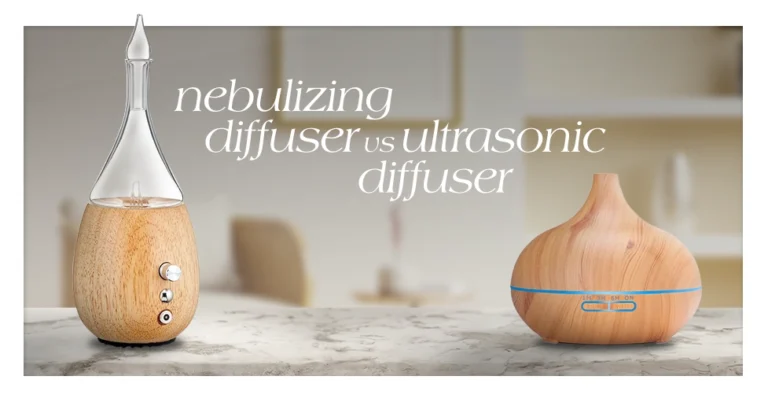
Trans-anethole, the sweet licorice molecule in aniseed, star anise and sweet fennel, melts at about 21°C (70°F). That means aniseed oil can turn partly solid on a shelf in a house that’s merely chilly, not freezing. Sweet fennel carries enough lighter molecules to stay liquid much lower (we wrote about it in our fennel, orange and cedarwood blend), but a night in a cold van can still leave it hazy. The second, sneakier cause is your own kitchen. A bottle that arrives at 5°C and is opened straight away in a 22°C room at 50% humidity sits well below that air’s dew point of about 11°C. Moisture condenses inside the neck the moment the cap comes off, and water is the one thing you never want in a Nebulizing Diffuser®.

Sign Up to Get Your FREE
e-Book Here…
The Gentle Two-Step Thaw
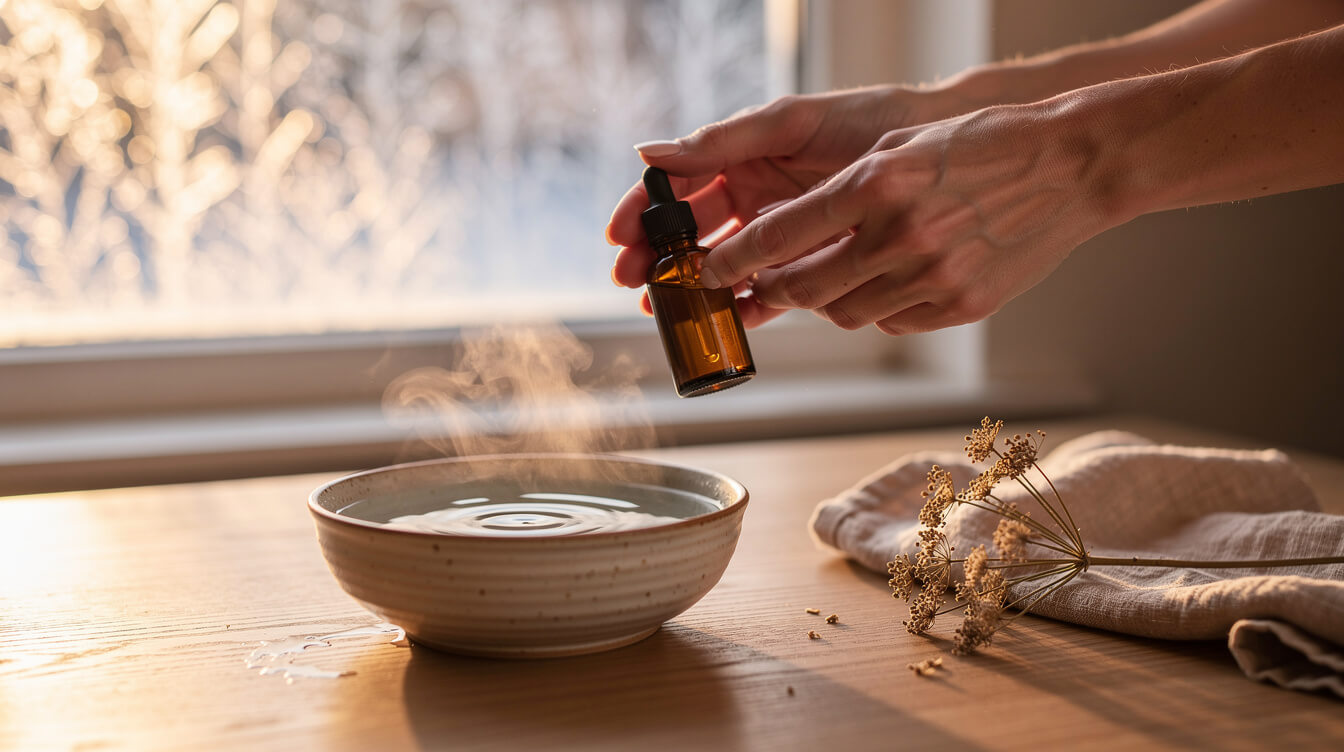
First, leave the cap on and let the bottle rest on the counter for about an hour, until the glass no longer feels cool in your hand. Then, if it’s still hazy, cup it in your palm or stand it in a bowl of bath-warm water for five minutes, rolling it slowly between your hands. Skip the microwave, the radiator and the hot tap. Before you pour, hold the bottle up to the light and look for clear oil with no grains at the bottom, because undissolved crystals can be drawn toward the narrow glass tube and slow the mist. From then on, keep your oils in a cupboard on an inside wall, away from the window, and winter will barely notice them.
A little patience and the warmth of your own hands is all a cold bottle needs. Here’s to cozy mornings and clear, bright oils.
Warmly,
Chad