

Essential Oil Room Spray Recipes That Actually Mix: The Witch Hazel Myth, Solubilizer Ratios and 6 Blends
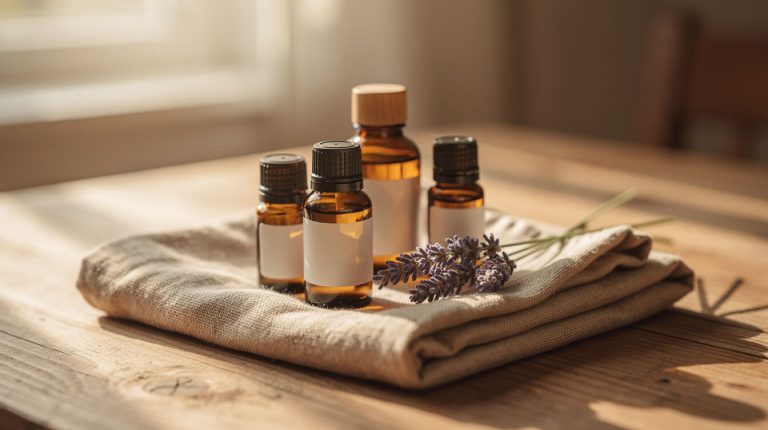
Most essential oil room spray recipes online use the same three ingredients: distilled water, a splash of witch hazel or vodka, and twenty or so drops of oil. Then they tell you to shake well before every use. That instruction is the giveaway. If the ingredients had actually mixed, you wouldn’t need to shake them.
We spend our days thinking about how essential oils behave in the air, so we wanted to write the room spray guide we couldn’t find: one that explains why most DIY sprays separate, which three bases genuinely hold oil in water, how long each one keeps, and six blends built on those bases. There’s also an honest note at the end about what a spray can and can’t do for a room.
Why Most Essential Oil Room Spray Recipes Separate (and the Witch Hazel Myth)
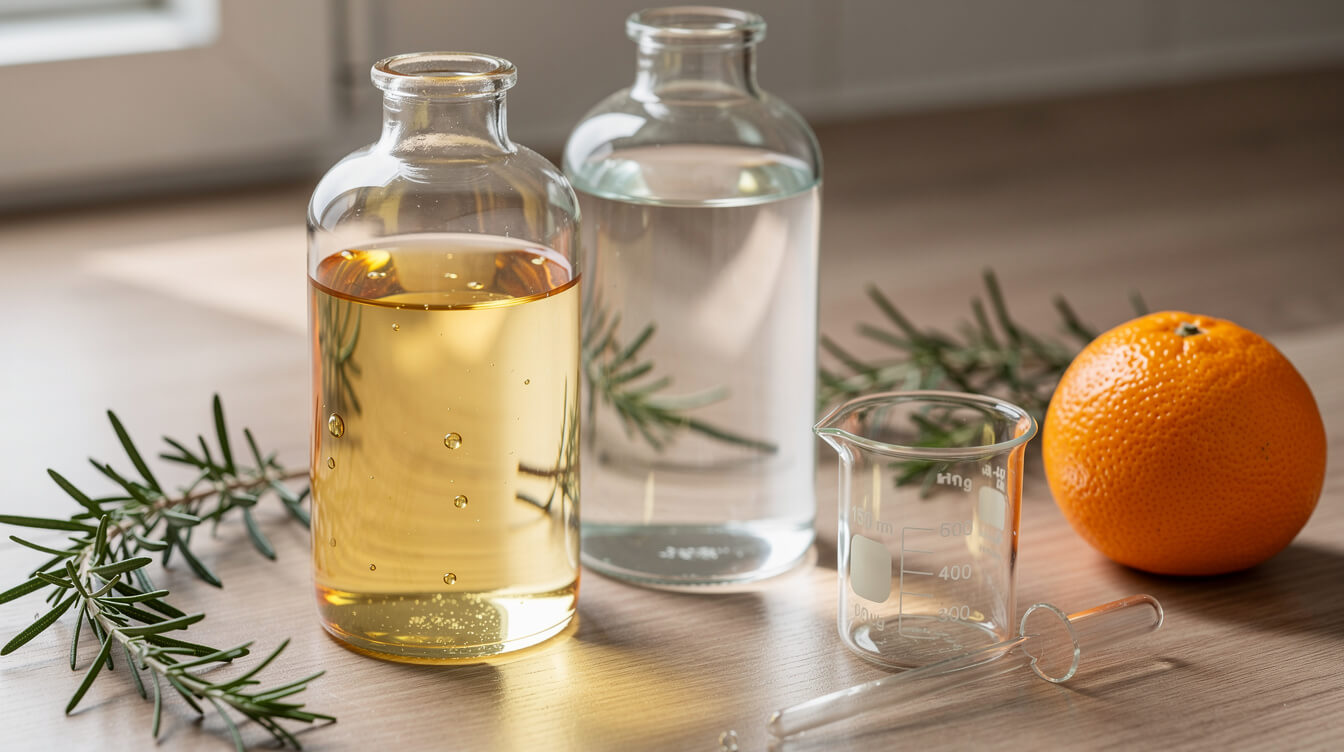
Essential oils are hydrophobic. They’re made of terpenes, alcohols, esters and other small molecules that are far happier among themselves than among water molecules. Drop them into water and they bead up and float, because most oils are lighter than water. Shaking breaks them into smaller droplets for a few seconds, and then they rise and merge again.
The usual fix is to add something that both oil and water can dissolve in. Alcohol (ethanol) can do this, but only at high strength. That’s where most recipes fall apart.
How much alcohol does it actually take?
Essential oil producers have measured it for decades, because solubility in alcohol is one of the standard quality checks for an oil. The international standard for true lavender oil, ISO 3515, sets its miscibility at 1 volume of oil in no more than 5 volumes of 70% ethanol at 20 °C (ISO 3515). Lavender is one of the cooperative oils, rich in linalool and linalyl acetate, which carry oxygen and mix relatively easily with alcohol. Citrus oils are mostly limonene, a hydrocarbon terpene, and it’s even less willing. Lemon oil concentrates are typically specified as soluble in 90% ethanol, and flavor makers have long used diluted alcohol to strip terpenes out of citrus oil precisely because they won’t stay dissolved in it.
Now compare that with the bases in the top-ranking recipes:
Witch hazel: the familiar drugstore distillate is about 14% alcohol (Dickinson’s labels it “Natural Grain Alcohol 14%”). Mix one ounce into a 4 oz bottle, as one popular recipe does, and the finished spray is around 3.5% alcohol. Some recipes even specify alcohol-free witch hazel and call it an emulsifier. It isn’t one, so that’s 0% alcohol.
Vodka: standard vodka is 40% alcohol. Two ounces in a 4 oz bottle gives about 20%. One ounce gives about 10%. Either way you’re nowhere near the 70% that even lavender needs.
So the spray isn’t mixed. The oil is just sitting on top, waiting for you to shake it.
What happens when it doesn’t mix
Uneven scent. The dip tube draws from the bottom of the bottle, but the oil floats at the top. The first few sprays after a hard shake are oil-heavy, then you’re mostly spraying scented water, and by the end of the bottle there’s a slick of oil you can’t get out.
Spots and residue. Undissolved droplets land as tiny drops of neat oil. On a pale linen, a silk cushion or a lacquered side table, that can leave marks. Citrus oils are effective solvents, which is why they’re used in degreasers, and they can soften some finishes.
Neat oil on skin. Mist a pillowcase with an unmixed spray and you’re putting undiluted droplets where your face will rest, which defeats the whole point of diluting. Our essential oil dilution guide explains why concentration matters so much for skin.
And if you’ve ever made a vodka spray that turned milky the moment you added water, that’s the same chemistry on display. As water is added, the alcohol pulls toward the water and lets go of the oil, which comes out of solution as a haze of tiny droplets. It’s the “ouzo effect,” named after the anise spirit that clouds when you dilute it. Cloudy means the oil is no longer dissolved.
The Three Room Spray Bases That Actually Work
There are three honest ways to make a room spray. Each one trades something different, so pick the one that suits how you’ll use it.
Base 1: High-proof alcohol
Use perfumer’s alcohol, or 190-proof (95%) grain alcohol where it’s legal to buy. The goal is to keep the finished spray at roughly 70% alcohol or more, so the oil stays dissolved.
Per 100 ml: 70 ml of 95% alcohol, 25 ml of distilled water, and 1 to 2 ml of essential oil (about 20 to 40 drops). Add the oil to the alcohol first, swirl, then add the water slowly. If it turns cloudy, add a little more alcohol, not more water.
Pros: crystal clear, evaporates quickly, leaves almost nothing behind on fabric, and the high alcohol content keeps microbes out, so it lasts for months. Cons: a sharp alcohol note for the first second or two, and it’s flammable. Store it away from candles, stoves and fireplaces, and never spray toward a flame.
Base 2: Water with a solubilizer
A solubilizer is an ingredient that wraps each oil droplet so small that it stays suspended in water. The most common one is polysorbate 20, sold by soap- and cosmetic-making suppliers. Supplier guidance starts at equal parts solubilizer to oil (1:1) and goes up from there if the mix stays cloudy (Village Craft & Candle). Light citrus and herb oils often clear at 1:1 or 2:1. Heavier oils such as cedarwood, patchouli and vetiver can need 4:1 or more.
Per 100 ml: 1 ml of essential oil (about 20 drops), 1 to 4 ml of polysorbate 20, a broad-spectrum cosmetic preservative at the rate on its label, and distilled water to fill. Always stir the oil into the solubilizer first, until it’s one smooth liquid, then add the water a little at a time. Adding solubilizer to a bottle of oil and water that’s already separated doesn’t work nearly as well.
Pros: no alcohol smell, gentle on most surfaces, inexpensive. Cons: more ingredients, and if you overdo the solubilizer the mist can feel slightly tacky, so mist into the air rather than soaking hard surfaces.
Base 3: The fresh water batch
Sometimes you just want a quick spritz tonight. That’s fine, as long as you know what you’re making: a temporary dispersion, not a solution.
Per 50 ml: distilled water and 8 to 10 drops of essential oil. Shake hard before every few sprays, mist upward into the air (never onto fabric, wood or skin), keep it in the fridge, and finish it within a week. Make small batches so there’s nothing left to go off.
Quick comparison
Clarity: Base 1 clear, Base 2 clear to slightly hazy, Base 3 separates. Shelf life: Base 1 months, Base 2 months with a preservative, Base 3 about a week in the fridge. Best for: Base 1 linens and quick-drying mists, Base 2 everyday room sprays, Base 3 one-off evenings.
For the drop counts above, we’ve assumed about 20 drops per ml, but droppers vary a lot. Our guide to how many drops of essential oil are in 1 oz explains why, and a 1 ml graduated pipette makes your recipes far more repeatable.
Sign Up to Get Your FREE Essential Oils e-Book Here
Shelf Life, Preservatives and the Right Bottle
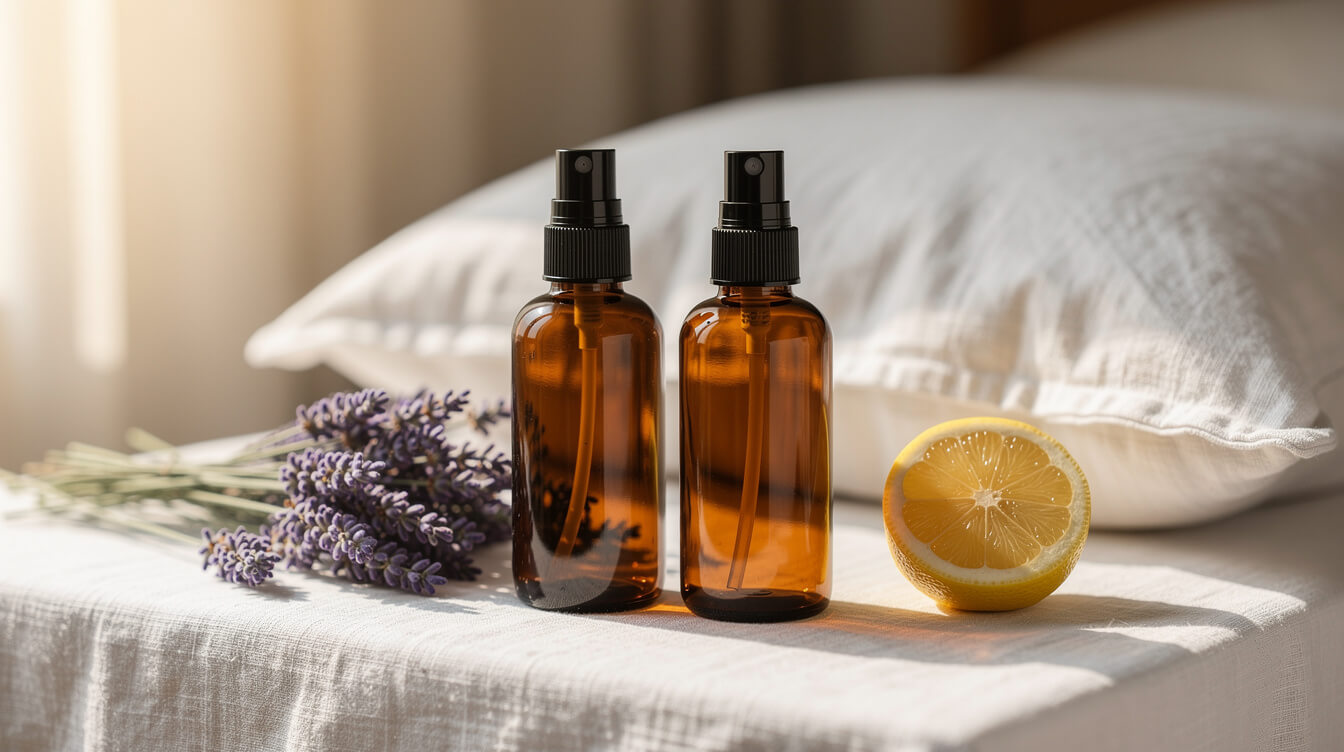
Here’s a claim you’ll see in a lot of DIY recipes: use distilled water because it prevents bacterial growth. Distilled water starts out clean, but it doesn’t prevent anything. The moment it meets a spray nozzle, your fingers and the air in your home, microbes can move in. Water plus a little organic material at room temperature is exactly what they like.
Do essential oils preserve a spray?
Not reliably. At the 1 to 2% you’d use in a room spray, essential oils aren’t a substitute for a tested preservative, and we’d rather not suggest otherwise. If your spray is mostly water (Base 2 or Base 3), you have two honest choices: add a broad-spectrum cosmetic preservative at the supplier’s recommended rate, or make small batches, refrigerate them and use them within a week. Base 1 is the exception, because at around 70% alcohol it stays protected.
Throw out any water-based spray that smells sour or musty, turns cloudy when it was clear, or grows strands or specks. Those are signs of contamination, not of the oils changing.
Glass, not plastic
Essential oils, and especially citrus oils, are solvents. Limonene readily attacks polystyrene, the brittle clear plastic used for some cheap bottles and caps, and other plastics can soften or absorb scent over time. PET is more resistant, but amber or cobalt glass is the safe default, and it also shields the oils from light, which slows oxidation.
Choose a fine-mist sprayer rather than a trigger. A fine mist makes smaller droplets that hang in the air longer and settle more lightly. And label the bottle with the date and the base you used, so you know when it’s due to go.
6 Essential Oil Room Spray Recipes That Actually Mix
Each recipe below makes 100 ml at about 1%, which is roughly 20 drops of essential oil. That’s plenty for a room. Make it with Base 1 (70 ml high-proof alcohol + 25 ml distilled water) or Base 2 (oil premixed with polysorbate 20, then preservative and distilled water to 100 ml). If you need help adjusting the balance of top, middle and base notes, our essential oil blending chart is a good companion.
1. Fresh Linen
12 drops Lavender, 8 drops Lemon. Clean, soft and familiar. Mist it into the air above the bed rather than straight onto the pillowcase. Cold-pressed citrus oils can be phototoxic on skin, so it’s a good habit not to soak fabric you’ll lie on in strong sun (more in our guide to phototoxic essential oils).
2. Kitchen Reset
9 drops Lemon, 8 drops Rosemary, 3 drops Clove Bud. Bright, green and a little warm, for after cooking. Keep clove to a few drops: it’s rich in eugenol, which is potent and can irritate skin, so this is an air-only spray.
3. Calm Bedroom
12 drops Lavender, 8 drops Cedarwood. A soft, woody wind-down blend for a calming evening atmosphere. Cedarwood is one of the heavier oils, so if you’re using Base 2, expect to need about 3:1 to 4:1 solubilizer to oil before it clears.
4. Uplift Entry
13 drops Sweet Orange, 6 drops Peppermint. Cheerful and crisp, for the hallway before guests arrive. Peppermint is strong, so it stays as the accent here.
5. Bathroom Fresh
8 drops Eucalyptus, 6 drops Tea Tree, 6 drops Lemon. Clean and herbal. This is a fragrance, not a cleaner. A room spray scents the air and doesn’t disinfect anything, so keep cleaning the usual way and let this be the finishing touch.
6. Autumn Evergreen
10 drops Sweet Orange, 7 drops of fir needle or another conifer oil, 3 drops Cedarwood. Woodsy and seasonal. We’ve deliberately left resins out: frankincense, myrrh, benzoin and vanilla extracts are thick and sticky, and they tend to gum up a fine-mist sprayer. They’re lovely in a Nebulizing Diffuser® in small amounts, but keep them out of spray bottles.
A two-minute check before you bottle it
Hold the finished mix up to the light. Base 1 should be clear. Base 2 should be clear or faintly hazy. Leave it for an hour: if a film of oil collects at the top, add a little more alcohol (Base 1) or premix a little more solubilizer with a few ml of the spray and stir it back in (Base 2). Then spray a test mist onto a paper towel. If it leaves a greasy ring, the oil isn’t fully dissolved yet.
Sign Up to Get Your FREE
e-Book Here…
Where Not to Spray, and When a Spray Isn’t the Right Tool
Surfaces
Mist upward into the room and let it fall, rather than aiming at furniture. Test a hidden spot before spraying upholstery, silk, leather, unsealed wood or anything lacquered or painted. Keep sprays away from electronics, screens and polished stone, which can show residue.
Pets and people
Cats are particularly sensitive to essential oils because their livers process some compounds very slowly, and birds have delicate airways. Don’t spray pet bedding, spray in a room the animal can leave, and be especially careful with tea tree, eucalyptus, peppermint and citrus around cats. Our guide to essential oils and pets covers it in detail, and our pet safe air freshener post looks at why pet smells come back. Ventilate after spraying if anyone in your home is sensitive to scent.
How long a spray really lasts
A room spray is a scent moment. Most of the fragrance is gone within about 5 to 15 minutes, depending on the room and the oils, because sprays are dominated by fast-evaporating top notes and the droplets settle out of the air. That’s ideal for a quick reset before guests arrive, or a mist over the bed at night. It’s not built to scent a room for an evening.
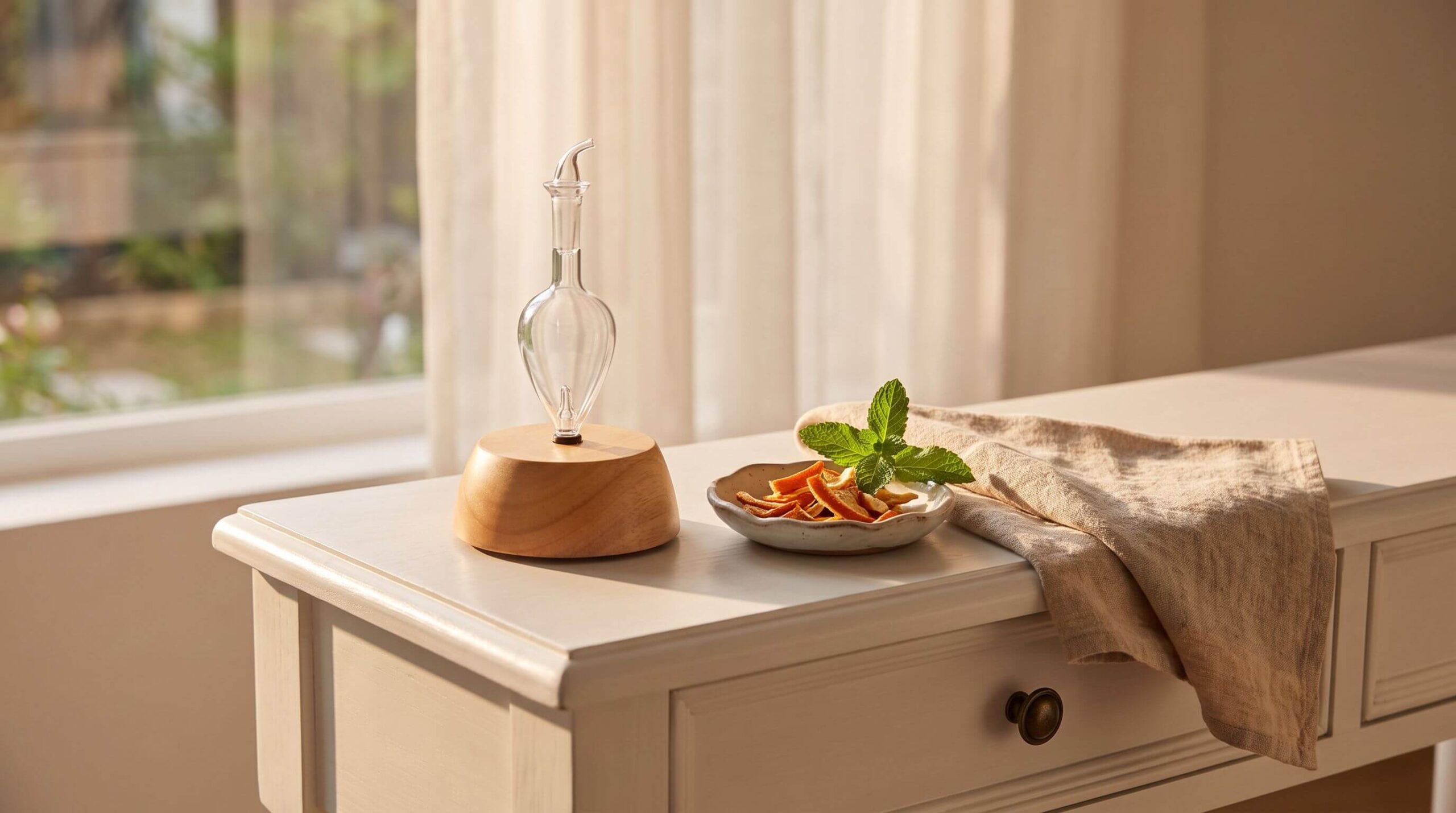
For that, you want steady diffusion. A Nebulizing Diffuser® sidesteps every problem in this guide: there’s no water, no alcohol, no solubilizer and no preservative, because it doesn’t need to dissolve the oil in anything. It uses Bernoulli’s Principle to draw pure essential oil up a fine glass tube and break it into a fine mist, so the blend you choose is exactly what reaches the air. The Raindrop Smart Nebulizing Diffuser® runs on timed sessions from an app, and every model is in our handcrafted Nebulizing Diffuser® collection. Many people use both: a spray for the quick moments, and a Nebulizing Diffuser® for the hours in between.
For more room-by-room ideas, from reed setups to simmer pots, see our guide to essential oils for air freshener, and for the bigger picture on fragrance dose and ventilation, read our non toxic home fragrance guide.
Essential Oil Room Spray Recipes: Frequently Asked Questions
What is the best base for a room spray?
For a clear spray that keeps for months, high-proof alcohol (around 70% or more in the finished spray) is the simplest. If you’d rather avoid alcohol, use distilled water with a solubilizer such as polysorbate 20, premixed with the oil at 1:1 or higher, plus a cosmetic preservative.
How do you mix essential oils with water for a spray?
You can’t dissolve them in plain water. Stir the oil into a solubilizer first until it’s one smooth liquid, then add water slowly. Or dissolve the oil in high-proof alcohol and add only as much water as the mix can take without turning cloudy.
Does witch hazel help essential oils mix with water?
Not really. Standard witch hazel distillate is about 14% alcohol, and once it’s diluted in a spray bottle it’s only a few percent. Lavender oil, one of the easiest to dissolve, needs around 70% alcohol. Witch hazel adds a pleasant note, but it doesn’t keep oil in solution.
Can I use vodka instead of perfumer’s alcohol?
Vodka is 40% alcohol, which isn’t enough to dissolve most essential oils once water is added. It’s fine for a fresh, shake-before-use batch, but for a clear, stable spray you’ll need higher-proof alcohol or a solubilizer.
Why did my room spray turn cloudy?
Cloudiness means the oil has come out of solution as tiny droplets, usually because there’s too much water for the amount of alcohol or solubilizer. Add a little more alcohol, or more premixed solubilizer, until it clears.
How long does homemade room spray last?
A high-proof alcohol spray keeps for several months in a dark glass bottle. A water-based spray with a broad-spectrum preservative keeps for a few months. A water-only spray should be refrigerated and used within about a week.
What is the best homemade air freshener with essential oils?
For a quick burst, a properly mixed room spray. For an all-evening scent, diffusing pure oil works better, because a spray fades within minutes. Removing the source of a smell and opening a window should always come first.
Join Our Exclusive Member Club to get Big Discounts!
The best essential oil room spray recipes aren’t about secret oil combinations. They’re about a base that actually holds the oil: high-proof alcohol, a proper solubilizer, or a fresh batch made with its limits in mind. Get that right and every spray smells the same as the first, nothing spots your linens, and the blends you love finally behave the way they should.