

Essential Oil Blends for Diffuser: The Note-Frequency Method for Pure-Oil Aromatherapy
Most guides to essential oil blends for diffuser sessions skip the only variable that actually decides whether a blend smells the way you imagined: the method you use to release the oil into the air. Heat changes one set of molecules. Ultrasonic water dilution mutes another set. A pure-oil cold-air diffuser preserves them all. Until you account for that, you can follow a five-star recipe and still wonder why it smells flat at the ten-minute mark.
This guide treats blending the way a perfumer would. We cover the drop-count math for a Nebulizing Diffuser®, the top, middle, and base note framework that makes a blend hold its shape across a full session, fifteen tested blends built specifically for waterless diffusion, and the small mistakes that turn a beautiful idea into a thin, sharp room scent. By the end, you will be able to mix any of these blends with confidence, and adapt them to your own collection of pure essential oils.
Why the Diffusion Method Changes Every Essential Oil Blend
Essential oils are not one ingredient. A single bottle of lavender holds more than a hundred volatile aromatic compounds, each with its own molecular weight and evaporation curve. Bright top-note molecules like linalool flash off in the first few minutes. Heavier base-note molecules like cedrol linger for hours. When you blend two or three oils, you are really blending dozens of volatile compounds, and the way you diffuse them decides which compounds make it to your nose intact.
An ultrasonic diffuser cracks oil droplets across a vibrating disc inside a tank of water. The water dilutes the oil before it ever reaches the air, and the gentle vibration knocks the most fragile top notes apart on the way out. The result is softer and shorter than the bottle promised. A reed diffuser depends entirely on capillary action, which favors the lightest molecules and leaves the heavier base notes pooling in the bottle. A heat or candle diffuser literally burns the lighter compounds before they ever vaporize.
A Nebulizing Diffuser® takes a different physical path. It uses Bernoulli’s principle, the same physics that pulls fuel into a carburetor, to draw undiluted essential oil up a thin glass tube and atomize it into micron-scale droplets at room temperature. No water. No heat. No carrier solvent. Every compound in the bottle, the linalool, the linalyl acetate, the cedrol, the limonene, leaves the glass in the proportion the distiller intended. That is the only diffusion environment in which a carefully built blend will reach the room as you composed it.
If you want a longer treatment of how cold-air, waterless diffusion preserves blend integrity, our guide to waterless diffusers for essential oils walks through the trade-offs of every other method. The rest of this article assumes you are working with a Nebulizing Diffuser® or another true pure-oil cold-air diffuser.
How Many Drops? The Math for Nebulizing Diffuser® Blends
The single biggest reason a homemade blend disappoints in a waterless diffuser is that the recipe came from a water-tank world. A Young Living or Eden’s Garden recipe written for an ultrasonic tank typically calls for eight to ten total drops, because most of those drops are about to be diluted in a hundred millilitres of water. In a Nebulizing Diffuser®, those same eight to ten drops would saturate the room in five minutes and waste expensive oil for the next twenty-five.
Across more than a decade of customer feedback at Organic Aromas, a consistent picture has emerged for nebulizing blend volume. Most rooms between 150 and 350 square feet sit in the sweet spot at five to fifteen total drops per session, distributed across the full blend.
The room-size formula we recommend
- Small room (under 150 sq ft): three to five total drops, intermittent cycle (one minute on, two minutes off), thirty-minute session.
- Standard living area (150 to 250 sq ft): six to ten total drops, intermittent or continuous, forty-five to sixty minute session.
- Large open space (250 to 400 sq ft): ten to fifteen total drops, continuous cycle, sixty to ninety minute session, with the diffuser raised on a shelf for better dispersion.
- Open-plan room over 400 sq ft: consider running two devices rather than overdosing one, as a single nebulizer atomizes a fixed maximum volume per minute regardless of drop count.
The ratio inside the blend is then independent of the total. A three-oil blend at a 3:2:1 ratio works the same whether you load it as six drops, twelve drops, or eighteen drops total. We work in ratios first, then scale to room size.
Why intermittent cycling matters more than drop count
A nebulizer at full power can produce more scent than a small room actually wants. Olfactory fatigue, the phenomenon where your nose stops registering a smell after a few minutes of continuous exposure, sets in faster than most people expect. An intermittent setting that runs one minute on, two minutes off, gives your sense of smell the gaps it needs to keep noticing the blend. For most homes, intermittent at a moderate output level produces a richer perceived experience than continuous at low output, even though both consume similar volumes of oil.
Sign Up to Get Your FREE Essential Oils e-Book Here
Top, Middle, Base: The Note Pyramid Most Blend Guides Skip
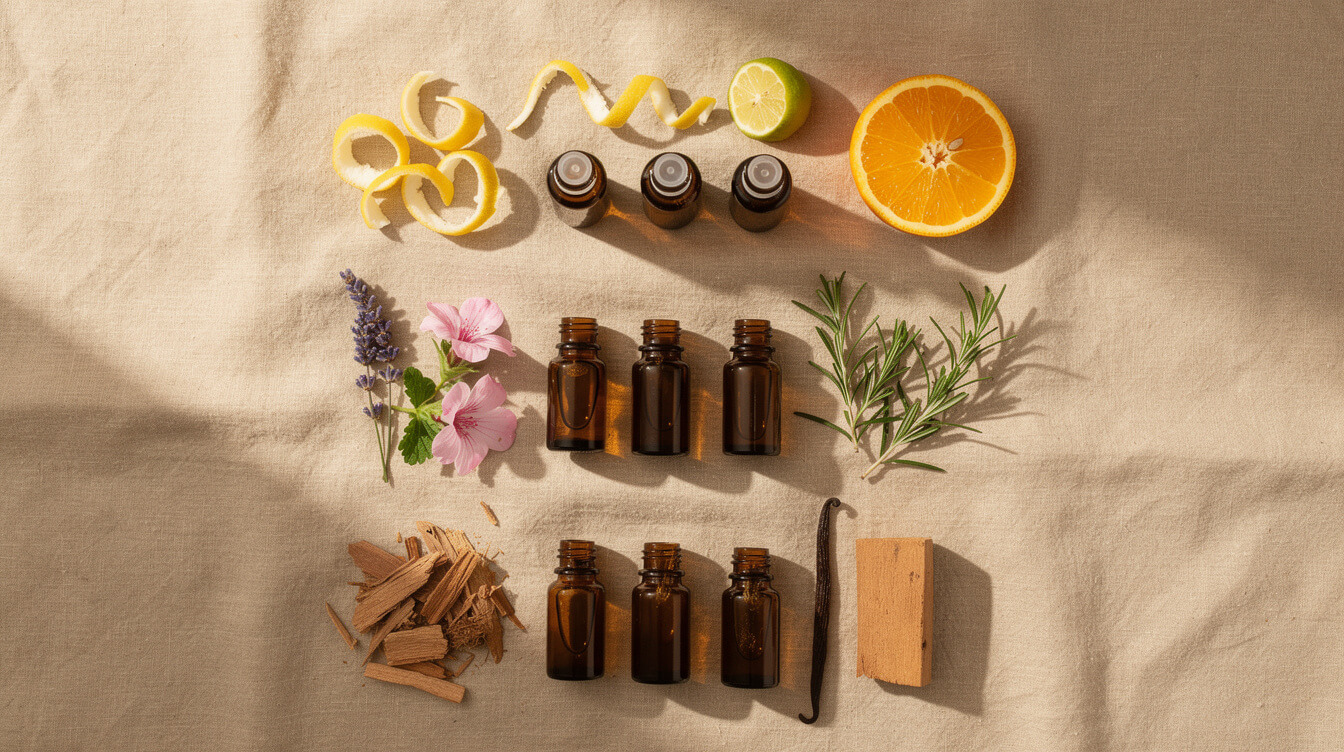
If you only take one structural idea away from this guide, take this one. Every essential oil sits somewhere on a three-tier note pyramid based on how quickly its dominant molecules evaporate. A blend that includes only one tier sounds one note. A blend that hits all three sings a chord that holds its shape from the first inhale to the last lingering trace half an hour later.
Top notes (first 5 to 15 minutes)
Top notes are the bright, sharp, immediate scents. They greet you the moment you walk back into the room. Their dominant compounds are small and volatile and they leave the air quickly. Use them for the first impression.
- Lemon, sweet orange, grapefruit, lime, bergamot
- Eucalyptus, peppermint, spearmint
- Basil, lemongrass, citronella
Middle notes (15 to 45 minutes)
Middle notes are the heart of the blend. They emerge as the top notes recede and they carry the personality of the recipe for most of the session. They are often described as warm, soft, herbaceous, or floral.
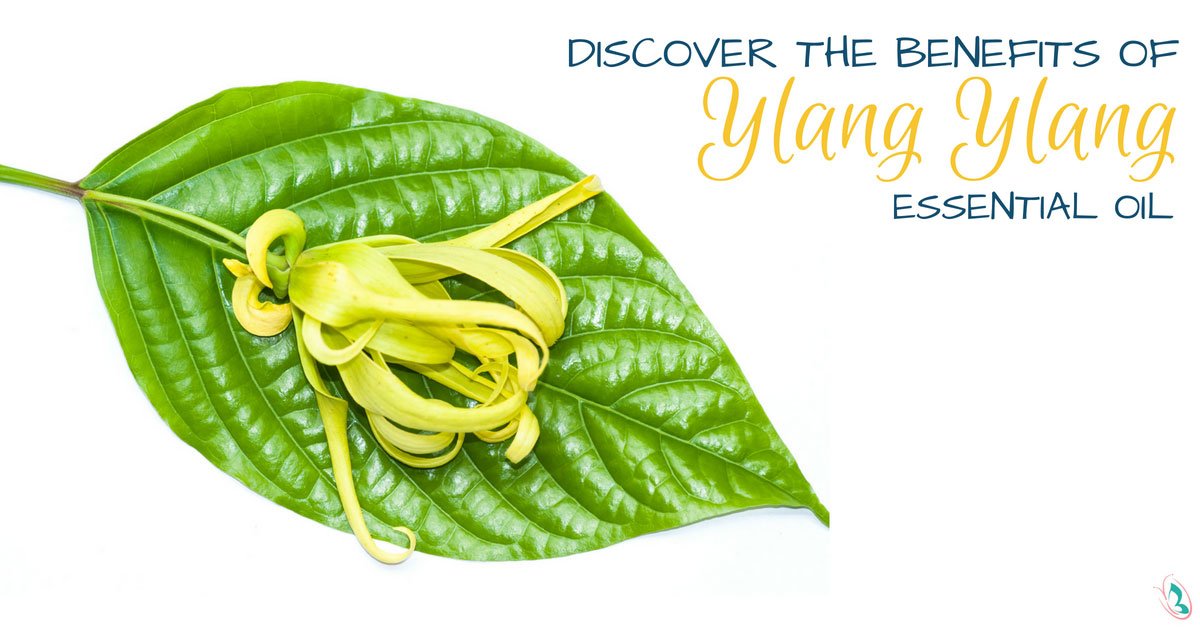
- Lavender, geranium, rose, ylang ylang, neroli
- Rosemary, marjoram, clary sage
- Black pepper, cardamom, juniper berry, nutmeg
Base notes (45 minutes to several hours)
Base notes are the grounding compounds. Their molecules are heavier and they release more slowly. They give a blend its weight, depth, and lingering quality. A blend with no base will feel thin and fleeting no matter how lovely the top is.
- Cedarwood, sandalwood, vetiver, patchouli
- Frankincense, myrrh, benzoin
- Vanilla absolute, oakmoss
The 30/50/20 ratio that works for most blends
Most successful aromatherapy blends sit close to a ratio of roughly 30 percent top, 50 percent middle, and 20 percent base. For a ten-drop session that translates to three drops top, five drops middle, two drops base. The middle tier carries the longest stretch of the experience, so it gets the most volume. Tilt the ratio toward base-heavy for evening blends, top-heavy for energizing morning blends, and middle-heavy for ambient daytime use. For a deeper dive into ratio theory, our essential oil blending chart for the perfect scent maps which families pair naturally and which do not.
15 Essential Oil Blends for Diffuser Sessions, Built for Pure-Oil Diffusion
Every blend below is written as a ratio first. Scale it to your room: load roughly half the listed drops for a small room, the listed amount for a standard living area, and one and a half times for a large open space. All ratios assume you are working with a Nebulizing Diffuser® or another waterless, cold-air pure-oil diffuser.
Calm and unwinding
- 1. Evening Linalool. 4 drops Bulgarian lavender, 3 drops sweet orange, 2 drops cedarwood. The classic floral-citrus-wood structure. The high linalool content in good Bulgarian lavender is the workhorse compound here, and a pure-oil diffuser preserves it without the water-tank dilution losses we cover in our deep dive on lavender for sleep.
- 2. Spa Afternoon. 3 drops bergamot, 4 drops geranium, 3 drops sandalwood. Smooth, slightly powdery, with a soft floral middle.
- 3. Quiet Hours. 3 drops Roman chamomile, 4 drops ylang ylang, 2 drops vetiver. Sweet, deep, and grounding for the end of the day.
- 4. Forest Bath. 4 drops Scotch pine, 3 drops cedarwood, 2 drops lavender. A walk in the woods, condensed into ten drops. For more on building a layered wind-down routine, see our relaxing essential oils for diffuser sequence.
Focus and clarity
- 5. Desk Morning. 4 drops rosemary, 3 drops peppermint, 2 drops lemon. A bright, clean head-clearing trio for the first hour of work.
- 6. Library. 3 drops cypress, 4 drops black spruce, 2 drops grapefruit. Cool, resinous, focused. Excellent for reading.
- 7. Creative Studio. 3 drops spearmint, 3 drops basil, 3 drops bergamot. Brisk and slightly herbal. Designed for writing, drawing, or design work.
Mood lift and uplift
- 8. Golden Hour. 4 drops sweet orange, 3 drops ylang ylang, 2 drops vanilla absolute. A warm, sunlit mood blend with a dessert-soft finish.
- 9. Mediterranean. 3 drops bergamot, 3 drops neroli, 3 drops cedarwood. The classic eau de cologne structure scaled for diffusion. Bergamot’s linalyl acetate plays a leading role here, and our guide to bergamot essential oil explores its profile in depth.
- 10. Sunday Pancakes. 4 drops sweet orange, 3 drops cardamom, 2 drops vanilla absolute. Warm, spiced, comforting. A favorite for cool-weather mornings.
Sleep and rest
- 11. Pre-Bed Wind Down. 5 drops lavender, 3 drops Roman chamomile, 2 drops vetiver. The vetiver gives this blend a deeper anchor than lavender alone. For full bedtime protocol design, see our 4-stage bedtime protocol guide.
- 12. Quiet Bedroom. 4 drops sandalwood, 3 drops lavender, 2 drops sweet marjoram. Soft, warm, deeply still.
Seasonal and atmospheric
- 13. Spring Garden. 3 drops rose absolute, 3 drops geranium, 2 drops lemon, 2 drops cedarwood. Lush and green.
- 14. Summer Citrus. 4 drops grapefruit, 3 drops lime, 2 drops sweet basil, 1 drop vetiver. The vetiver keeps it from feeling thin.
- 15. Winter Hearth. 3 drops sweet orange, 3 drops cinnamon leaf, 2 drops clove bud, 2 drops cedarwood. Warm and resinous. Use cinnamon and clove sparingly because they are dermatologically potent, and a Nebulizing Diffuser® delivers them undiluted.
If you would rather not measure drops at all, the curated bottled synergies in the Organic Aromas pure essential oils collection are pre-composed using the same note-pyramid framework. They go straight into the glass reservoir of your Nebulizing Diffuser® with no further blending.
Join Now and Get a Coupon for 10% Off!
Pre-Mixed Synergies vs Mixing Your Own Pure Essential Oils
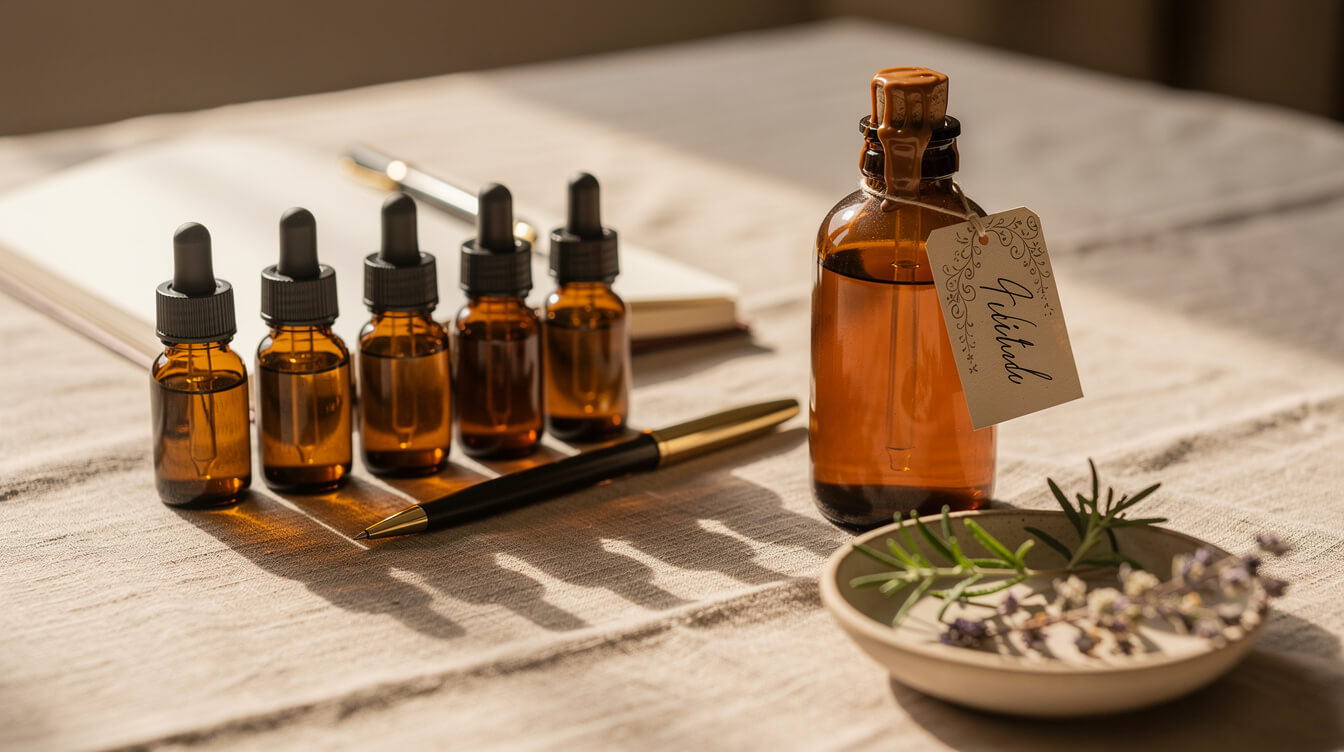
Once you have built a few blends from scratch, you will notice that two paths open up in front of you. You can continue mixing fresh blends drop by drop on the glass reservoir of your Nebulizing Diffuser®, which is the most flexible and educational approach, or you can pre-blend a favorite recipe into a bottle of its own and use it like a single oil. Both work. They serve different moments.
When to mix in the chamber
Mixing directly in the glass reservoir lets you experiment without committing. You can adjust on the next session if a blend felt too bright or too heavy. You preserve the full shelf life of each individual oil because nothing is being pre-combined before its time. And you can match the blend to the room, the weather, or your mood on a given day. For most users, this is the everyday workflow.
When to pre-blend a synergy bottle
Pre-blending a synergy is worth it when you have settled on a recipe you love and you want a fast, repeatable way to use it. Combine the oils in their final ratio into a clean amber-glass dropper bottle, label the bottle with the recipe and the date, and store it away from heat and sunlight. The act of mingling in the bottle for a few weeks before first use actually rounds the edges off a blend, much the same way a perfumer’s macerated formula matures. Synergies typically smell more cohesive after fourteen days of bottle rest than they did the day they were combined.
For those who want professionally composed synergies built for waterless diffusion, the curated blends in the Organic Aromas catalog are formulated specifically for nebulizing equipment, with note ratios calibrated to the steady atomization profile of a Bernoulli-driven diffuser. Our complete guide to mixing essential oils walks through the synergy-building workflow if you want to go deeper.
Five Blending Mistakes (and How to Fix Them Mid-Session)
After more than a decade of feedback from a customer base now over two hundred thousand strong, the same five issues come up again and again when a blend does not land the way the writer expected. The fixes are quick, and most of them can be done without restarting the session.
Mistake 1: All top notes, no anchor
Symptom: the blend smells gorgeous for the first ten minutes and then disappears. Cause: every oil in the blend is a top note. Fix: add one drop of cedarwood, sandalwood, or vetiver directly into the chamber and continue the session. Even a single drop of a true base note will extend the perceived life of the blend by half an hour.
Mistake 2: Cinnamon, clove, or oregano at full strength
Symptom: the room feels sharp, almost prickly, and someone in the household says it smells like medicine. Cause: hot oils like cinnamon bark, clove bud, and oregano are dermatologically aggressive and have very assertive aromatic profiles. In a Nebulizing Diffuser® they arrive undiluted. Fix: cap them at one to two drops in any blend, and always pair them with a softer middle note like sweet orange or geranium.
Mistake 3: Mixing thick resin oils with light citrus oils 1-to-1
Symptom: the blend leaks unevenly through the nebulizer, or the chamber clouds and the output drops. Cause: thicker oils like vetiver, patchouli, and sandalwood resist atomization at the same rate as the thinnest citrus oils. Fix: keep heavy oils at twenty percent or less of the total volume, and warm the bottle briefly between your hands before adding the heavy oil to the chamber.
Mistake 4: Diffusing too long in a small space
Symptom: the blend smelled great at minute five and feels overwhelming at minute thirty. Cause: olfactory fatigue plus oil saturation. Fix: switch to an intermittent cycle, open a window briefly to refresh the air, and reduce the total drop load on the next session by about thirty percent.
Mistake 5: Using oils that have oxidized
Symptom: a familiar oil suddenly smells sour, dusty, or paint-thinner-like. Cause: citrus and pine-family oils oxidize within twelve to eighteen months of opening. Fix: track the date you opened each bottle and replace citrus and pine oils after a year, especially if they have been stored away from a cool, dark spot.

Join Our Exclusive Member Club to get Big Discounts!
Caring for Your Nebulizing Diffuser® Between Blends
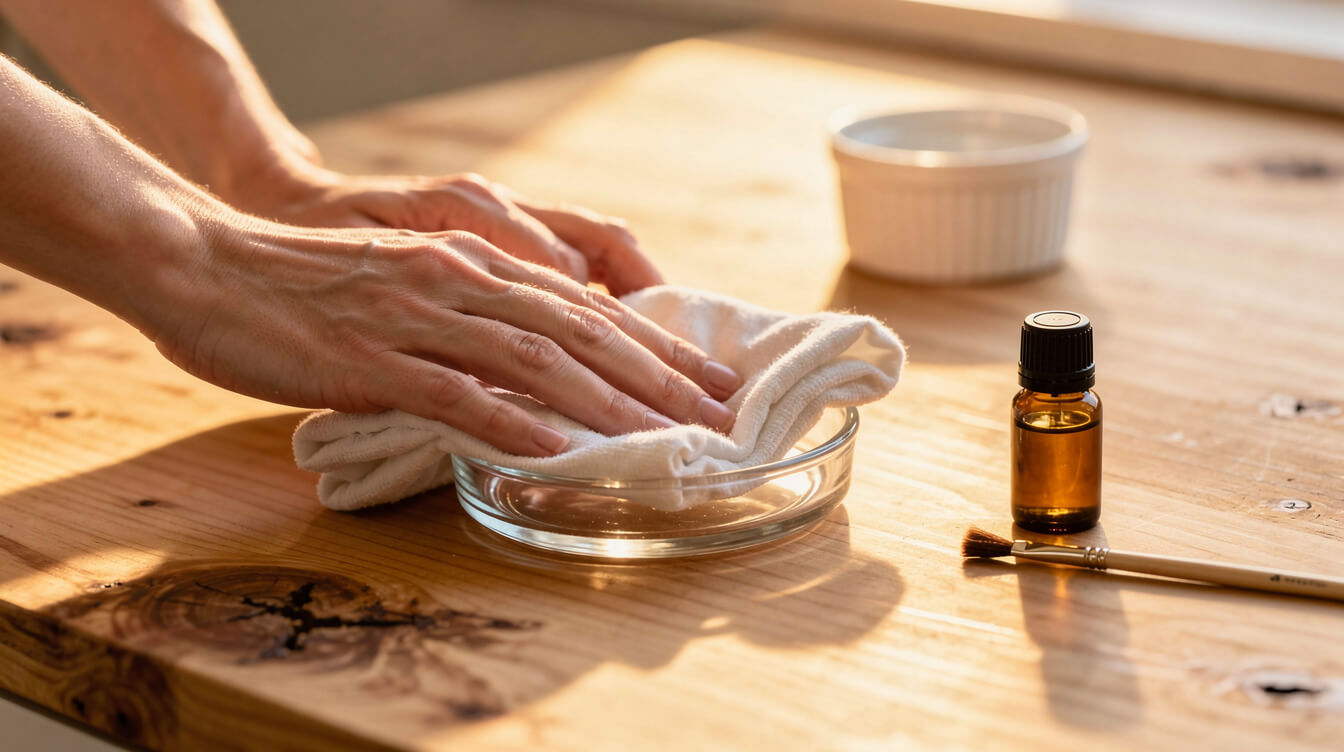
A pure-oil diffuser asks for very little maintenance, but the small ritual between blends has a big effect on the next blend. Residual oil from yesterday’s recipe will tint today’s recipe if you do not refresh the chamber.
The thirty-second refresh between sessions
- Unplug the unit and remove the glass reservoir.
- Pour out any unused oil. A few drops of leftover blend can be saved in a small dropper bottle if you want to reuse them later in the day.
- Add five to ten drops of pure 90 percent or higher isopropyl alcohol to the chamber, swirl gently for ten seconds, and pour it out.
- Let the chamber air-dry on a clean cloth for one minute.
That is enough between two different blends in the same day. A deeper monthly clean uses the same procedure but with a longer alcohol swirl and a soft pipe-cleaner brush for the inner glass tube where the atomization happens. The Organic Aromas Nebulizing Diffuser® is built from real wood and medical-grade Pyrex glass exactly so it can be cleaned with alcohol without damaging the housing.
Storing your blends
Pre-blended synergies belong in amber-glass dropper bottles, labelled with the recipe and the date, and stored upright in a cool dark drawer. Heat, light, and oxygen are the three things that age an essential oil fastest. A properly stored citrus-heavy blend will hold its character for about twelve months. A wood-heavy blend will hold for closer to twenty-four.
Essential Oil Blends for Diffuser Sessions: FAQ and Final Thoughts
How many drops of essential oil should I put in a Nebulizing Diffuser®?
Between five and fifteen total drops per session for most rooms, distributed across the full blend. Smaller rooms sit closer to five, large open-plan spaces closer to fifteen. The ratio inside the blend matters more than the total drop count, and intermittent cycling makes a moderate drop load feel richer than a heavy continuous load.
Can I use water or carrier oil in a Nebulizing Diffuser®?
No. A Nebulizing Diffuser® is designed for undiluted essential oils only. Water, carrier oil, or any solvent will block the atomization, can damage the glass tube, and produces a wet mist rather than the dry vapor a pure-oil diffuser is designed to deliver.
Why does my blend smell different on different days?
Humidity, room temperature, and your own scent fatigue all change how a blend reads. The same ten drops of the same blend will feel sharper on a dry winter day, softer on a humid summer evening, and stronger on a morning when you have not eaten than late at night when you are tired. None of this means the blend is wrong. It means your nose is part of the recipe.
How long do diffuser blends last in the bottle?
A pre-blended synergy in an amber-glass bottle, stored away from light and heat, will hold its character for twelve to twenty-four months depending on its composition. Citrus-heavy blends age fastest. Wood, resin, and root-based blends age slowest, and many of them actually improve in the bottle for the first few weeks.
Are there essential oil blends I should not use around pets?
Yes. Tea tree, citrus oils at high concentrations, peppermint, eucalyptus, ylang ylang, and pine-family oils can be problematic for cats in particular, and for some dogs. Diffuse in a separate room, give pets a way to leave the space, and consult a veterinary professional if you live with cats, birds, small mammals, or pregnant or sick animals.
Final thoughts
The recipes in this guide will give you a strong starting library, but the real reward of building essential oil blends for diffuser sessions comes from the moment a blend you composed yourself fills a room exactly the way you imagined it. That moment depends on three things: pure undiluted oils, a diffusion method that respects their full chemistry, and the patient habit of working in note ratios instead of guessing. Get those right, and every bottle in your collection becomes a building block in a much bigger creative palette. The Nebulizing Diffuser® is the instrument. The blends are the music.