

What Is Linalool? The Floral Molecule in 200+ Plants, Most Scented Products, and Your Earl Grey
What is linalool? It is a small, fragrant molecule that smells soft, floral and faintly woody, a little like lavender with a citrus edge, and it is one of the most common scent molecules on Earth. More than 200 plant species make it, and a widely cited fragrance-industry review estimates it is in 60 to 80% of scented soaps, shampoos, lotions, detergents and cleaners.
Most explanations of linalool online are either cannabis “terpene effect” cards or skincare “is it bad for you” cards. We’d rather follow the molecule through the real world: where you’ve already smelled it, which essential oils are mostly linalool (including one surprise from our own lab reports), why a fresh bottle and an old bottle are not the same material, and why the way linalool reaches you, through your nose, matters more than most people think. It’s a story that makes the case for a pure Nebulizing Diffuser® better than any sales pitch could.
What Is Linalool? The Short, Science-Backed Answer
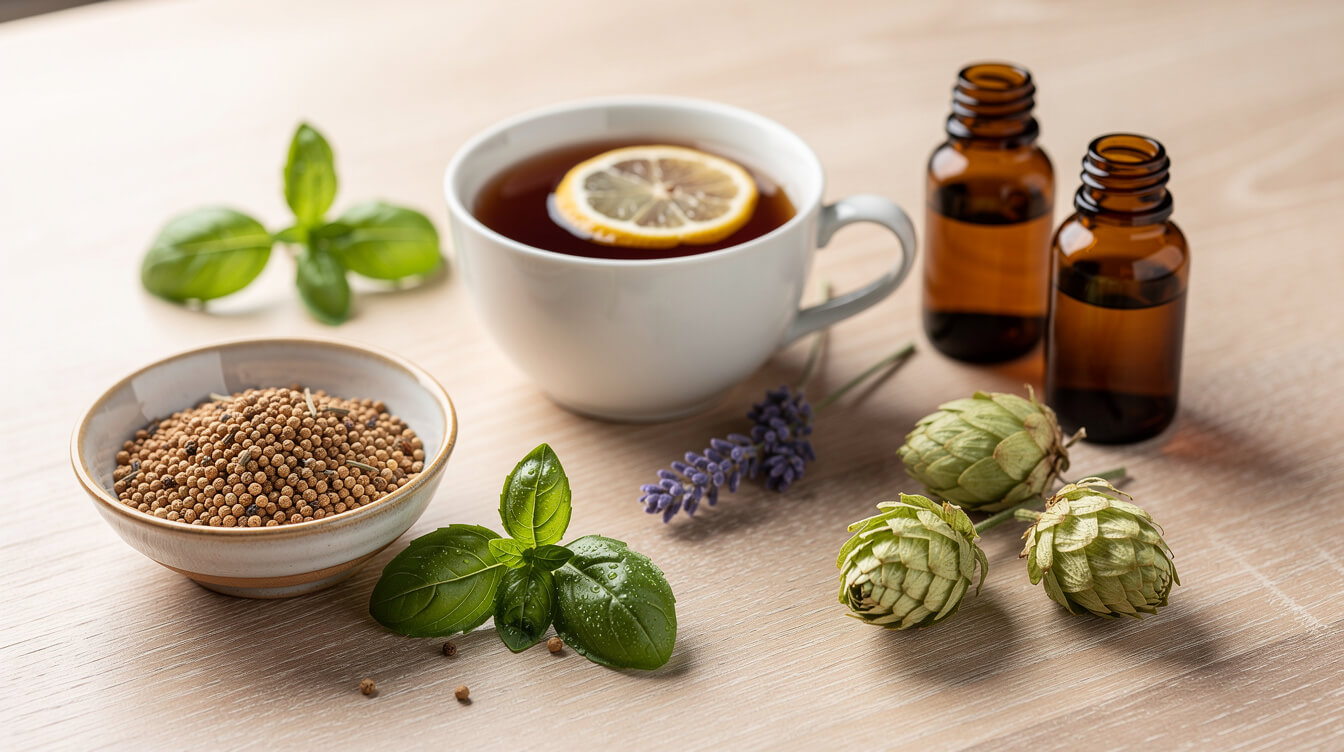
Linalool is a monoterpene alcohol: a ten-carbon molecule (C10H18O) that plants build from the same starter units they use for pine, citrus and mint aromas. The “alcohol” part is a single oxygen-hydrogen group hanging off the middle of the chain, and it’s what makes linalool rounder and softer-smelling than the sharp, piney hydrocarbons around it.
How to say it, and its official name
Most English speakers say lin-AL-oh-ol (some perfumers say LIN-a-lool). Its IUPAC name is 3,7-dimethylocta-1,6-dien-3-ol, which simply describes an eight-carbon chain with two methyl branches, two double bonds and an alcohol group on carbon 3. You’ll also see it written as linalol, and on cosmetic labels in the EU it appears as plain “Linalool.”
What linalool smells like
On a paper strip, pure linalool is fresh, floral and clean, with a light woody-citrus lift and none of the camphor or sharpness of rosemary or eucalyptus. It boils at about 198°C (388°F), so it’s a middle note: it lingers longer than citrus but fades well before resins like myrrh or vetiver. Perfumers use it as a “connector,” because it bridges bright top notes and deeper florals so smoothly that you rarely notice it on its own.
It’s also two molecules in one. Like your left and right hands, linalool comes in two mirror-image forms that smell slightly different, which we’ll unpack below. And unlike many aroma molecules, it’s equally at home in a flower, a leaf, a seed, a tree’s wood and a brewery.
Where You’ve Already Smelled Linalool
Once you know the smell, you start noticing linalool everywhere. Here is a quick “you’ve met it before” map.
In your garden and kitchen. Lavender, sweet basil, coriander seed, bay laurel, thyme, marjoram, orange blossom and hops all make it. Botanists count it in more than 200 species across the mint, laurel and citrus families, which is why so many unrelated plants share a faint “clean floral” thread.
In your teacup. Earl Grey is scented with bergamot, and bergamot’s floral heart is built on linalool and linalyl acetate, as we explain in our guide to what bergamot smells like. Linalool also occurs naturally in many plain teas, which is part of why a good black or oolong can smell faintly floral.
In your glass. Brewers treat linalool as one of the key markers of hop aroma. It’s a big reason a dry-hopped ale can smell floral and citrusy, and it pairs with other hop alcohols like geraniol to make that “lime-and-flowers” impression.
In your bathroom cabinet. A fragrance-material review published in Food and Chemical Toxicology in 2003 estimated linalool appears in 60 to 80% of perfumed hygiene products and cleaning agents. Check the ingredient list on a scented shampoo or lotion and there’s a good chance you’ll find it.
The twist: most linalool never goes near a perfume
Here’s the part almost no linalool guide mentions. The linalool in mass-market fragrance is usually not distilled from plants at all. Industry makes it from pine-derived α-pinene (a by-product of paper making) or builds it from small petrochemical pieces via a related molecule called dehydrolinalool. And the single largest use of manufactured linalool isn’t scent: it’s a stepping stone in the industrial synthesis of vitamin E and vitamin A. The same molecule that makes lavender smell like lavender quietly sits in the supply chain of the vitamins on a pharmacy shelf.
That’s why “contains linalool” on a label tells you nothing about where it came from. In a pure essential oil, linalool arrives with dozens of companion molecules in the exact proportions the plant made. In a shampoo, it’s usually a single synthetic ingredient. Same name, very different experience, which is the thread that runs through our guide to what’s really inside luxury home fragrance.
Sign Up to Get Your FREE
e-Book ($9.99 Value)
Which Essential Oils Are Highest in Linalool?
Linalool content varies hugely between oils, and even between batches of the same oil, so treat these as typical ranges. Where we have our own lab (GC) reports, we’ve used those numbers instead of textbook ones.
Ho Wood (Cinnamomum camphora, linalool chemotype): over 90%. The richest everyday source. It’s the same tree species that gives camphor and ravintsara, a story we tell in our ravintsara Oil of the Day. Our Ho Wood is the linalool type.
Rosewood (Aniba rosaeodora): roughly 70 to 90%. The classic perfumery source for centuries. Overharvesting of the Amazonian trees led to the species being listed under CITES Appendix II in 2010, and its essential oil is covered by that listing. That’s why Ho Wood became the go-to stand-in. Our Rosewood is sold in small quantities and priced accordingly.
Coriander seed: roughly two-thirds to three-quarters linalool. Unusually, it’s mostly the other mirror-image form (more on that below).
Lavender: typically about 25 to 45%. True lavender pairs linalool with linalyl acetate; we explain why that ratio matters in our lavender guide.
Clary sage: 26.2% in our 2021 lab report. Plus 58.4% linalyl acetate, the same pairing as lavender. See our clary sage lab-report breakdown.
Magnolia (white champaca) and Petitgrain. Our Magnolia and Petitgrain both list linalool as a leading aroma molecule.
Bergamot: roughly 3 to 15%, alongside far more linalyl acetate.
Rosemary: 0.65% in our lab report. A useful reminder that “herb” doesn’t mean “linalool”; see what rosemary smells like.
A candid note on our sweet basil
Basil is often listed as a linalool oil, and some basil is. European-style sweet basil can be linalool-dominant. But when we pulled all three lab reports for our Sweet Basil for this article (2017, 2019 and 2021 batches), every one read as the methyl chavicol type: 72 to 82% methyl chavicol (also called estragole), with linalool at 9.5 to 19%. Our product description has called it the linalool type, and that’s not what the lab data show. It still has a genuine linalool facet, which is what softens its anise-like sweetness, but it’s a supporting source, not a primary one.
We share that because it’s the most useful lesson in this whole article: the name on the bottle doesn’t tell you the chemistry. The lab report does. Basil, thyme, ho wood and rosemary all come in chemotypes, plants of one species that make very different oils. If linalool is what you’re after, look for “ct. linalool” on the label or a GC report that shows it as the top line.
The Two Mirror-Image Linalools: Licareol and Coriandrol
Linalool is chiral: it exists as two forms that are mirror images of each other and can’t be stacked, like a pair of gloves. They even have their own old names. (R)-(−)-linalool is called licareol, after the licari tree of French Guiana, an old source of rosewood-type oil. (S)-(+)-linalool is called coriandrol, because coriander seed is its best-known source.
Most linalool-rich oils lean heavily toward licareol: lavender, basil, ho wood, rosewood and bergamot among them. Coriander is the famous exception, which is a big reason coriander seed oil smells sweeter, more orange-blossom-like and less “lavender” than ho wood, even though both are mostly linalool. Synthetic linalool, by contrast, is usually a roughly 50:50 mix of both hands.
The two forms smell different, and your nose is far more sensitive to one than the other. We’ve covered those odor thresholds, and how labs use chiral analysis to catch bergamot that’s been “rebuilt” from synthetics, in our bergamot smell guide. For blending, the practical takeaway is simple: if a recipe calls for rosewood and you swap in Ho Wood, the result will be very close, because you’re swapping licareol for licareol. Swap in coriander, and the blend turns sweeter and more floral.
Try it: for a soft, clean evening blend in a Nebulizing Diffuser®, mix 5 parts Ho Wood, 3 parts Petitgrain and 2 parts sweet orange. It’s a linalool-forward blend that smells like fresh linen and orange blossom, without lavender’s herbal edge.
Sign Up to Get Your FREE Essential Oils e-Book ($9.99 Value)
Fresh vs Oxidized Linalool: Why an Old Bottle Is a Different Material
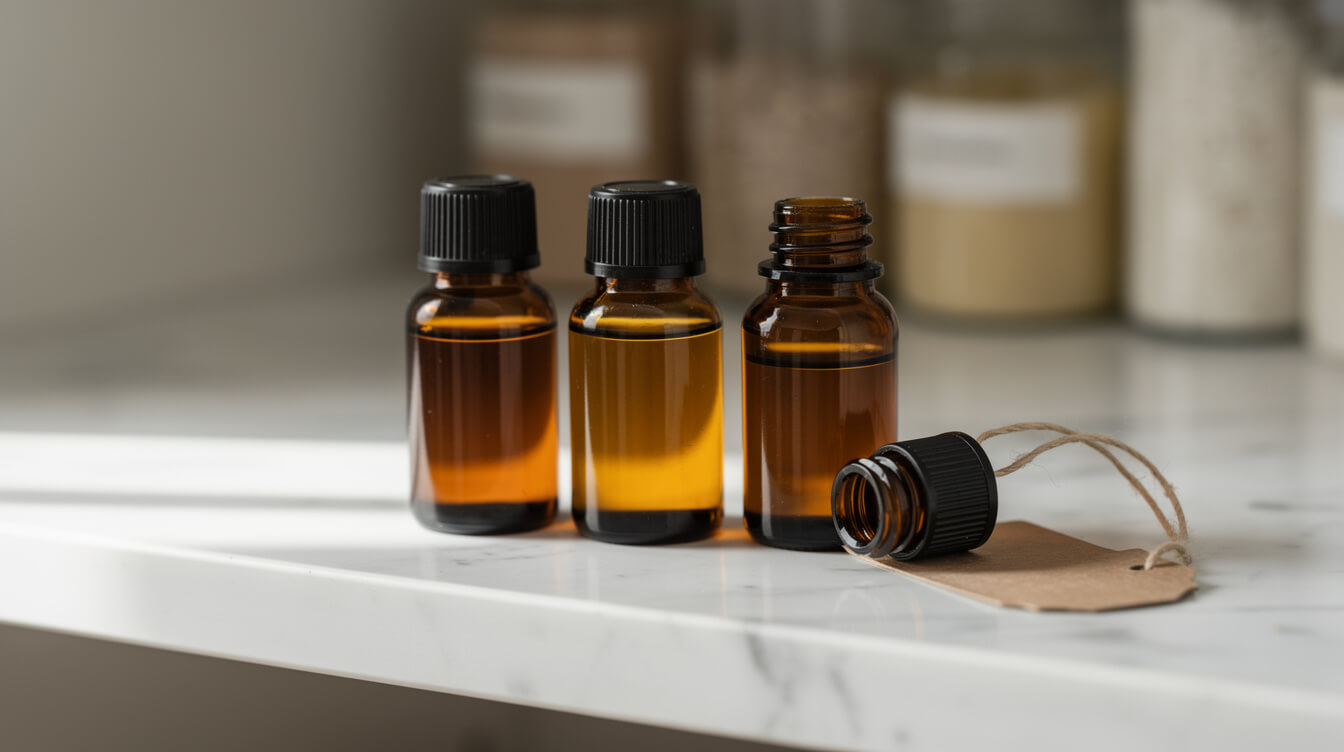
This is where linalool gets genuinely interesting, and where most “is linalool safe?” articles stop too early. Fresh, pure linalool is considered only a weak skin sensitizer. The problem is what it turns into when it sits in air.
What happens in the bottle
Linalool reacts slowly with the oxygen in air (chemists call it autoxidation) and forms hydroperoxides, reactive molecules that are much stronger skin sensitizers than linalool itself. In a classic experiment, Swedish chemists at the University of Gothenburg left pure linalool exposed to air for 10 weeks. By the end, the linalool content had dropped to about 80%, and one hydroperoxide alone made up about 15% of an oxidized sample. In their tests, the air-exposed linalool caused clear sensitization where fresh linalool did not, and the hydroperoxides were the strongest culprits.
Why skin clinics now test for it
That finding changed patch testing. In an international multicentre study published in Acta Dermato-Venereologica, oxidized linalool was patch-tested on 2,900 consecutive patients at skin clinics in Denmark, the UK, Singapore, Spain, Sweden and Australia. Overall, 6.9% reacted (ranging from 3 to 13% by clinic), and an earlier Swedish study of 2,500 patients found about 5%. That puts air-oxidized linalool among the more common fragrance sensitizers seen in those clinics, while fresh linalool rarely is.
The fragrance industry’s own rulebook reflects this. the IFRA Standard for linalool says linalool, and natural oils rich in it, specifically naming bois de rose (rosewood), coriander and ho wood oil, should only be used when peroxides are kept to the lowest practicable level, with a peroxide value under 20 millimoles per liter, and recommends adding an antioxidant such as 0.1% BHT or vitamin E (α-tocopherol) at production. In the EU, linalool must be named on cosmetic labels above 0.001% in leave-on products and 0.01% in rinse-off ones.
How to read it on a lab report
On a GC report, look near the linalool line for small entries called cis- and trans-linalool oxide. These are part of linalool’s oxidation family. They also occur naturally in many plants, so a trace is normal; across our three basil reports they ranged from about 0.1 to 0.6% each. Hydroperoxides themselves don’t show up cleanly on a standard GC, which is why the fragrance industry measures them separately with a peroxide value.
Five habits that keep linalool fresh
1. Buy the size you’ll use. A half-empty bottle has a lot of air above the oil. Smaller, fuller bottles oxidize more slowly.
2. Cap it right away. Don’t leave the bottle open while you mix.
3. Keep it cool and dark. Heat and light both speed oxidation. A cupboard away from the stove beats a sunny windowsill.
4. Refrigerate slow-use oils. If a bottle of Ho Wood or Rosewood will last you more than a year, the fridge (in a sealed bag) slows the chemistry down.
5. Date the bottle. Write the opening date on the cap. Old, oxidized oil is better enjoyed in the air than on skin, and if it smells flat or sharp, it’s time for a new one.
Our lavender guide touches on this briefly; the chemistry above is why it matters for every linalool-rich oil, not just lavender. It also links to how scented products behave indoors, which we cover in our honest guide to non-toxic home fragrance.
Why Linalool Works Through the Nose
Much of the internet talks about linalool as if it has to be swallowed or absorbed to do anything. A widely reported animal study points the other way. In a 2018 study in Frontiers in Behavioral Neuroscience, researchers at Kagoshima University in Japan let mice breathe linalool vapor and watched their behavior in standard tests of how bold or cautious mice are. Mice that smelled linalool behaved more calmly and explored more. But in mice whose sense of smell had been switched off, the effect disappeared. The same linalool, reaching the same bodies, did nothing without the nose.
That’s a mouse study, and we’re careful not to stretch it into claims about people. But it supports something aromatherapy lovers already sense: much of what a scent does for your mood happens through smell itself. You enjoy linalool by breathing it in, not by drinking it or putting more on your skin. That’s also the safest way, given what oxidized linalool can do to skin.
Why the way you diffuse it matters
If smell is the point, the goal is to get fresh, unchanged linalool into the air. Heat-based warmers keep oil hot for hours, and heat speeds up oxidation, so the scent can flatten and drift as the session goes on. Ultrasonic diffusers dilute a few drops in a tank of water, so you get far less oil in the air.
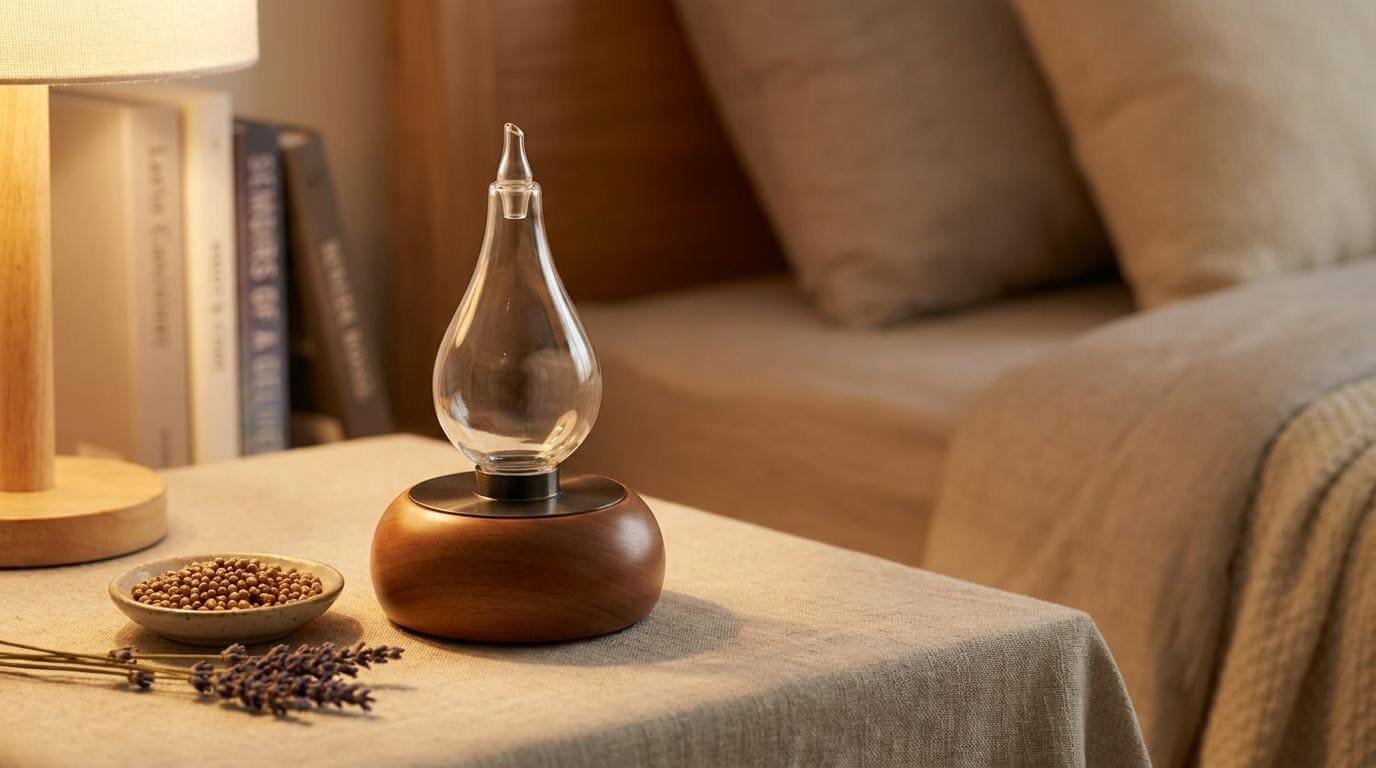
A Nebulizing Diffuser® takes a different route. It uses moving air and Bernoulli’s principle to break pure, undiluted oil into a fine vapor at room temperature, with no water and no heat. The linalool in your Ho Wood or Rosewood reaches the room as the plant made it, along with all its companion molecules. (Pictured above: our classic Raindrop Nebulizing Diffuser®.) Our guide on how to use a Nebulizing Diffuser® covers settings and run times, and our look at what the oil actually touches inside a glass diffuser explains why an all-glass oil path keeps delicate aromas true.
Fresh Linalool, Straight From the Plant to the Air
Handcrafted from real wood and medical-grade Pyrex glass, a Nebulizing Diffuser® turns pure essential oil into a fine vapor with no water and no heat, so soft florals like Ho Wood and Rosewood reach the room as nature made them.

Join Our Exclusive Member Club to get Big Discounts!
What Is Linalool? FAQs
Does lavender have linalool in it?
Yes. Linalool is one of lavender’s two main aroma molecules, typically around 25 to 45% of true lavender oil, alongside linalyl acetate. The exact amount varies by species, growing region and batch, which is why lavandin and true lavender smell different.
Is linalool a terpene?
Yes, strictly speaking it’s a terpenoid: a monoterpene with an alcohol group attached. That’s why cannabis and hemp guides list it among “terpenes.” It’s the same molecule whether it comes from lavender, hops or cannabis.
What does linalool smell like?
Soft, fresh and floral, with a light woody-citrus edge, a bit like lavender without the herbal sharpness. Ho Wood and Rosewood oils are the closest thing to smelling linalool on its own.
Is linalool natural or synthetic?
Both. Plants make it naturally, but most linalool used in scented products and in vitamin manufacturing is made industrially. A pure essential oil contains only the plant’s own linalool, together with the other molecules the plant makes.
Is linalool bad for your skin?
Fresh linalool is considered a weak sensitizer. The concern is oxidized linalool, which forms hydroperoxides when the oil sits in air for a long time. Store linalool-rich oils capped, cool and dark, and dilute properly if you use them on skin. If you have known fragrance sensitivities, talk with a dermatologist before topical use.
What is the IUPAC name of linalool?
3,7-dimethylocta-1,6-dien-3-ol. Its formula is C10H18O.
So, what is linalool, in one sentence? It is the quiet floral thread running through lavender fields, Earl Grey, hop gardens and most scented products in your home. In its fresh, natural form it’s one of the gentlest and most loved aroma molecules there is. Keep it fresh, check the lab report rather than the name, and enjoy it the way it works best: through the air you breathe.