


Myrrh Essential Oil Benefits: The Resin Oil That Clogs Every Diffuser But One
Myrrh essential oil benefits get buried under the same pile of unverifiable claims every time this oil comes up — antibacterial lists, acne cures, anti-aging promises lifted from medical abstracts and repeated as marketing copy. What almost nobody tells you is the one thing that actually affects your experience with this oil every single day you own it: myrrh is a resin, not a leaf or peel oil, and that single fact determines whether your diffuser keeps working in six months or quietly gums up and goes quiet.
This isn’t another 17-benefits listicle borrowing language from in-vitro petri dish studies. We’re going to explain what myrrh actually is at a chemical level, give you an honest, non-medical read on its traditional and modern uses, and walk through the specific hardware problem that causes more “my diffuser stopped working” emails about resin oils than almost any other single cause — plus exactly which diffusion method sidesteps it.
Myrrh’s Resin Origin and Why It’s So Viscous
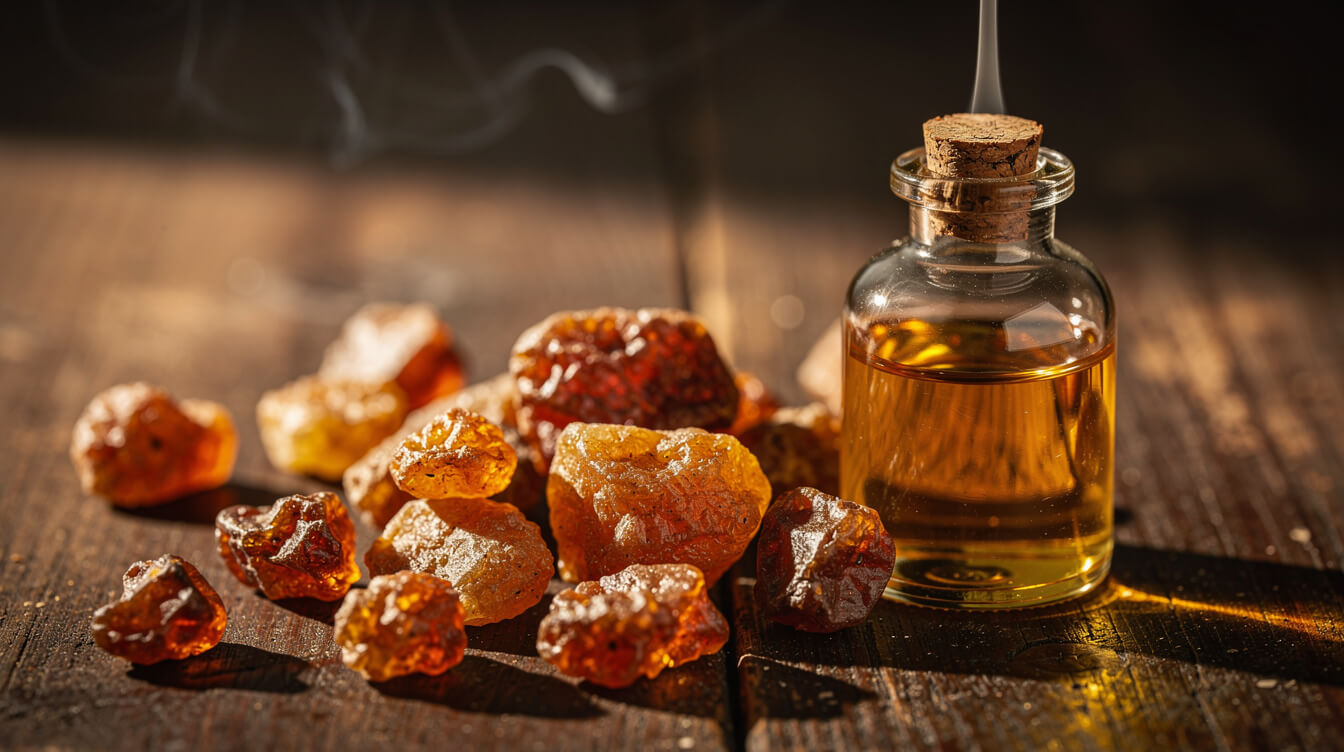
Myrrh doesn’t come from a petal or a peel. It’s an oleo-gum-resin — part oil, part gum, part hardened resin — that oozes from wounds in the bark of Commiphora myrrha (and the closely related C. molmol), a thorny, drought-tolerant tree native to Somalia, Yemen, and the dry scrublands of the Horn of Africa and southern Arabia. The tree produces this resin as a wound-sealing response, the way a pine tree weeps sap over a cut. It hardens on contact with air into reddish-brown “tears,” which harvesters collect by hand once the resin has cured on the bark for several days.
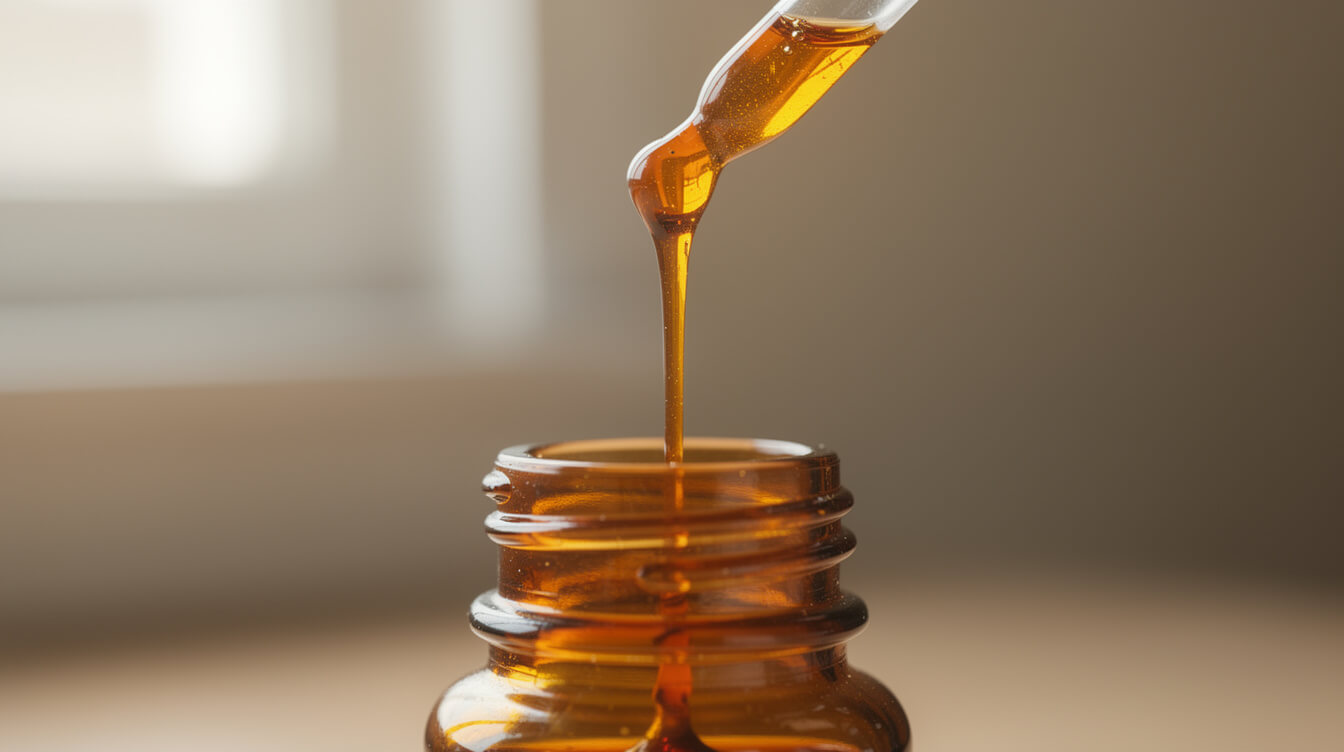
That origin story matters more than trivia. Resin exists, biologically, to be thick and slow-moving — its job is to seal a wound and resist evaporation long enough to harden. Myrrh essential oil is steam-distilled from these resin tears, and it inherits that heavy, slow-moving chemistry: a dense load of furanosesquiterpenes (furanoeudesma-1,3-diene and curzerene are the two most frequently cited in lab analyses) alongside sesquiterpene alcohols that carry a much higher molecular weight than the monoterpenes in a citrus or mint oil. The result is an oil that pours more like warm honey than water, with a deep amber color and a warm, smoky, faintly medicinal balsamic scent that’s instantly recognizable.
Why Distilling a Solid Resin Is Harder Than Distilling a Leaf
Lavender or peppermint can be steam-distilled in under two hours because their volatile oils sit in tiny glands close to the leaf surface. Myrrh resin has to be broken down and coaxed apart before steam can even reach the aromatic fraction locked inside it, which is why distillers typically run it far longer and still recover a comparatively small percentage of oil relative to the raw resin they start with. Whatever comes out the other end carries a wider spread of heavy, slow-evaporating compounds than almost any flower or leaf oil on the market — which is exactly why myrrh behaves more like tree sap than like a bottle of lemon oil.
Not all myrrh resin is identical, either. Somali and Ethiopian harvests tend to run slightly thinner and brighter in scent, while resin from more arid, slower-growing regions trends darker and heavier. None of that changes the core issue for a diffuser: every grade of true myrrh is still a resin oil, meaningfully more viscous than the florals and citrus oils most diffusers are designed around.
Myrrh Essential Oil Benefits: Traditional and Modern Uses (Without the Medical Claims)
Myrrh’s history is long before it’s ever modern. Ancient Egyptians burned it as temple incense and used it in embalming resins; it appears in the Papyrus Ebers, one of the oldest surviving medical texts; and it’s one of the three gifts in the Nativity story, paired there with frankincense — a pairing that has survived into today’s aromatherapy blends for good reason, which we cover in our guide to frankincense and myrrh oil blends. Traditional Chinese medicine and Ayurveda have both used myrrh resin for centuries as well, long before “essential oil” was a retail category.
Here’s where we part ways with most of what you’ll find searching this oil’s name: you’ll see myrrh marketed for acne, wound healing, antimicrobial action, and antioxidant skin repair, usually citing lab studies done on isolated compounds in a petri dish or on animal models — not clinical evidence that diffusing or applying the oil treats any condition in a person. We won’t repeat those claims here, and we’d encourage some skepticism any time a site makes them without a qualifier. What we can say honestly, from both tradition and our own customer base, is that myrrh’s warm, smoky, resinous note is one of the most consistently requested base notes for grounding, meditative, and ritual-feeling blends — the kind of scent people reach for during a slow evening wind-down or a quiet moment of reflection, not because it’s treating anything, but because it smells and feels that way.
That’s the honest modern use case: an atmosphere-and-mood oil, not a medicine cabinet substitute. If you want something to anchor a calming evening ritual or deepen a meditation space, myrrh earns its reputation on scent alone.
It also helps explain why myrrh has stayed in continuous use for roughly 4,000 years while plenty of other ancient aromatics faded into obscurity: it traveled. Resin tears are stable, lightweight, and don’t spoil the way fresh botanicals do, which made myrrh one of the most valuable commodities on the historic incense trade routes connecting the Horn of Africa and southern Arabia to Egypt, the Mediterranean, and eventually Europe. The same stability that made it a prized trade good 4,000 years ago is, not coincidentally, the same chemistry that makes it a slow-moving, viscous oil in a bottle today.
Sign Up to Get Your FREE
e-Book Here…
The Diffusing Problem Nobody Mentions: Viscosity and Clogging

Nobody selling myrrh oil leads with this, but it’s the single most common frustration we hear about resin oils like this one: the same viscosity that makes myrrh’s scent so deep and long-lasting is exactly what causes trouble in most diffuser types. Ultrasonic diffusers break a water-and-oil mixture into mist using a vibrating ceramic disc with microscopic pores designed around thin, water-emulsifying oils. Myrrh’s dense resin load resists that emulsification — it tends to pool on the surface rather than disperse — and over repeated use it leaves a gummy film on the membrane that quietly dulls output until the unit stops misting altogether.
Heat-based and reed diffusers run into the same wall from a different direction. A heat diffuser relies on a wick or ceramic plate soaking up oil and releasing it as it warms, and thick myrrh moves through that wick far more slowly than a citrus oil — what does travel through it tends to caramelize slightly under sustained heat, darkening and partially sealing the wick channel. Reed diffusers fare no better: the reeds themselves gradually clog, and scent output throttles down within weeks. We’ve seen the identical pattern with another viscous base-note oil in our vetiver essential oil benefits guide, and if your unit has already slowed down, our troubleshooting guide for a diffuser that’s stopped misting walks through the cleaning steps that typically resolve it.
If you’ve noticed a diffuser running noticeably weaker a few weeks after you started using myrrh, this residue buildup is very often the real cause — worth ruling out before assuming the oil has gone bad or the unit is defective.
Why Nebulizing Diffusion Handles Resin Oils Ultrasonic Can’t
A Nebulizing Diffuser® sidesteps this problem structurally instead of through extra maintenance. Instead of a membrane or a wick, it uses an open glass venturi tube: a stream of air passes across the mouth of a thin glass tube submerged directly in pure, undiluted oil, and Bernoulli’s Principle draws the oil up and atomizes it into micro-droplets — no water, no heat, and critically, no absorbent surface for a heavy resin oil to coat and clog. There’s nothing for myrrh’s dense furanosesquiterpenes to stick to the way they would on a membrane or wick, so routine rinsing keeps the glass tube clear, and the oil disperses at room temperature, protecting those heavier, more heat-sensitive compounds from the mild caramelizing a hot plate or wick can cause over time.
This is also why undiluted diffusion matters specifically for a resin oil: because nothing is cut with water, you get myrrh’s full, complex aromatic profile in the room air instead of a thinned-out fraction of it. Myrrh, vetiver, patchouli, and sandalwood — the heaviest base notes in any collection — are precisely the category nebulizing diffusion was engineered to handle. For the full tradeoff picture across diffusion technologies, our nebulizing vs. ultrasonic diffuser comparison and our complete guide to using an aromatherapy oil diffuser cover how each method performs beyond just resin oils.

Join Now and Get a Coupon for 10% Off!
Blending Myrrh for Winter and Grounding Scents
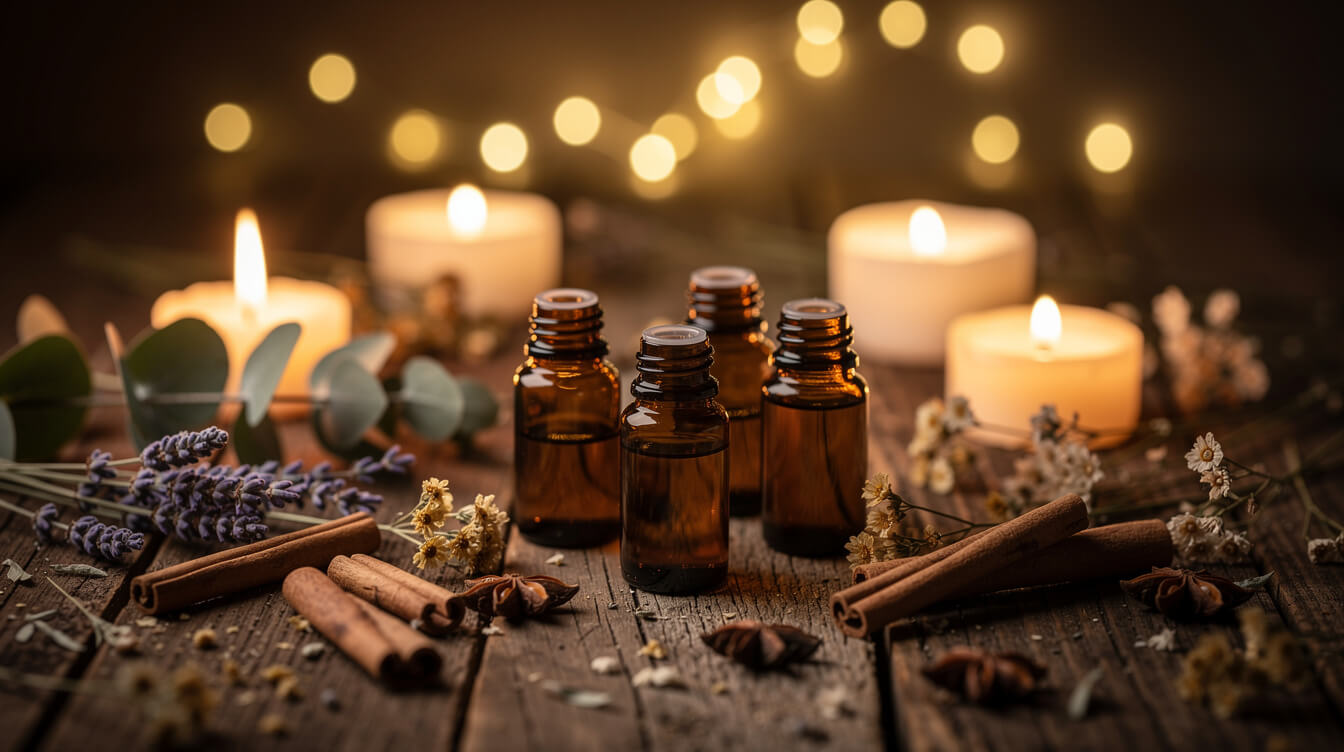
As a true base note, myrrh is the anchor of a blend, not the headline — a little goes a long way, and it’s meant to be built on top of, not drowned out by, lighter top and heart notes. A reliable starting ratio from our 12-year blending corpus is roughly 1 part myrrh to 3 parts lighter oils, adjusted to taste from there.
The logic behind that ratio comes from how a blend actually reaches your nose over time. Top notes (citrus, light herbs) hit first and fade within minutes; heart notes (florals, most spice oils) carry the middle of the session; base notes like myrrh linger longest and are what you still smell after the top notes have disappeared. Because myrrh is both a base note and an unusually heavy one, even a small proportion of it will still outlast everything else in the blend — which is exactly why overdoing the ratio makes a blend smell muddy and one-dimensional rather than complex.
For a cold-weather grounding blend, these pairings consistently perform well:
- Myrrh + frankincense + sweet orange — the classic resin-and-citrus winter pairing, warm with a bright lift
- Myrrh + cedarwood + clove bud — a deep, spiced, fireside-evening blend
- Myrrh + lavender + bergamot — softens myrrh’s smokiness into a gentler evening wind-down scent
- Myrrh + cinnamon bark (used sparingly) — a festive, Christmas-adjacent profile
If you’re building out a full holiday diffusing rotation, our guide to 12 essential oils for Christmas covers the wider seasonal palette myrrh sits inside, and our breakdown of the best aromatherapy oils for a diffuser explains how base, heart, and top notes work together in any blend, resin or otherwise.
Buying and Storing Myrrh Oil
Look for oil labeled with its botanical name (Commiphora myrrha or C. molmol) and steam-distilled rather than solvent-extracted, since solvent extraction can leave trace residues behind in an already resin-heavy oil. Country of origin matters less than with some oils, but Somali and Ethiopian myrrh are the most commonly available grades on the market.
Store myrrh the way you’d store a fine resin incense: tightly capped, away from direct sunlight and heat, ideally in a cool cabinet rather than a bathroom shelf that swings in temperature and humidity. If you ever want to apply it topically rather than diffuse it, myrrh should always be diluted into a carrier oil first — our guide to choosing the right carrier oil for essential oils covers safe dilution ratios in detail.
When you’re ready to diffuse it the way it deserves, our own Myrrh Essential Oil, 100% Pure is steam-distilled and bottled for exactly the kind of slow, grounding blends covered in this guide — and it’s built to be run undiluted through a Nebulizing Diffuser®, the one diffusion method that won’t quietly clog on you six months in.

Sign Up to Get Your FREE Essential Oils e-Book Here
Frequently Asked Questions About Diffusing Myrrh Essential Oil
Can I use myrrh oil in any diffuser I already own?
Yes, but expect an ultrasonic or heat diffuser to need more frequent cleaning when you run myrrh regularly — its viscosity makes residue buildup on the membrane or wick far more likely than with a lighter citrus or floral oil.
Why does my myrrh oil look darker and thicker after a year?
That’s expected aging for a resin oil, not spoilage — myrrh tends to deepen in color and thicken slightly over time. Only discard it if the scent turns sharply sour or rancid rather than simply richer and smokier.
Is myrrh essential oil safe to diffuse around pets?
Use caution, especially around cats and birds, who are more sensitive to many essential oils. Run any diffuser in a room your pet can freely leave, keep sessions short, and watch for any sign of discomfort the first few times you introduce a new oil.
What’s the difference between myrrh and frankincense?
Both are resins from related desert trees and are traditionally paired together, but frankincense (Boswellia species) is lighter, brighter, and slightly citrusy, while myrrh is heavier, darker, and smokier. They’re often blended precisely because they occupy different registers of the same resinous family.
Why is myrrh oil so much more expensive than lavender or peppermint?
Low oil yield is the main driver. Myrrh resin requires a long, labor-intensive distillation and still returns a comparatively small volume of finished oil relative to the raw resin, unlike a leafy herb that distills quickly and generously. That inefficiency, combined with the resin being hand-harvested from trees in a limited growing region, keeps myrrh priced closer to other rare base notes like sandalwood than to high-yield oils like lavender.
The Real Myrrh Essential Oil Benefits: Earned Through the Right Setup
Myrrh essential oil benefits — a grounding, ancient, deeply resinous atmosphere — are real and worth seeking out, but only if your diffuser can actually handle a resin oil’s unusual chemistry. Skip the membranes and wicks that quietly clog over months, blend it as the base note it was always meant to be, and store it the way you’d store good incense, and myrrh becomes one of the most rewarding oils in a home aromatherapy collection instead of a bottle that slowly ruins your diffuser.