


Essential Oils in the Shower: 5 Ways That Last (and Where Oils Don’t Belong)
Using essential oils in the shower is one of the easiest ways to turn five ordinary minutes into a small ritual. Warm water, rising steam and a scent you chose on purpose can make a morning feel brighter or an evening feel softer. But most of the advice online wastes a surprising amount of oil, and some of it puts the oil exactly where it shouldn’t go.
This guide is our honest, tested take. You’ll find five methods ranked by how long the scent actually lasts, the drop math behind the popular “15 to 20 drops on a washcloth” tip, the surfaces and habits to avoid (including one most guides never mention), what your bathroom fan does to your scent, and three simple blends for winding down, waking up and feeling fresh.
Can You Use Essential Oils in the Shower? What the Steam Really Does
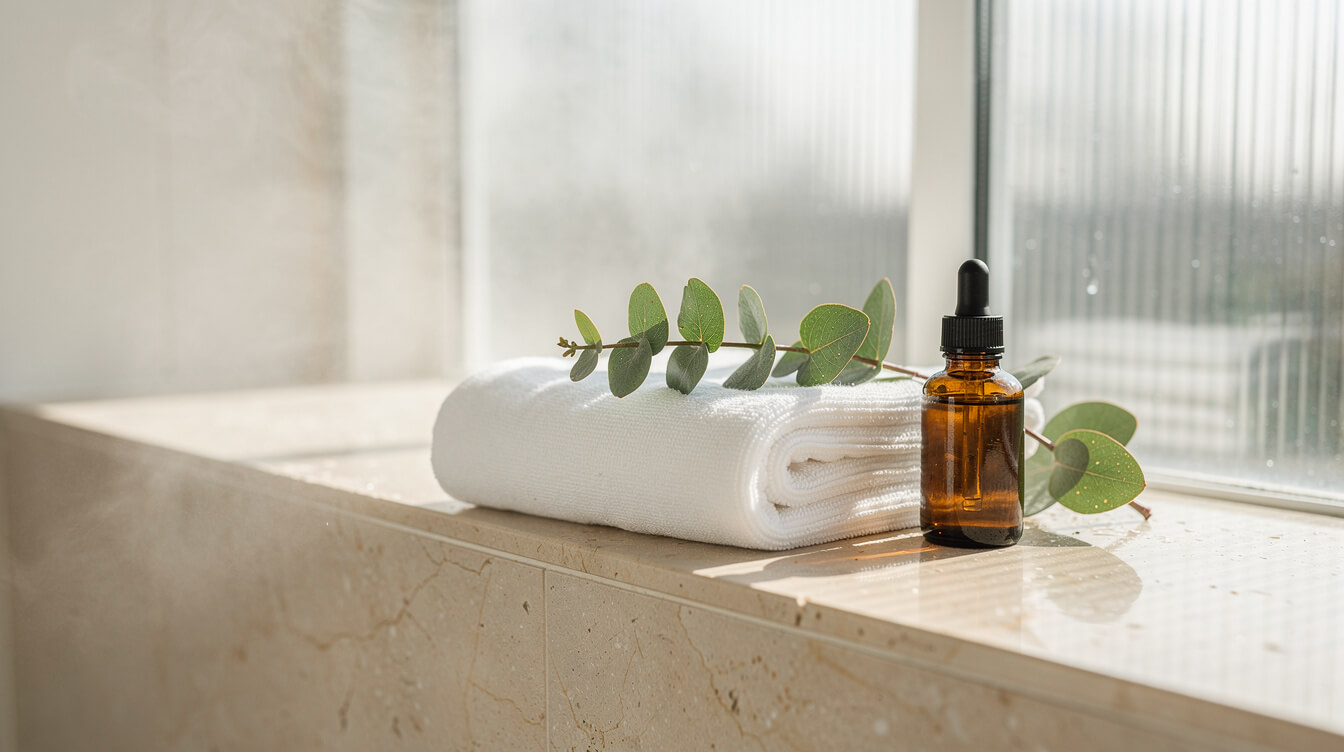
Yes, and the shower is a naturally good setting for aroma. Warm air carries scent molecules more readily than cool air, and a small, closed room keeps them close to you. That’s why a few drops can feel so vivid in the first minute.
The catch is that the shower works against you in three ways at once. Water washes oil away. Essential oils don’t dissolve in water. Drops that land in the spray float, smear and run down the drain within seconds. Heat speeds everything up. The same warmth that releases the scent also spends it, so the brightest top notes are gone fastest. We explain that front-loading effect in detail in our guide to essential oils for shower steamers. Your exhaust fan is pulling the air out. More on that below, because it changes how you should plan the whole ritual.
So the goal isn’t to use more oil. It’s to put a small amount somewhere warm but dry, close enough to enjoy and far enough from the water to last. Every method below is built on that one idea.
5 Ways to Use Essential Oils in the Shower, Ranked by How Long They Last
1. A washcloth up high and out of the spray (best overall)
Put 4 to 6 drops on a dry corner of a washcloth or a cotton pad, then set it on a high ledge, caddy or the top of the shower door, away from the direct stream. Steam warms it and lifts the scent toward your face, while the dry fibers hold the oil instead of rinsing it away. A high spot matters more than you might think. Warm, scented air rises, and the spray is mostly below shoulder height.
Don’t press the scented cloth to your chest or face, as some guides suggest. Undiluted oil on warm, damp skin is a fast route to irritation, and minty or eucalyptus vapor that close to your eyes can sting.
2. A mesh tea infuser hung from the shower arm
Fill a stainless mesh tea ball with coarse sea salt or Epsom salt, add 4 to 5 drops, and hang it from the shower arm on the side away from the spray. The salt holds the oil and releases it slowly. It’s tidy, reusable and lovely in a guest bathroom. Just keep it out of the water, or the salt dissolves and takes the oil with it.
3. A pre-blended body wash in a small pump bottle
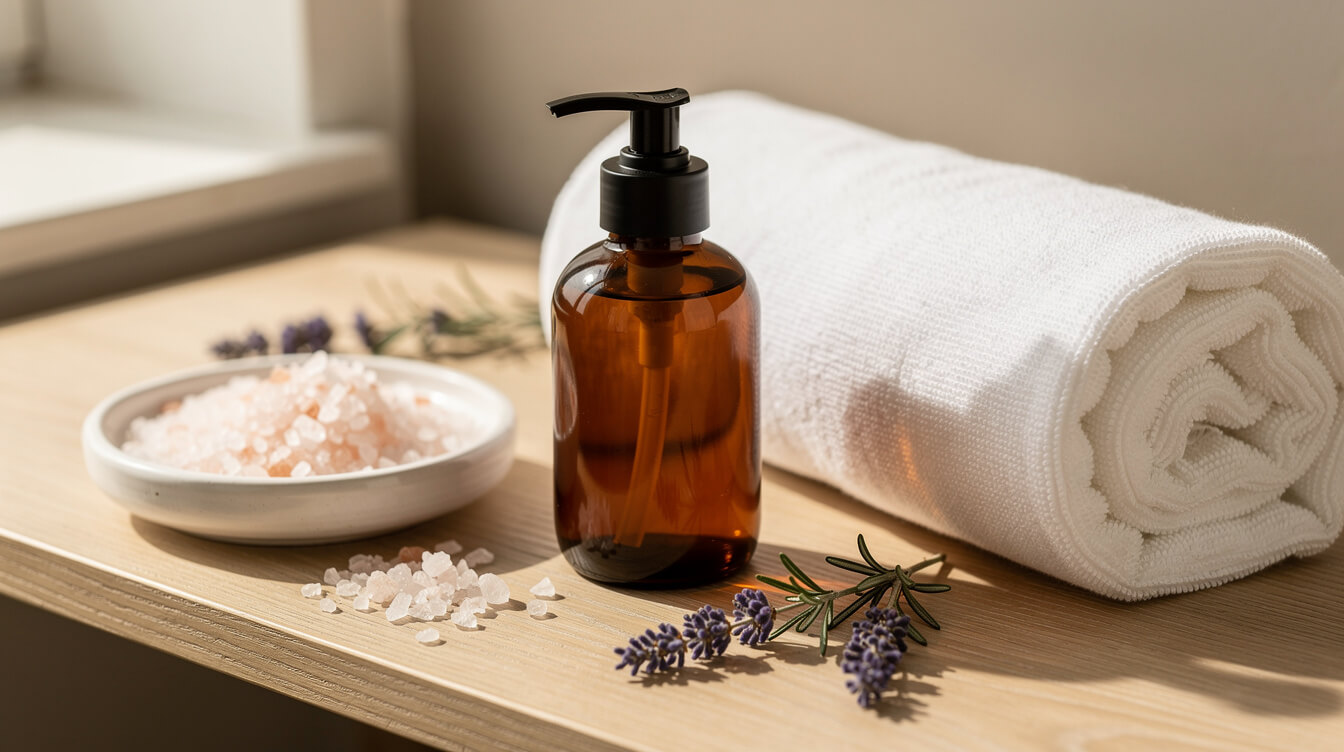
This is the method that puts aroma on your skin rather than in the air, and it’s the most consistent. Mix your oils into a small bottle of unscented body wash at a measured dilution (the next section shows the math). Every pump then carries the same gentle amount, so you’re not guessing with drops in your palm.
4. A shampoo or conditioner add-in
The same pre-blended approach works for unscented shampoo or conditioner. Mixing a small bottle at a set dilution beats dripping oil into a palmful each time, which tends to swing between barely there and far too strong. Keep oils well away from your eyes when rinsing, and choose gentle oils like lavender or cedarwood rather than hot ones like cinnamon or clove.
5. Shower steamers (most dramatic, shortest-lived)
Steamers give the biggest burst of scent and the shortest show, because hot water dissolves them and flashes off the oil in a few minutes. They’re a treat rather than a daily method. Our shower steamer guide covers recipes, safe ratios and why more drops backfire.
Want the scent to linger after you turn off the water? None of these methods will do much on their own, for reasons we’ll get to. That’s where the room you step into next comes in.
Sign Up to Get Your FREE Essential Oils e-Book ($9.99 Value)
The Drop Math: Why “15 to 20 Drops on a Washcloth” Is Mostly Waste
The most repeated tip in the top search results is to put 15 to 20 drops on a damp washcloth for every shower. That sounds modest until you convert it. Drop size varies with the oil and the dropper, and the Tisserand Institute notes that charts assume anywhere from 20 to 30 drops per milliliter. At those rates, 15 to 20 drops is roughly 0.5 to 1 ml.
A standard bottle holds 10 ml. So that single tip uses 5 to 10% of a bottle every shower, and a daily habit empties it in about 10 to 20 days. With our 10 ml Lavender Essential Oil at $15, that’s about $0.75 to $1.50 per shower, much of it rinsed away or pulled out by the fan before you’ve had a chance to enjoy it.
On a cloth placed high and dry, 4 to 6 drops gives you nearly the same experience. The difference is placement, not quantity.
The body wash math runs the opposite way
The other popular tip, “add 10 to 15 drops to your bottle of body wash,” has the reverse problem. In a standard 16 oz (473 ml) bottle, 15 drops is about 0.5 to 0.75 ml. That works out to roughly 0.1 to 0.16%, which is far too little to smell once you lather. For comparison, the Tisserand Institute’s dilution guidance puts bath and body products at around 1 to 4%.
Dripping into your palm instead swings too far the other way. Three to five drops in a 5 to 10 ml palmful of shampoo is roughly 1.5 to 5%, depending on your dropper. That’s above the comfortable range at the top end, and it changes every time.
The fix is a small, measured bottle. Start with 100 ml of unscented body wash or shampoo and add about 1 ml of essential oil for a 1% blend. That’s 20 to 30 drops, depending on your dropper. Shake before each use, since oils can separate over time. Stay at 1% for daily use, especially with peppermint or eucalyptus. Our essential oil dilution guide has a full table, and our guide to carrier oils explains why oil-based blends behave differently from washes.
Where Essential Oils Don’t Belong in the Shower
Most shower guides tell you to sprinkle a few drops on the floor. We’d skip that one, for two good reasons.
The floor: oil plus water is a slip hazard
Bathrooms are already a common place for falls. A CDC analysis of bathroom injuries estimated that about 234,000 people aged 15 and older were treated in US emergency departments for bathroom injuries in 2008. About 81% were falls, and 37% happened while bathing, showering or getting out of the tub or shower. The CDC’s own advice is to add non-slip strips and grab bars.
Essential oils don’t mix with water. Drops on the floor spread into a thin, slick film over wet tile or acrylic, right where you stand. A washcloth or tea infuser on a ledge gives you the same scent without changing your footing. If oil does land on the floor, wipe it with a little dish soap and rinse before the next person steps in.
Acrylic tubs and shower trays: check your care sheet
This is the one most guides never mention. Many tubs and shower bases are acrylic sheet backed with fiberglass. Acritec, an acrylic tub maker, lists “aromatic solvents (essential oils)” among the things not to use on its surfaces in its care instructions. The same list calls out wintergreen oil and pine oil by name, next to nail polish remover and lacquer thinner. Citrus oils are rich in d-limonene, a solvent strong enough that it’s sold as a degreaser.
A drop that splashes and gets rinsed right away is unlikely to matter. Repeated undiluted oil sitting on the same patch of acrylic, day after day, is a different story. It can dull the gloss or leave a sticky residue. Keep neat oils on cloth, salt or ceramic, and if you own an acrylic tub, check your maker’s care sheet. The same logic applies to plastic caddies and soap dishes.
Your eyes, and anyone sensitive
Steam brings scent closer to your face, which is the point, but it also concentrates vapors like menthol and 1,8-cineole near your eyes. If your eyes sting, move the cloth higher or use fewer drops. Skip the strong mints and eucalyptus when children are in the shower, and keep pets out of a small, steamy bathroom while oils are in use.
Sign Up to Get Your FREE
e-Book ($9.99 Value)
Your Bathroom Fan vs. Your Scent (and How to Carry the Ritual Out)
Here’s the part that explains why shower aroma never seems to last. Bathroom fans are sized to clear moisture quickly. The US residential ventilation standard, ASHRAE 62.2, calls for at least 50 cubic feet per minute for a bathroom fan that you switch on and off.
Run the numbers on a typical 5 by 8 foot bathroom with an 8 foot ceiling. That’s about 320 cubic feet of air. At 50 cfm, the fan moves a full room’s worth of air every 6 to 7 minutes, or about nine times an hour. Assuming the air mixes well, each of those cycles removes roughly two-thirds of whatever scent is in the room. By the time you’ve dried off, most of it has gone out through the roof.
Don’t turn the fan off to save the scent. Moisture control matters more, and a damp bathroom is where mildew gets started. Our guide to essential oils and mold explains why steam left to linger is the real problem. Instead, treat the shower as the first few minutes of the ritual, not the whole thing.
Move the scent to the next room
The room you step into is where aroma can actually stay. A Nebulizing Diffuser® in your bedroom or dressing area, set on a timer to start a few minutes before you get out, means you walk from steam into a room that already smells of lavender or cedarwood. It works with pure oil, using Bernoulli’s Principle to turn it into a fine, dry mist with no water and no heat. That also means it belongs outside the bathroom, well away from splashes and steam. Our Nebulizing Diffuser® how-to guide covers placement and run times, and our guide to making your house smell good explains why short, timed bursts keep a scent noticeable.
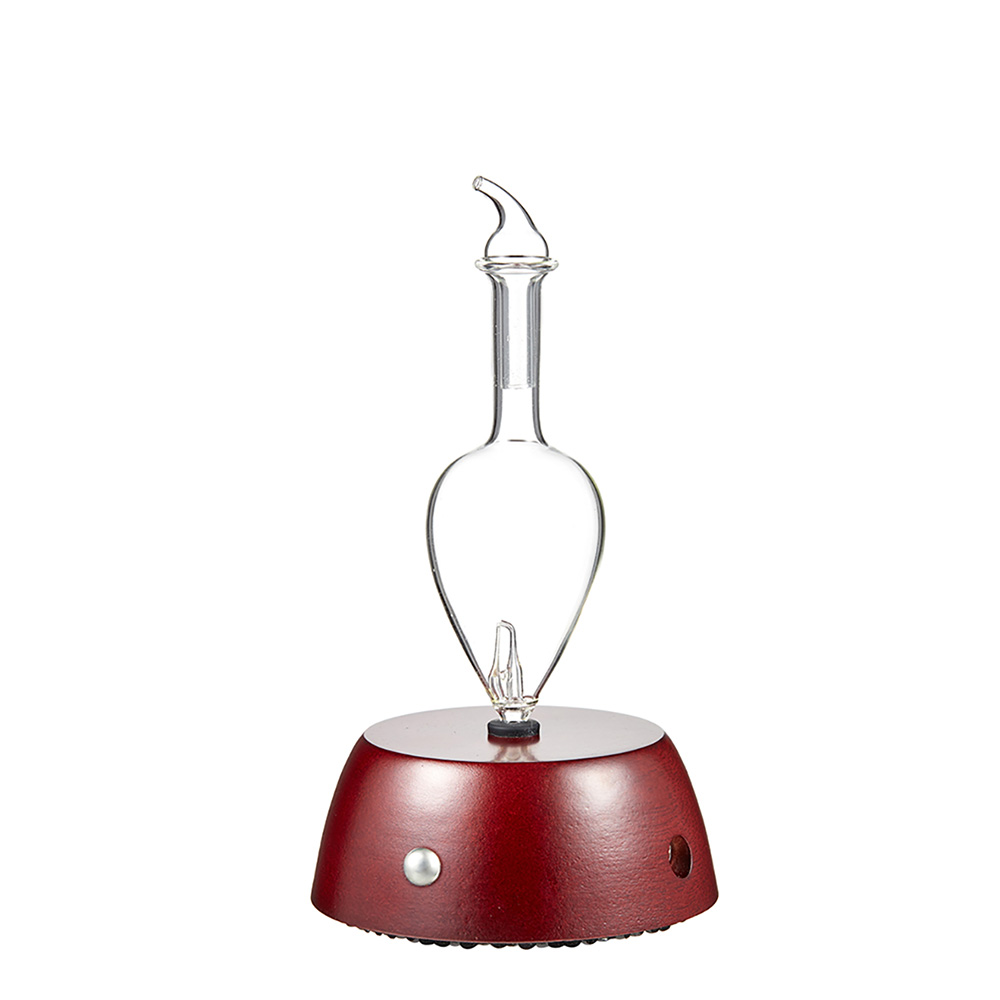
Step Out of the Steam Into Your Scent
Handcrafted from real wood and medical-grade Pyrex glass, the Nebulizing Diffuser® fills your bedroom with pure essential oil aroma, with no water and no heat. Set the timer and let the ritual keep going after the water stops.
Best Essential Oils in the Shower, by Mood: 3 Easy Blends
Choose oils by the feeling you want, not a long list of claims. Each blend below is for a washcloth or tea infuser (6 drops total). To use one in a 100 ml pump bottle of unscented body wash, keep the same proportions and scale the total to about 20 to 30 drops for a 1% blend.
Wind Down (evening)
3 drops lavender, 2 drops cedarwood, 1 drop frankincense. Soft, woody and quiet, a good bridge from a long day to a slow evening. Our Lavender Essential Oil is a natural place to start.
Wake Up (morning)
3 drops rosemary, 2 drops sweet orange, 1 drop peppermint. Bright and green with a cool lift. One drop of Peppermint Essential Oil is plenty in a small, steamy room. A quick note on citrus: cold-pressed bergamot, lime, lemon and grapefruit can make skin more sensitive to sun. That matters most in a body oil you leave on before heading outdoors, so read our guide to phototoxic essential oils first.
Fresh and Clear-Feeling (any time)
3 drops eucalyptus, 2 drops pine, 1 drop spearmint. Crisp, foresty and open, like stepping outside on a cold morning. Eucalyptus Essential Oil and Pine Essential Oil are both made for a washcloth or salt, never for the tub surface (see the acrylic note above). If you’re curious why eucalyptus smells the way it does, and why it isn’t the same as a menthol rub, see what eucalyptus smells like.
Prefer a soak? Oils behave differently in standing water, where they float in a film. Our guide to aromatherapy oils for the bath explains how to disperse them safely.
Join Our Exclusive Member Club to get Big Discounts!
Essential Oils in the Shower: FAQ
Can you put essential oils directly in the shower?
You can, but it isn’t the best place for them. Drops in the spray or on the floor wash away within seconds and leave a slippery film where you stand. Put 4 to 6 drops on a washcloth or salt in a tea infuser, placed high and out of the direct spray, for a longer-lasting scent.
How many drops of essential oil should I use in the shower?
About 4 to 6 drops on a washcloth or tea infuser is enough when it sits high and dry. The common 15 to 20 drop tip uses roughly 0.5 to 1 ml, which is 5 to 10% of a 10 ml bottle per shower. For body wash, aim for about a 1% blend: roughly 1 ml (20 to 30 drops) in 100 ml of unscented wash.
Can I put essential oils on the shower floor?
We don’t recommend it. Essential oils don’t mix with water, so drops spread into a slick film on wet tile or acrylic, and bathrooms are already a common place for falls. Some acrylic tub makers also list essential oils among the solvents to keep off their surfaces.
Are essential oils safe for acrylic tubs?
Check your tub’s care sheet. At least one acrylic tub maker, Acritec, lists essential oils, wintergreen oil and pine oil among the solvents to avoid. A quick splash that’s rinsed away is unlikely to matter, but don’t let neat oil sit on acrylic repeatedly. Keep oils on a cloth, salt or ceramic dish instead.
Why does the scent from my shower fade so fast?
Heat makes the oil evaporate quickly, water rinses away anything in the spray, and a typical bathroom fan replaces all the room’s air every 6 to 7 minutes. To enjoy the scent for longer, carry it into the next room with a Nebulizing Diffuser® running in your bedroom or dressing area.
Can I use an electric diffuser in the bathroom?
Keep electric devices, including a Nebulizing Diffuser®, out of the wet zone and away from steam and splashes. The simplest approach is to scent the shower with a washcloth or tea infuser, then use your Nebulizing Diffuser® in the bedroom or dressing area you step into next.
The best shower aromatherapy is the simplest. Use a few drops, high and dry. Keep oils off the floor and the tub. Then let the scent carry on in the room you walk into. For more ways to bring the spa home, see our self-care gift guide and our older companion piece on essential oils for the bath and shower.




You never ceases to amaze me with all the ideas you post for using essential oils. Thank you.
I love the tea diffuser idea. Creative and reuses old items, instead of ending up in the garbage.
Love the tea diffuser idea!
It’s perfect for being well relaxed after a hard day’s work! 🙂
Thanks for the share!
Amazing!
Thanks for info
I’ve only recently heard about shower melts & love the fact that I can make my own!!! There are so many great ideas in this article, saving it & want to try them all! Thanks for all the great info & ideas!
I am excited to try to tea diffuser idea. Thanks for all the great info!
You always share such informative information. Thanks
Great article!
Thank you very much for sharing these wonderful ideas, I did not know this way of using essential oils.
Thanks for this information. I think I will try the washcloth idea first.
Useful tips. Thanks!
i should try putting oils in my shampoo
Great article!
Good information! I didn’t know that there was so many different ways to use them!
Never thought of using it in the shower before. I really love the washcloth idea.
Cada día se aprende más de estos aceites, gracias por la información.
thanks for the information, some forms I had already done, but I want to try them all
You always have the best information to share – Thank you for that 🤗
Thanks for the great ideas! I definitely need to try the shower melts.
Good information, thanks
Great info!
There is no end to how essential oils may be used! I love these ideas. Have never even considered them until now!