

What Does Bergamot Smell Like? The Earl Grey Note, the Three Plants Called Bergamot, and How to Smell the Real Thing
What does bergamot smell like? Picture a lemon that has been softened with a drop of lavender and a pinch of black pepper, then steeped in black tea. That is the short version, and it is why so many people recognize bergamot before they can name it: it is the bright, floral, faintly bitter note in every cup of Earl Grey and in classic cologne.
Most guides stop at adjectives like “citrusy, floral, spicy.” This one goes further. We’ll break bergamot into what you smell in the first ten seconds, after ten minutes, and in a room. We’ll set it side by side with lemon, orange, lime and petitgrain so you can place it. We’ll untangle the three different plants called “bergamot”, which explains why a gardener’s bergamot smells like oregano. And we’ll show you the molecule-level test that separates real bergamot from a flattened copy, because a great deal of the “bergamot” sold worldwide is not what it says.
What Does Bergamot Smell Like? The 30-Second Answer
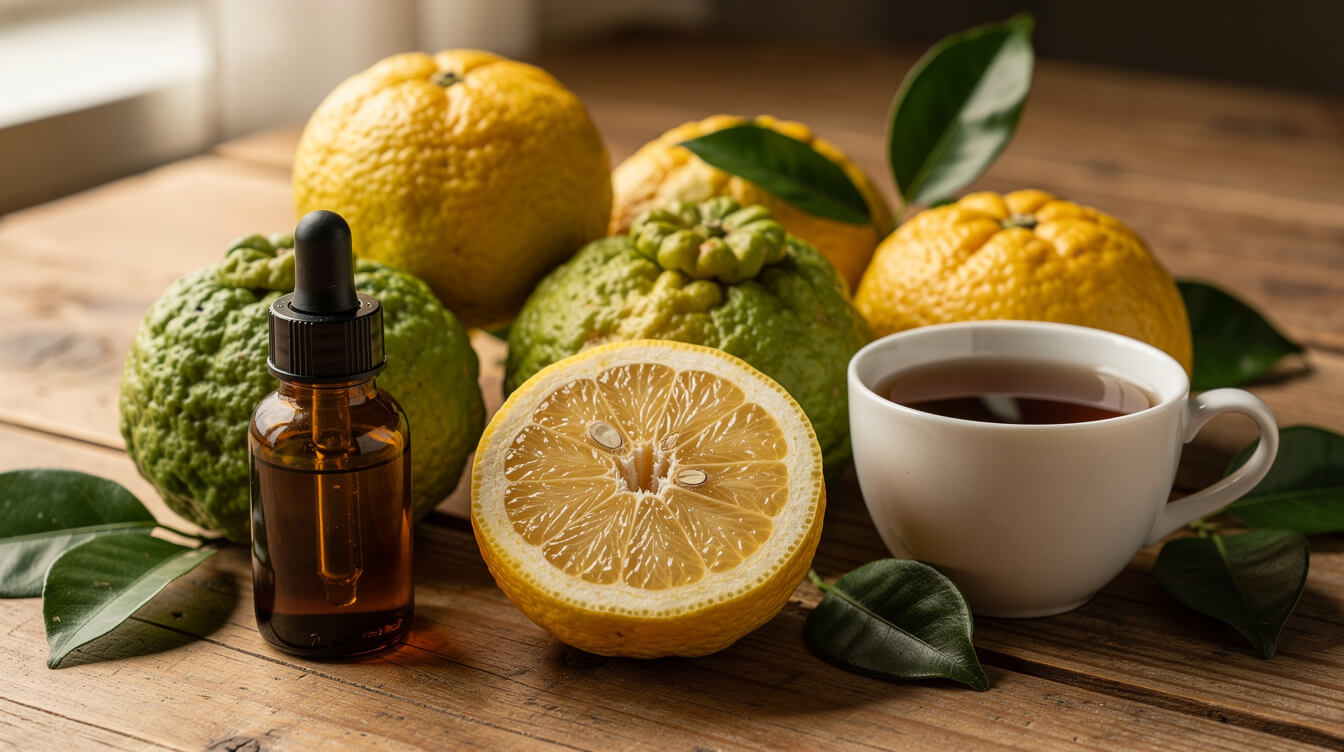
Bergamot essential oil is cold-pressed from the peel of Citrus bergamia, a small, green-to-yellow, sour and bitter citrus grown mostly along the coast of Calabria in southern Italy. Its scent unfolds in three stages, and learning them is the fastest way to recognize it anywhere.
The first 10 seconds: green, sour citrus
The opening is sharp and bright, but greener and less sugary than orange, and less lip-puckering than lemon. Think of the zest of an unripe lime with a hint of grapefruit pith. This sparkle comes mostly from limonene, which makes up roughly 30 to 45% of genuine bergamot oil.
After 10 minutes: floral, peppery and soft
As the zest fades, something unexpected shows up: a smooth, almost lavender-like floral heart with a faint peppery edge. That is linalyl acetate (about 22 to 36% of the oil) and linalool (about 3 to 15%), the same two molecules that define true lavender and clary sage. No other common citrus carries this much of them, and it is the single biggest reason bergamot smells “floral” when lemon does not.
In a room: tea-like roundness
Diffused, the two layers merge into something rounder: clean, airy, slightly bitter, with that unmistakable tea-shop quality. If you want the deeper chemistry of these layers and why perfumers have prized them since the 1700s, our guide to bergamot essential oil benefits for diffusing covers it in detail. For a quick daily-ritual introduction, see our Oil of the Day profile of bergamot.
Bergamot vs. Lemon, Orange, Lime and Petitgrain: A Side-by-Side Smell Map
The easiest way to learn what bergamot smells like is by contrast. Here is how bergamot compares with the citrus oils it is most often confused with. For each, we note the first impression, the heart, how long it lingers on a scent strip, and where you have probably smelled it before.
Bergamot. First impression: green, sour, lightly bitter zest. Heart: floral, lavender-like, a little peppery. Lingers: longer than most citrus, because the linalyl acetate holds on after the limonene fades. You know it from: Earl Grey tea, classic eau de cologne, many fresh “blue” fragrances.
Lemon. First impression: sharp, sour, very clean. Heart: thin, slightly waxy, with almost no floral note. Lingers: briefly. You know it from: cleaning products, lemonade, lemon zest. If bergamot smells like “lemon with a personality,” that floral heart is the personality.
Sweet orange. First impression: sugary, juicy, round. Heart: candied peel, cheerful and simple. Lingers: briefly; it is overwhelmingly limonene. You know it from: fresh-squeezed juice and the peel of a clementine. Our guide to orange essential oil explains why it fades so quickly. Sweet Orange is the sweeter, simpler cousin.
Lime. First impression: zesty, green, a little sharp. Heart: in cold-pressed lime, slightly bitter and “cocktail”-like. Lingers: briefly. You know it from: margaritas and cola. Lime is the closest match to bergamot’s opening, but it has no lavender-like heart.
Petitgrain. First impression: green, woody, leafy. Heart: floral and herbal, rich in linalyl acetate like bergamot. Lingers: longer than citrus peel oils. You know it from: classic colognes alongside bergamot. Petitgrain is distilled from the leaves and twigs of the bitter orange tree, not the fruit, so it shares bergamot’s floral heart without the juicy zest. It is also bergamot’s best blending partner, as our petitgrain profile explains.
The one-line test
If you are holding a citrus scent strip and can’t tell what it is, wait five minutes and smell it again. Lemon, orange and lime will have nearly vanished. Bergamot will still be there, softer and more floral, like lavender in a citrus coat. That lingering floral heart is the fingerprint.
Sign Up to Get Your FREE
e-Book Here…
Three Plants Called “Bergamot” (and Why Garden Bee Balm Smells Like Oregano)
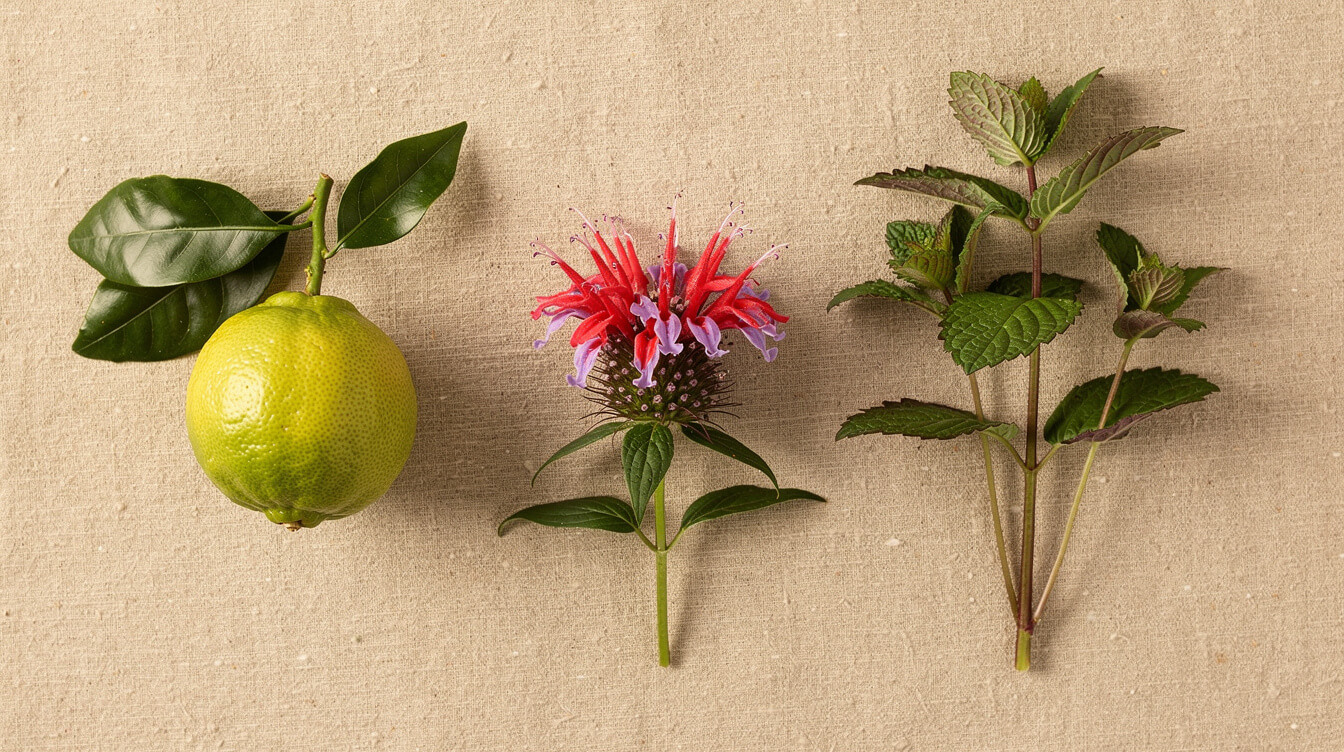
Search a garden center for “bergamot” and you will not find a citrus tree. You’ll find a shaggy purple or scarlet wildflower. Search a herb nursery and you may find a mint. These are three different plants from two different botanical families, and they smell very different. This naming tangle is the source of a lot of confused online reviews: “I grew bergamot and it smells like pizza herbs.” Both the gardener and the perfumer are right; they are just talking about different plants.
1. Bergamot orange (Citrus bergamia): the real oil
This is the citrus behind every bergamot essential oil, Earl Grey tea and classic cologne. Everything in the rest of this guide refers to it. Its peel oil gives you the zest-plus-lavender profile described above. It takes the peel of around 100 fruits to yield roughly 85 grams of oil, which is part of why it is costly and so often counterfeited.
2. Wild bergamot and bee balm (Monarda): the oregano surprise
Monarda fistulosa (wild bergamot) and Monarda didyma (scarlet bee balm, also called Oswego tea) are North American members of the mint family. They earned the name “bergamot” because early botanists likened the smell of their crushed leaves to bergamot orange. But their essential oils tell another story. Wild bergamot oil is typically dominated by thymol, often 50 to 80% of the oil, with carvacrol, p-cymene and γ-terpinene behind it. A 2022 analysis of Monarda didyma in the journal PeerJ classified it as a carvacrol chemotype, with carvacrol, p-cymene and thymol most abundant.
Thymol is the signature smell of thyme. Carvacrol is the signature smell of oregano. So when someone rubs a bee balm leaf and says “oregano,” their nose is reporting the chemistry accurately. The resemblance to bergamot orange is a faint citrus-herbal impression at best. Interestingly, some Monarda hybrids bred for their oil are linalool-dominant, and those do smell far closer to the citrus, which may be how the old comparison started.
3. Bergamot mint (Mentha citrata): the honest look-alike
Also sold as “eau de cologne mint” or orange mint, this is the one plant whose name is chemically earned. Its oil is built on the same two molecules as bergamot’s floral heart: published analyses from the US, India, Japan and Argentina range from about 23 to 66% linalyl acetate and 13 to 48% linalool, with very little menthol. Crush a leaf and you get a soft, floral, lavender-citrus smell with only a whisper of mint. That resemblance has a downside: distilled bergamot mint oil is one of the cheaper oils documented as a cutting agent for real bergamot, which brings us to the most useful skill in this guide.
If you enjoy this kind of “same name, different chemistry” story, our guide to jasmine essential oil untangles the two jasmines on the market in the same way.
Why Earl Grey Smells Like It Does (and Why Old Bergamot Smells Sour)
Earl Grey is black tea scented with bergamot oil, named after Charles Grey, the 2nd Earl Grey and British prime minister in the 1830s. The pairing works because black tea is malty and slightly smoky, and bergamot’s floral linalyl acetate and bitter-green zest lift it the way a twist of peel lifts a drink. When people describe a tea, candle or perfume as “Earl Grey,” they almost always mean the bergamot.
You may also see bergamot labeled FCF (furocoumarin-free) or “bergaptene-free.” FCF oil has had its non-volatile furanocoumarins removed for skin safety. Because those compounds don’t evaporate, they contribute little to what you smell in the air; the difference between FCF and whole oil matters far more on skin than in a Nebulizing Diffuser®. Our bergamot diffusing guide covers that distinction fully.
When bergamot stops smelling like bergamot
Open a bottle that has been sitting half-full on a sunny shelf for a couple of years and you may notice the tea-like softness is gone, replaced by something sharper, greener and slightly sour or turpentine-like. Two things tend to happen as citrus oils age. Limonene reacts with oxygen and forms oxidation products with a harsher, less fruity smell. And linalyl acetate, the soft ester behind bergamot’s roundness, can gradually break down toward linalool and acetic acid, the molecule that makes vinegar smell like vinegar. The result drifts away from “Earl Grey” toward “old lemon cleaner.” How fast this happens depends on heat, light and air in the bottle, so treat it as a tendency rather than a timeline. Store bergamot cold, dark and tightly capped, and decant into smaller bottles as you use it.
Bergamot blends beautifully once you know its layers. Two of our favorite daily recipes show how: the Blue-Hour Chord pairs it with lavender and clary sage, which share its linalyl acetate, and our essential oil blending chart shows where a top note like bergamot fits in a balanced blend.
Sign Up to Get Your FREE Essential Oils e-Book Here
How Bergamot Smells in a Room: Nebulized vs. Ultrasonic vs. Reed
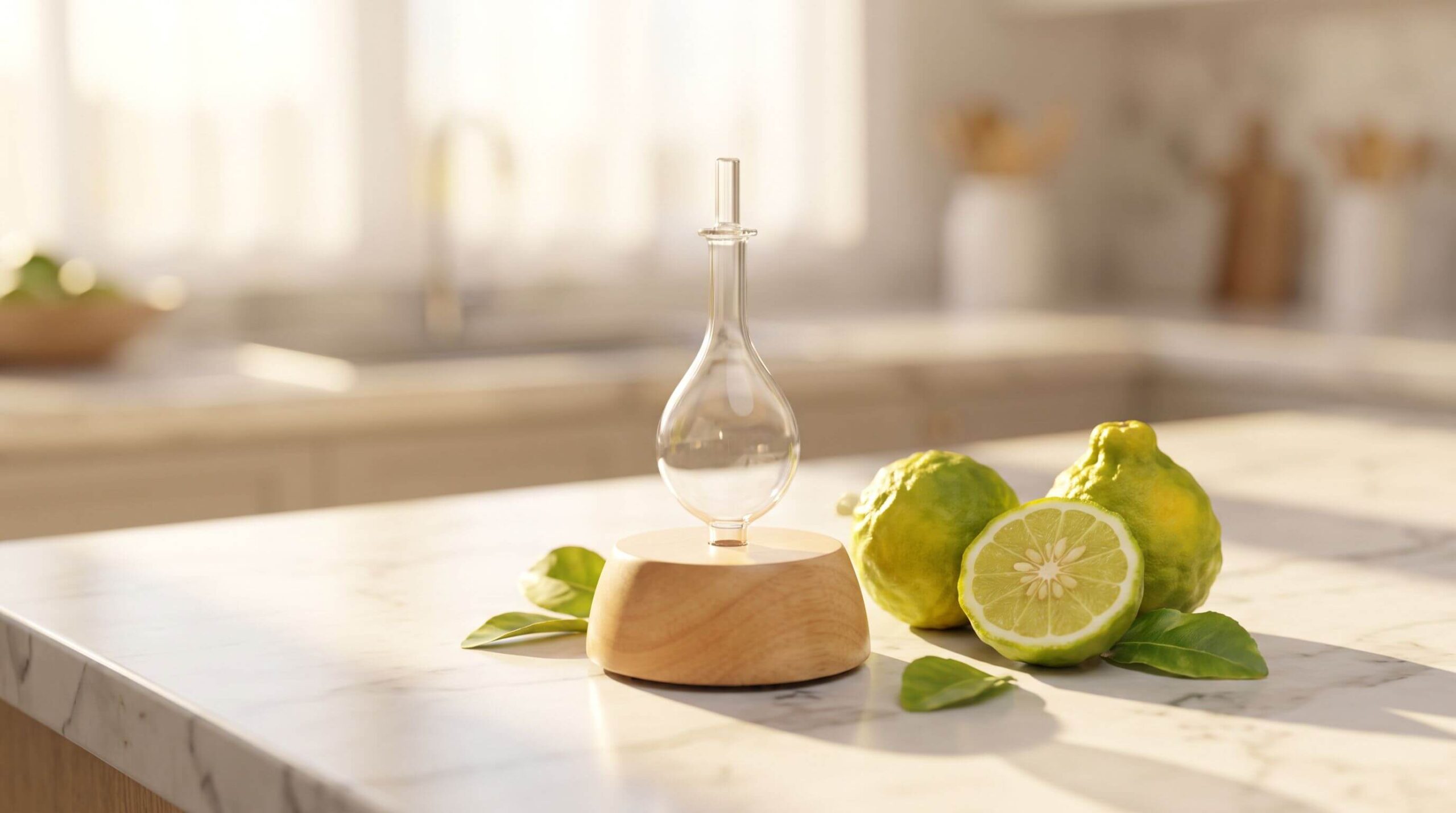
So what does bergamot smell like in your living room? That depends on how it gets into the air. Bergamot’s charm is its bright top: the green zest that hits first. It is also the most fragile part of the oil, so the way you scent a room changes what you actually smell.
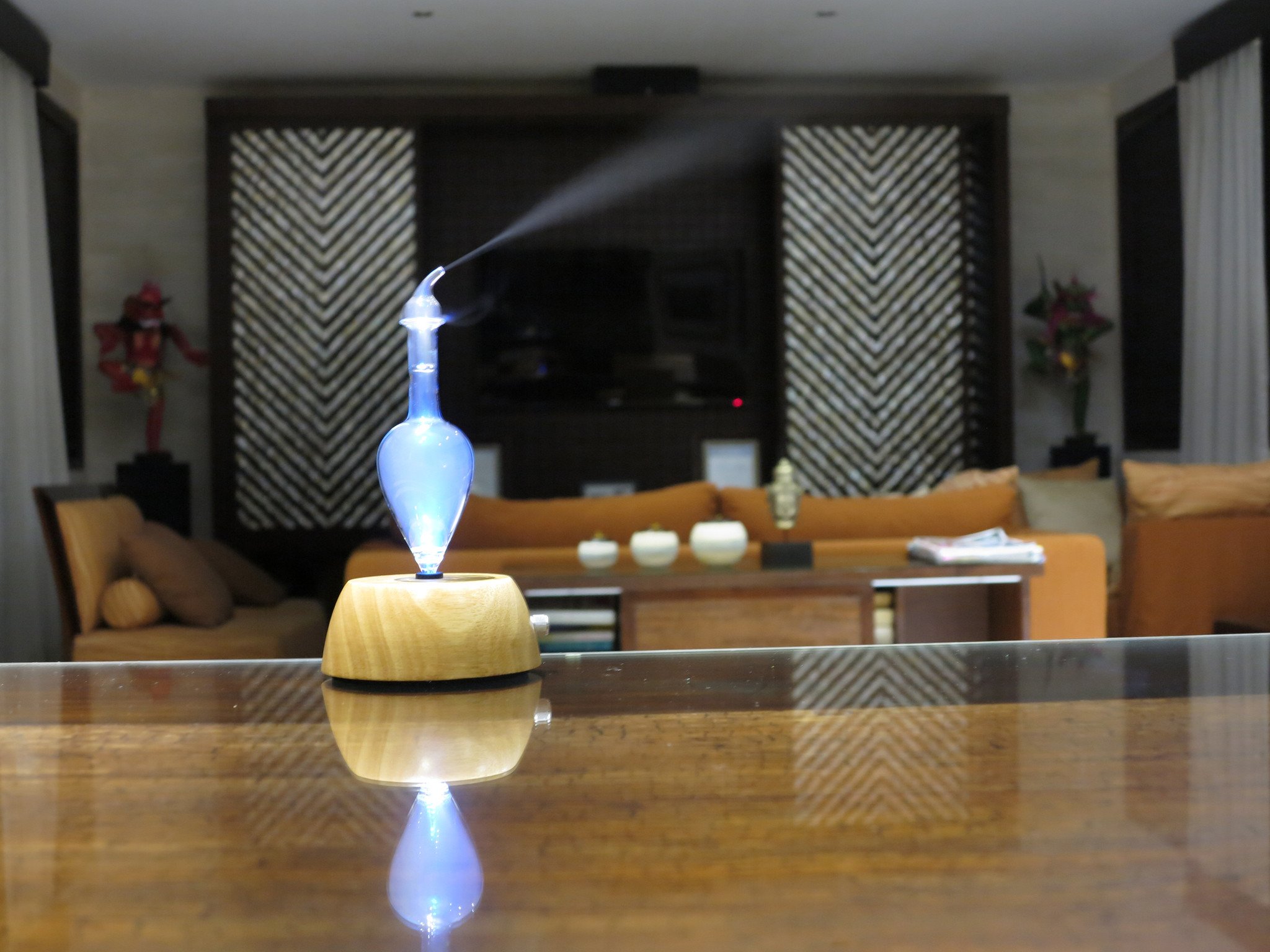
A Nebulizing Diffuser® uses Bernoulli’s Principle: a stream of air passing over a fine glass tube draws up pure, undiluted oil and breaks it into a microscopic mist. There is no water and no heat. The whole oil, zest and floral heart together, goes into the air in the proportions it left the bottle. This is the closest you will get to smelling freshly cut bergamot peel in a room.
An ultrasonic diffuser adds a few drops of oil to a tank of water and vibrates it into a cool mist. Bergamot is mostly water-insoluble, so it floats on top, and much of what you smell is humid, diluted citrus. The sparkle tends to read softer and wetter. We compare the two methods honestly in our nebulizing vs. ultrasonic guide.
Reed sticks and heat-based burners change the scent over time. In a reed bottle, the lighter limonene evaporates first, so a bergamot blend smells brightest on day one and heavier each day after. Heat speeds up evaporation of the top notes and can encourage the oxidation described above, so a warmer leans toward the duller, sharper side of bergamot.
Two bergamot blends to try
Each recipe is in parts, so you can scale it to your bottle. Mix in a clean glass vial and let it rest for a day.
Earl Grey Morning: 6 parts Bergamot, 2 parts Lavender, 1 part Cedarwood. Bergamot leads, lavender doubles its floral heart, and a touch of cedarwood plays the role of the black tea’s dry woodiness. Bright, clean and calm.
Citrus Grove at Noon: 4 parts Bergamot, 3 parts Sweet Orange, 2 parts Petitgrain, 1 part Black Pepper. Orange sweetens the opening, petitgrain extends the green floral heart, and a single part of black pepper brings out the spice already hidden in bergamot.
Because bergamot is so bright, short, intermittent sessions keep it smelling fresh rather than overwhelming. The Raindrop Smart Nebulizing Diffuser® lets you set low-intensity cycles from your phone, and you can browse every model in our handcrafted Nebulizing Diffuser® collection.
How to Tell Real Bergamot From a Flattened Copy
Bergamot is one of the most counterfeited essential oils in the world. An often-cited Italian estimate puts the genuine Calabrian crop at no more than about 100 tonnes of oil a year, while roughly 3,000 tonnes of “bergamot oil” are traded. Even if that figure is rough, the gap is enormous. Common shortcuts include cutting the oil with cheaper distilled bitter orange or bergamot mint, adding natural or synthetic terpenes, or rebuilding the whole profile from synthetic linalool, linalyl acetate and limonene, sometimes tinted green with chlorophyll.
The left-handed molecule test
Here is the jewel almost no guide explains. Linalool and linalyl acetate are chiral molecules: they exist in two mirror-image forms, like a left and a right hand. Plants build them one-handed. Factories usually don’t. Synthetic linalool and linalyl acetate are typically made as a roughly 50:50 mix of both hands, called a racemic mixture.
In genuine cold-pressed bergamot, reference values used by Italy’s Experimental Station for the Essential Oil and Citrus Products Industry in Reggio Calabria put linalool at 99.3 to 99.7% of the (R)-(−) form, and linalyl acetate at 99.4 to 99.7% (R)-(−). Limonene runs the other way, at about 97.4 to 98.4% of its (+) form. A lab using gas chromatography with a chiral column can see these ratios directly. Add synthetic linalool or linalyl acetate and the “wrong hand” shows up immediately. The same chiral analysis can even tell cold-pressed oil from heat-distilled bergamot, because heat breaks down linalyl acetate and scrambles the linalool.
Why your nose cares, too
This isn’t just lab trivia. The two hands of linalool smell different. (R)-(−)-linalool is described as woody and lavender-like, with an odor threshold around 0.8 parts per billion. (S)-(+)-linalool smells sweeter, more floral and petitgrain-like, and you need roughly 7.4 parts per billion to detect it, about nine times as much. So a bergamot “rebuilt” with racemic synthetics swaps half of its most potent floral molecule for a weaker, sweeter twin. Perfumers often describe these reconstructions as flatter or soapier: recognizably bergamot-ish, but missing the clean, lavender-like lift of the real thing. Our lavender guide explores how that same linalool and linalyl acetate pair shapes lavender’s character.
A buyer’s checklist
The Latin name and origin are on the label. Look for Citrus bergamia and, ideally, Italy (Calabria) or another named origin. “Bergamot fragrance” or “bergamot scent” usually means synthetic.
The extraction method is stated. Cold-pressed (expressed) is the classic oil. Steam-distilled bergamot exists, but it smells flatter and less floral.
A GC/MS report is available. Reputable sellers can share one. A chiral analysis is even better, but few retailers publish it. On a standard report, limonene should sit around 30 to 45% and linalyl acetate around 22 to 36%.
The price is plausible. If “pure bergamot” costs the same as sweet orange, something is off. Our Bergamot Essential Oil is 100% pure organic oil, tested for purity.
The smell test passes. Put a drop on a paper strip and smell it at 10 seconds and 10 minutes. Real bergamot keeps a clear lavender-like floral heart after the zest fades. A flattened copy tends to collapse into generic sweet citrus or soap.
Join Our Exclusive Member Club to get Big Discounts!
What Does Bergamot Smell Like? Frequently Asked Questions
What smells like bergamot?
The closest matches are Earl Grey tea (which is scented with bergamot), petitgrain, and bergamot mint. Lavender and clary sage share bergamot’s floral heart, because all of them are rich in linalyl acetate and linalool. Among citrus, lime is closest to bergamot’s opening, but it lacks the floral note.
What do amber and bergamot smell like together?
Amber in perfumery is not a single oil but a warm, resinous accord, usually built from labdanum, vanilla and benzoin. Paired with bergamot, you get a classic contrast: a bright, fresh citrus opening that settles into a soft, warm, slightly sweet base. It is one of the most common structures in modern fragrance.
What does bergamot taste like?
The fresh bergamot fruit is sour and noticeably bitter, more so than lemon, which is why it is rarely eaten fresh and is mostly used for its peel. In Earl Grey tea, it tastes floral and lightly citrus. Please don’t ingest bergamot essential oil; enjoy it through the air instead.
Who should not use bergamot essential oil?
On skin, whole (non-FCF) bergamot is phototoxic, so it can cause serious burns if skin is exposed to sunlight or a tanning bed afterward. The fragrance industry limits it to very low levels in leave-on products for this reason. If you are pregnant, nursing, managing a health condition or taking medication, ask your clinician before using it. With pets, diffuse in a ventilated room and give them a way out; our guide to essential oils around dogs has more.
Does bergamot smell like oranges?
Only partly. It shares orange’s limonene, so the first sniff is citrusy, but it is greener, more sour and less sweet, and it has a lavender-like floral heart that orange lacks.
Why does my bergamot plant smell like oregano?
You are probably growing bee balm or wild bergamot (Monarda), not the bergamot orange. Its leaves are rich in thymol and carvacrol, the compounds that give thyme and oregano their smell. Bergamot essential oil comes from the citrus fruit.
Once you know its three stages and its fingerprint, you will start noticing bergamot everywhere. For more ways to enjoy it day to day, see our seven ways to use bergamot essential oil.