


Best Essential Oil for Laundry Detergent: Why the Scent Washes Out and 4 Ways to Make It Last
The best essential oil for laundry detergent is usually lemon, lavender or eucalyptus, but the oil you pick matters less than when you add it. Most people tip a few drops into the wash, pull out clean clothes that smell of almost nothing, and decide essential oils just don’t work in laundry. The oils aren’t the problem. The timing is.
Your detergent is designed to remove oil from fabric, and that includes the essential oil you just added. Store-bought “fresh” scents get around this with a trick from the chemistry lab that essential oils can’t use. This guide explains both, names the oils worth buying for each laundry job, corrects a popular DIY recipe that quietly cancels itself out, and gives you four methods that actually leave your linens smelling of something. We’ll finish with the safety points most laundry guides skip: dryer fires, stains and the rubber seal on your washer door.
The Best Essential Oil for Laundry Detergent, Matched to the Job
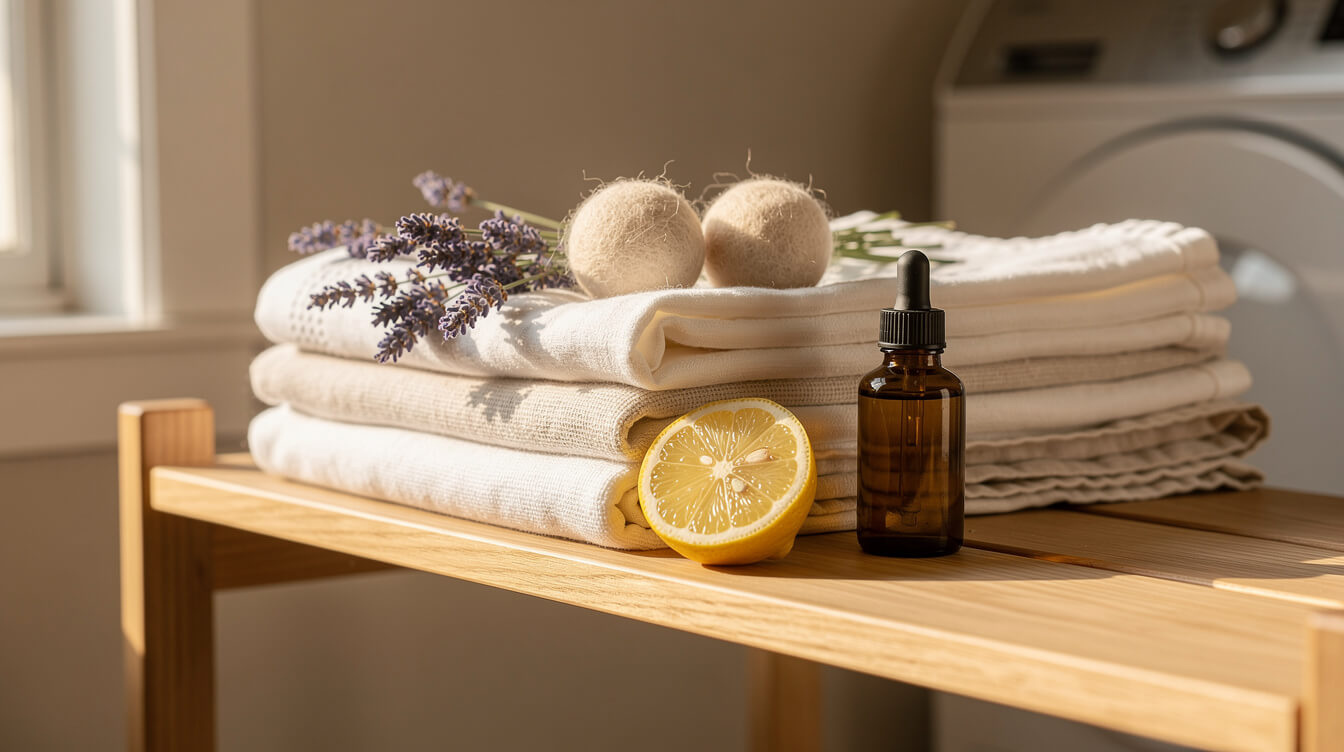
Every “best oils for laundry” list says the same nine or ten oils. That’s fine, but a ranking is more useful when it’s tied to the load in front of you. Here is how we’d choose, based on 12 years of customers telling us what lasted on their linens and what vanished.
Everyday cottons and kitchen towels: Lemon. Bright, clean and familiar. Lemon’s main molecule, d-limonene, is a good grease solvent, which is why a drop rubbed into a fresh oil spot before washing helps the detergent lift it. It is also the most volatile oil on this list, so use it in the rinse or on dryer balls rather than in the main wash.
Sheets and pillowcases: Lavender. Soft, floral and the most requested scent for bedding by a wide margin. Linalool and linalyl acetate, its two main components, are a little heavier than limonene, so lavender lingers longer on cotton.
Bath towels and robes: Eucalyptus. Crisp and spa-like, and its 1,8-cineole reads as “clean” to most noses even at a faint level. Pair it with lavender for towels that smell like a hotel bathroom.
Gym kit and musty loads: Tea Tree. A sharp, medicinal-green scent that covers lingering sweat and damp odors. Use it fresh, because tea tree that has oxidized in the bottle smells harsher and is more likely to bother sensitive skin.
A cheerful everyday blend: Sweet Orange or Grapefruit. Sweeter and rounder than lemon, and lovely mixed with lavender.
Cool, crisp work shirts: Peppermint. Use one drop for every three of something softer. On its own it can make laundry smell like toothpaste.
One honest note before you go further. Essential oils are not registered disinfectants, whatever older laundry blogs (including an earlier version of this page) suggested. Hot water, detergent, sunlight and a thorough dry are what get laundry clean. Essential oils are there for the scent, and that’s a perfectly good reason to use them.
Why Essential Oil Scent Washes Out (and Store-Bought Scent Doesn’t)
If you’ve ever added twenty drops of lavender to a load and smelled nothing afterwards, here’s what happened.
Detergent is an oil remover
Essential oils don’t dissolve in water. Most are lighter than water, so in the drum they form a thin, oily film. Detergent molecules have one end that likes water and one end that likes oil. They surround oily droplets in tiny spheres called micelles and carry them away in the wash water. That’s exactly how detergent lifts skin oil and food grease from a shirt, and it treats your essential oil just the same. Add oil at the start of the wash and most of it goes down the drain with the dirt. We explain the same oil-and-water behavior in our guide to why bath oils float and how to disperse them.
Heat finishes the job
Whatever survives the wash then meets the dryer. Most household dryers heat the air to somewhere around 50 to 65°C (125 to 150°F) and blow a large volume of it out of the vent. Limonene’s vapor pressure at 60°C is roughly six to eight times what it is at room temperature, by the standard Clausius-Clapeyron estimate. Put another way, the bright top notes evaporate several times faster, and a fan pushes them straight outside. That’s why your laundry room vent can smell wonderful while your towels don’t.
The trick commercial laundry scent uses: microcapsules
Detergent and fabric-softener brands solve this with perfume microcapsules. These are microscopic plastic shells, often melamine-formaldehyde or acrylic polymers, with liquid fragrance sealed inside. The shells survive the wash and the dryer, cling to the fibers, and break when the fabric is rubbed. That’s why a towel from a scented detergent smells strongest when you dry your face with it, and why the scent can last for weeks. Fabric softeners add a second trick: their positively charged ingredients settle onto fabric, which carries a slight negative charge in water, and take fragrance along with them.
Those shells are a form of microplastic. The European Union’s restriction on intentionally added microplastics, Regulation (EU) 2023/2055, gives encapsulated fragrances a six-year transition, so they’re due to be phased out of products sold in the EU by October 2029. It’s a useful reminder that “long-lasting scent” on a label usually means something has been engineered to stay on your clothes.
Pure essential oils don’t come in capsules, so the goal is different: add the oil after the detergent has done its work and keep it away from high heat. The methods below are built around those two rules.

Sign Up to Get Your FREE Essential Oils e-Book ($9.99 Value)
The Castile Soap and Vinegar Mistake in DIY Detergent
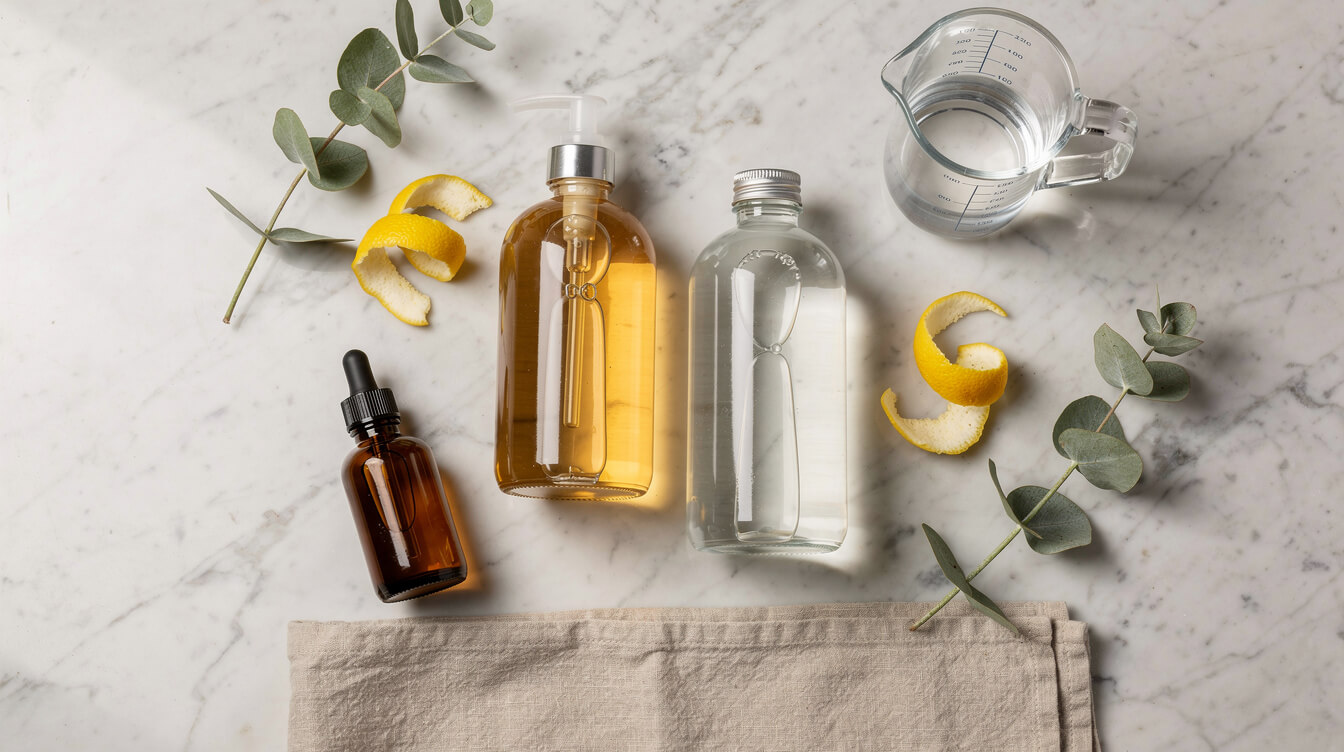
The most-shared DIY recipe for essential oil laundry detergent goes like this: liquid castile soap, white vinegar, a little glycerin and 30 to 40 drops of oil, shaken together in one bottle. An earlier version of this very page printed it. It doesn’t work, and the reason is basic soap chemistry.
Vinegar “un-makes” soap
True soap, castile included, is made by reacting plant oils with a strong alkali. That reaction is called saponification, and it turns fatty acids into their sodium or potassium salts, which are the part that cleans. Vinegar is an acid. Mix the two and the acid takes the soap back toward free fatty acids: an oily, white, curdled mess that can’t wash anything. Lisa Bronner of Dr. Bronner’s describes exactly this, calling the result a white, goopy mix, and advises using the two one after the other, never together.
Hard water makes castile worse
Even without vinegar, plain soap struggles in a washing machine. Calcium and magnesium in hard water bind to soap and form insoluble “soap scum”, the same gray film you see on a shower door. In laundry, that scum settles in the fibers, so whites go dingy and towels feel stiff and less absorbent over time. That is why synthetic detergents largely replaced soap for laundry after the 1940s: they keep working in hard water. Castile soap is a lovely hand and body soap. It’s a poor laundry detergent.
What to do instead
Use a good unscented detergent as your base. Let it do the cleaning. Fragrance-free detergents are easy to find and give you a blank canvas.
If you like a vinegar rinse, keep it separate. A half cup in the softener compartment goes in during the rinse, after the detergent has been drained away, so the two never meet. Don’t add essential oil to the vinegar, though: the oil won’t dissolve in it and will simply float.
Add your essential oil at the end, using one of the methods in the next section.
How to Use Essential Oils in Laundry: 4 Methods That Hold Scent
Each of these follows the two rules from above: add oil after the detergent is gone, and keep it out of the hottest, windiest part of the dryer cycle.
1. Wool dryer balls, at the end of the cycle
This is the single best method. Dry your load as usual. When it finishes, put 3 to 4 drops of oil on each of two or three wool dryer balls and give them a minute or two to soak in, so there’s no wet oil sitting on the surface. Toss them in with the warm laundry and run 10 minutes on an air-only or no-heat setting. The wool holds the oil and releases it slowly as it tumbles, and the warm fabric picks up the scent without the oil being blasted out of the vent. Re-scent the balls every two or three loads.
2. The final rinse, pre-dispersed
Drops of oil added straight to rinse water float, cling unevenly and can leave small oily spots. Disperse them first. Stir 10 to 15 drops into a tablespoon of unscented liquid fabric softener, or into an equal amount of Polysorbate 20, a solubilizer that helps oil mix into water. Add the mixture to the softener compartment so it goes in with the final rinse. Expect a gentle scent rather than a strong one. This method suits people who don’t use a dryer.
3. A linen spray after folding
For the strongest, most controllable result, scent the fabric after it’s dry. A simple linen spray made with a high-proof alcohol and a solubilizer will mist evenly and dry in seconds without marking. Our room spray recipes that actually mix explain the ratios. One tip: witch hazel alone isn’t strong enough to hold lavender oil in solution. Always spray-test a hidden spot on silk or dark fabric first.
4. Scent the room, not just the clothes
Fabric absorbs whatever is in the air around it. It’s the same reason a jacket smells of smoke after one evening by a fire, as we explain in our guide to removing cigarette smoke smell. You can use that to your advantage. Diffuse your chosen oil in the bedroom or linen closet for half an hour while you fold and put things away, and the fabrics pick up a soft, even scent with no risk of spots. More on this below.
How many drops?
Start lower than you think. About 6 to 12 drops on dryer balls, or 10 to 15 dispersed in the rinse, scents a full load. More oil doesn’t make the scent last longer. It just raises the chance of residue on fabric and in your machine. If you want the scent to last, use the room method, not more drops.

Join Now and Get a Coupon for 10% Off!
Laundry Safety: Dryer Fires, Stains and Washer Seals

Essential oils in laundry are safe when used in small amounts. Most of the problems come from too much oil in the wrong place.
Never put oil-soaked fabric in the dryer
This is the one rule that really matters. Dryer manufacturers warn against drying items soiled with cooking or vegetable oils, because those fats can slowly oxidize and heat themselves up in a warm, tightly packed pile of laundry, sometimes enough to start a fire after the cycle ends. The usual culprits are massage towels, kitchen rags and cloths used to wipe up carrier oils, rather than a few drops of essential oil on a wool ball. Essential oils have their own fire-safety profile, which we cover in are essential oils flammable?. If you’ve spilled a bottle onto clothing, wash it thoroughly and air-dry it. Don’t tumble it. Our guide on how to remove essential oil smell from fabric walks through the cleanup.
Some oils stain
Colored and thick oils can mark fabric if a neat drop touches it. These include patchouli, vetiver, cinnamon, clove and blue oils like German chamomile. Older citrus oils darken as they oxidize, too. Keep these oils for your Nebulizing Diffuser® and use pale, thin oils such as lemon, lavender, eucalyptus and tea tree in the laundry. Let drops soak into dryer balls before they touch clothes.
Keep neat oil off rubber and plastic
Citrus oils are natural solvents. Undiluted d-limonene can swell or soften some rubbers and plastics, including the kind used in many washer door seals and dispenser drawers. A few dispersed drops in a full load won’t matter. Pouring oil straight onto the gasket or into the drawer week after week might. It’s the same chemistry that makes the plastic tanks of ultrasonic units absorb oil, which we cover in our guide to what oil does to plastic versus glass.
Babies, pets and sensitive skin
For baby clothes, skip the oils or use the room method. Freshly washed fabric sits against skin all day, and some people react to oils that have oxidized, especially old citrus and tea tree. Use fresh oil, store it cool and dark, and stop using any scent that seems to bother someone in the house. If you share your home with cats or birds, keep scenting light and make sure the room is well ventilated.
Scenting Your Linens with a Nebulizing Diffuser®
If what you really want is a bedroom that smells of fresh linen and lavender, it’s easier to scent the air than to fight your detergent.
A Nebulizing Diffuser® uses Bernoulli’s Principle: a small pump pushes air across the tip of a glass micro-tube, the pressure drop draws pure oil up the tube, and the oil is sheared into a fine, dry mist. There’s no water and no heat, so what reaches your linens is 100% essential oil, with no water to dampen fabric and no damp warmth for musty smells. Because the oil path is glass, a clean citrus blend smells like citrus, not like last week’s peppermint.
A simple linen-closet routine
Run the Nebulizing Diffuser® in the bedroom or near the linen cupboard on a low setting for 20 to 30 minutes while you fold and put things away, with the closet door open. Run it in short bursts rather than all day. Your nose stops noticing a constant scent within minutes, a point we cover in how to make your house smell good. Short bursts keep it fresh for you and leave a soft trace on the fabric.
Three “fresh laundry” blends for the diffuser
Clean Linen: 4 parts lemon, 3 parts lavender, 1 part eucalyptus.
Hotel Towel: 3 parts eucalyptus, 3 parts lavender, 2 parts sweet orange.
Sunday Sheets: 4 parts lavender, 2 parts grapefruit, 1 part peppermint.
Mix each blend in a small glass bottle and pour it into the reservoir. Thin oils like these run cleanly in any of our models. The Raindrop Smart Nebulizing Diffuser® lets you set a schedule from your phone, so the scent can start just before you get home on laundry day. You’ll find every design in the Nebulizing Diffuser® collection.

Join Our Exclusive Member Club to get Big Discounts!
Best Essential Oil for Laundry Detergent: FAQs
What is the best essential oil for laundry detergent?
Lemon, lavender and eucalyptus are the most reliable all-rounders. Lemon suits everyday cottons and kitchen towels, lavender suits sheets, and eucalyptus suits bath towels. Tea tree works well on gym kit and musty loads. Whichever you choose, add it after the wash, on dryer balls or in a pre-dispersed rinse, because detergent removes oil added at the start.
Why can’t I smell essential oils on my laundry after washing?
Detergent is designed to lift oil from fabric, and it removes essential oil the same way it removes grease. Dryer heat then evaporates most of what’s left. Commercial detergents last longer because their fragrance is sealed in microscopic capsules that break when the fabric is rubbed.
Can I mix castile soap and vinegar for laundry?
No. Vinegar is an acid that turns soap back into free fatty acids, leaving a white, curdled residue that can’t clean. If you use both, use them separately: soap or detergent in the wash, vinegar in the rinse.
How many drops of essential oil should I use per load?
About 6 to 12 drops spread over two or three wool dryer balls, or 10 to 15 drops dispersed in a tablespoon of unscented softener or solubilizer for the rinse. More oil adds residue, not lasting scent.
Are essential oils safe in the dryer?
A few drops absorbed into wool dryer balls, used on a low or no-heat setting, are fine. Never dry clothes or towels soaked in oil, especially cooking, massage or carrier oils, because oily fabric can heat itself and catch fire. Wash spills out thoroughly and air-dry those items.
Do essential oils disinfect laundry?
No. Essential oils are not registered disinfectants. Hot water, detergent and thorough drying are what clean laundry. Use essential oils for scent.
The short version: choose the best essential oil for laundry detergent by the load, let the detergent do the cleaning, and add your oil at the end. For a scent that lasts all week, put it in the air your linens live in, not just in the machine. For more household uses, see our guide to essential oils and mold in damp rooms.




I’ve used all of these for laundry except lemongrass! I’ll have to try it soon.
I think this is a great idea, thanks for the info!
Interesting article. I did not know grapefruit could dissolve older stains
Nice idea to add to the laundry, I will give it a shot!
Lemon oil would be wonderful
Lavender or lemon oils would be fine
Essential oils are so much better for you and the earth than synthetic chemical fragrances and these are some great choices to start with 😀
I love citrus scents. Pink Grapefruit is my favorite.
I used lavendar
I’m so glad lavender is on the list, it’s my favorite essential oil.
I love lavender It smell great and I would use it to do laundry
I cant wait to try this
Good stuff!
What a game changer! My clothes smell AMAZING AMAZING!
I love to use lemon and lavender together.
I have not tried this yet, but as lavender really does calm me I look forward to doing this.
Thanks for these wonderful ideas! I love using citrus scents myself.
Great article I never knew of these uses before but will try some now .
Wow this is an amazing idea.
I always like the smell of lavender in my laundered clothes.
I use lavender in my laundry.
I love the lavender scent.
This is such a good article with great tips. Who knew essential oils were so versatile.
Such amazing suggestions! I thought I was up on these things, but I see I wasn’t!
very cool post
I’m excited to try lemongrass oil in my laundry!
I didn’t know about using oils for stain removal. I have used essential oils for a long time, good to know!
Lavender is for sure my favorite! So calming.
I did not ever even think about using essential oils in laundry. Thank you!
love to try it never saw it.
There couldn’t be anything nicer than a great scented aroma from clean clothing. Except there is, from natural and clean ingredients is so much better! Great ideas with EO in the laundry room, especially the calming and relaxing effect of lavender.
I want to use oils in my laundry. New learner here
Love it, good for the laundry and the laundry machine!
Awesome article, so many great tips! Love the one about using tea tree oil to help keep washing machine clean!
Thanks for the share. This is very useful.
Good information
I am amazed that you can clean your machine with Tea Tree Oil. thank you
I never knew about tea tree oil for cleaning the washer
good to know
wow didin’t know certain oils can remove stains
This is interesting I haven’t tried using essentials oils in my laundry
I am glad to know that essential oils can be used for laundry. I’ve been looking for an alternative for a softener. Can’t wait to creat one with my favorite essential oils. Thank you Organic Aromas for this educational article.
I use lavender EO on my dryer balls.
I had not come up with that great idea, thanks for sharing
Nice!
👍🏼 Another awesome instruction from Organic Aromas 🤗
It’s amazing!
Really want to try lavender essential oil as a natural fabric softener! 🙂
I add a couple of drops of Lemon and Tea Tree essential oil to 3 – 5 pcs natural wool dryer ball to replace toxic dryer sheets.